Category Archives: Garden Design

2019 Chelsea Flower Show Garden Designs

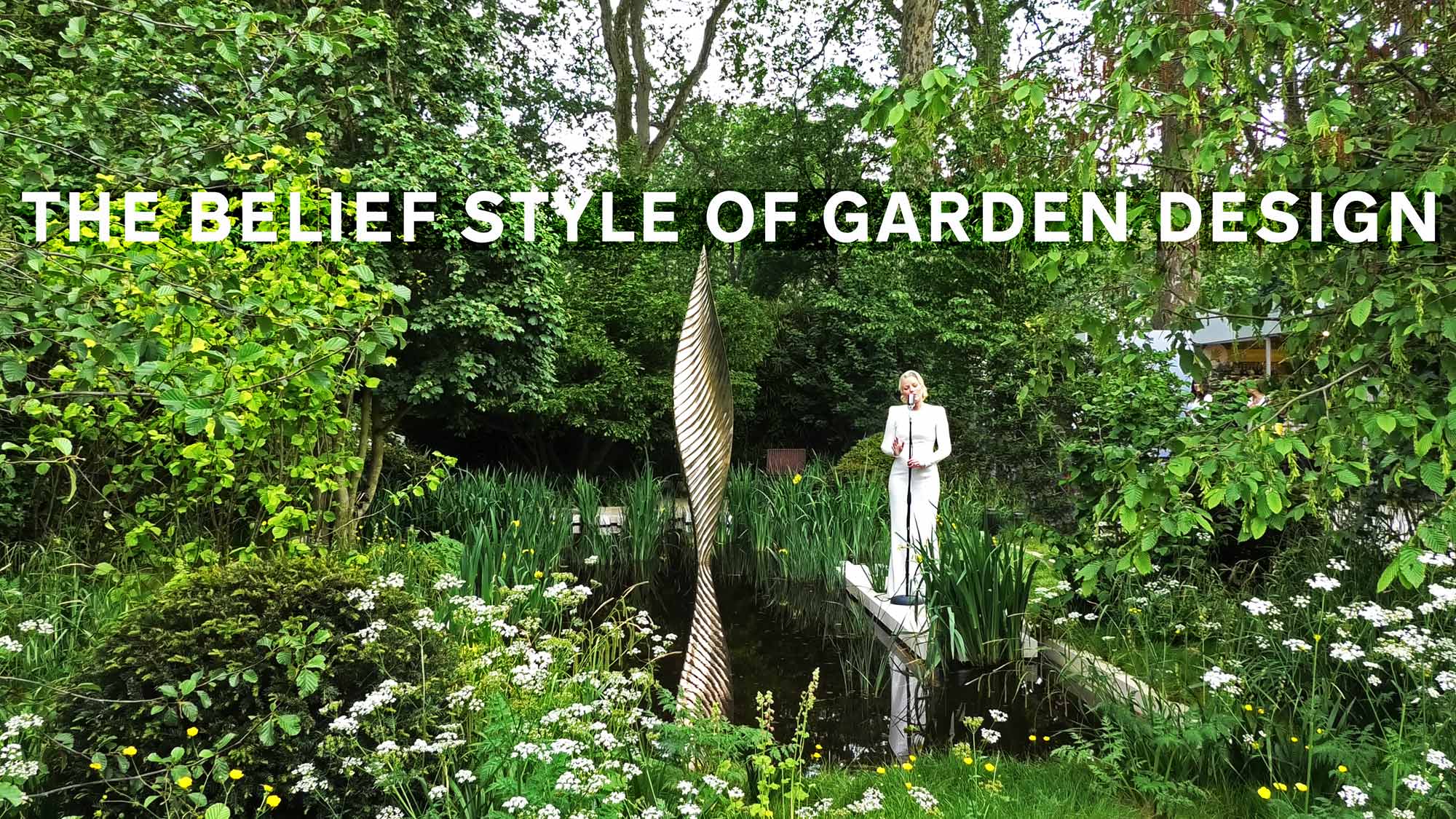
The Belief Style of garden design was prominent at the 2019 Chelsea Flower Show. This example, The Savills and David Harber Garden, was designed by Andrew Duff

While admiring the 2019 Chelsea Flower Show, I thought of a name for an emerging style of garden design. The primary characteristic of  the Belief Style is a new view of Nature: as simultaneously endangered, life-enhancing and in need of conservation by and for humanity. Perhaps it will earn a place on the Gardenvisit chart of Historic Styles of Garden Design.

Though I have used ‘belief’ in the titles of books about garden history, I have not used it to characterise a specific design approach. My reason for doing so now is to clarify and enhance an important trend in both garden design and landscape architecture. Without accurate terminology, the development of concepts is hindered.
The dominant design trends of the twentieth century were Modernist and Postmodernist. Both influenced gardens. But both advance on the path to obsolescence every time the clock ticks. With an inward smile, I used the term post-Postmodern in the sub-title of a book on design theory: City as landscape: a post-Postmodern view of design and planning. It’s cumbersome and when I checked the order of ‘design’ and ‘planning’ this morning I noticed that Amazon had contracted it to post-Modern. ‘Belief’ may also be a substitute for ‘post-Postmodern’ in other contexts. Time will tell.
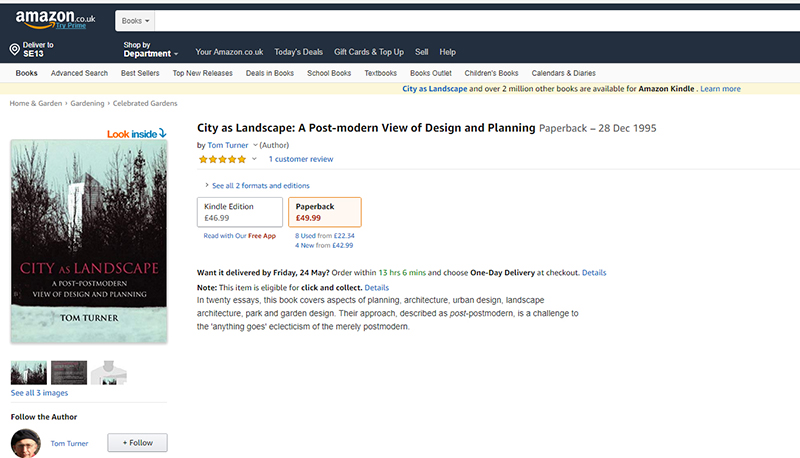
The subtitle should be ‘a post_Postmodern view of design and planning

With regard to art and design, the names I prefer to Modern and Postmodern are Abstract and Post-Abstract. They tell us ‘what’s in the box’ rather than ‘when the box was opened’.
The word ‘belief’ does not mean the same as either ‘religion’ or ‘faith’. Not everybody has a religion. But we all have beliefs in the sense of things we hold to be true that cannot be established by rational empirical science. Even such determined anti-theists as Christopher Hitchens, Richard Dawkin and Stephen Fry have beliefs. I assume, for example, they have beliefs in the wickedness of cruelty and the virtues of kindness. Both could could influence garden design.
In these agnostic times the belief that is most foregrounded (to use a term favoured by postmodernists) is in the overwhelming importance of nature. This is not new. But it is now being linked with beliefs about conservation, sustainability, climate change, biodiversity, physical health and mental health.
The garden awarded the 2019 RHS Chelsea Best in Show Medal is a good example, designed by Andy Sturgeon.
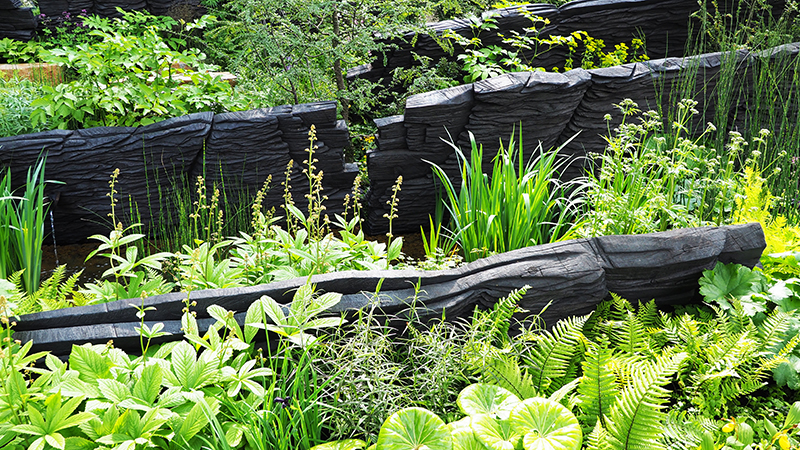
The M&G Garden, designed by Andy Sturgeon

We also see a love of nature in the work of William Robinson  (mentioned by Sarah Eberle). But though he talked about a wild garden he is not in fact believed to have made a dominant use of wild plants in his own garden. Alfred Parson‘s illustrations to his books are another matter and have a real commonality with some of the planting design at Chelsea.most important these planting designs are favoured both by the RHS and by the Chelsea judges.
What designers say about their work is almost as significant as what they do. Here are some examples, not coordinated with the video clips.
Andy Sturgeon, who won the Best in Show award for the M&G garden, uses ‘a biodiverse range of pioneering plant species from around the world’ to demonstrate ‘nature’s power to regenerate’.
The RHS ‘Back to Nature Garden-, designed by the Duchess of Cambridge with landscape architects Davies White, is conceived ‘as a place to retreat from the world’ while promoting ‘physical and emotional wellbeing’.
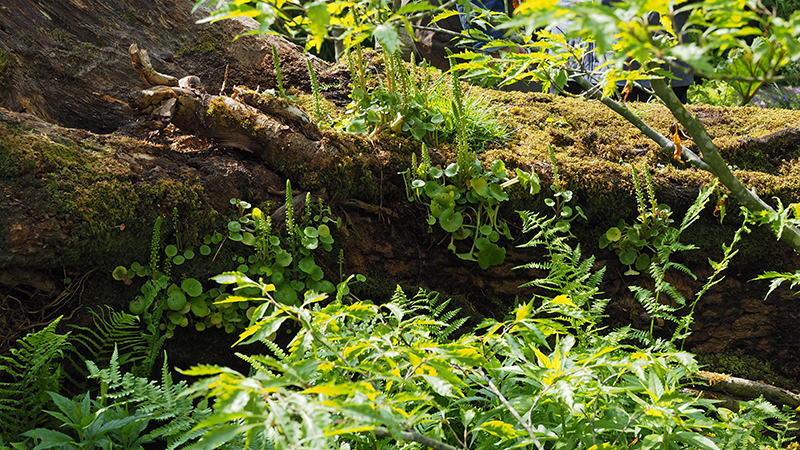
The RHS Back to Nature Garden, by HRH the Duchess of Cornwall with Andree Davies and Adam White

Andrew Duff, explaining his design for ‘The Savills and David Harber Garden’, states that ‘The most important aspect of this garden is its underlying sustainability’.
Sarah Eberle, in a design for the Forestry Commission, explores how gardens and landscapes ‘can be made resilient to the threats posed by a changing climate, pests and diseases’.
Beliefs always have been a fundamental aspect of garden design so I’m happy that new beliefs are leading to a new design style – which I hope you can appreciate from the video clips we’ve been looking at. They focus on planting design and are not classified by designer, but the potential scope of the style is much wider – and merits another blog post.
The Belief Style of garden design is related to William Robinson’s Wild Garden but also strikes off in a new direction


James Veitch and Sons nurserymen and garden designers

Veitch’s Chelsea nursery ceased trading in 1914, rather appropriately for the greatest horticultural firm in British history. It was founded in the eighteenth century  and in the nineteenth century took advantage of peace, prosperity and sea power to engage in plant collecting on a world scale.  It brought 1281 new plants into cultivation and undertook significant design projects including Killerton and Ascott. Sir Harry Veitch played a key role in moving the RHS Flower Show to Chelsea.

A royal visit to the Chelsea Flower Show

There is much to be said for the involvement of horticultural firms in garden design providing they have the good sense to work with talented and independent-minded garden designers. There is a risk of ‘in-house’ designers being over-influenced by technical and business managers with insufficient design judgement for the work in hand. As Winston Churchill remarked, experts should be on tap but not on tap. What they bring to garden design is a focus on high quality planting and construction: very necessary but of limited value when deployed to make a mediocre design.

Veitch & Sons Nursery Cataogue

Veitch & Sons Nursery Cataogue

Gardens of the Château de Vullierens

The gardens of Chateau Vullieren

The gardens of Chateau Vullierens have been influenced by the styles of several periods in garden history: Medieval, Baroque, Romantic and Modern

We are pleased to welcome the gardens of the Château de Vullierens to the Gardenvisit guide. Just inland from Lac Lemen (Lake Geneva) it looks south to the Alps and Mont Blanc. Four important styles of garden design have influenced the layout. When first built, as a strongly fortified house, it was set in a classic medieval walled enclosure. One can speculate that as with many medieval gardens, it was used for growing sweet smelling and medicinal herbs. Perhaps it had a turf seat and a rose bower in which the ladies of the house could enjoy the sun, do their embroidery and listen to minstrels.
When rebuilt, as a baroque style ‘Little Versailles’ the old uses are likely to have continued. The ladies and gentlemen of the house will have walked with family and guests on the elegant terrace, stopping to enjoy the sun and watch their children and pets play on the grass. In the nineteenth century, again following Europe-wide fashions, the gardens will have taken on more of a horticultural flavour and, to use English terms,  in a gardenesque and mixed styles.  In the mid-twentieth century Doreen Bovet, the owner’s American wife, began the fabulous iris collection.

Monty Don on the ‘Paradise Gardens’ of Islam

Monty Don is my favourite TV garden presenter but watching his BBC2 series on “””Paradise Gardens”””” has been a mixed pleasure. He has the talents to be a good garden historian. But he does not have the time. So the BBC should involve more experts. On Islamic gardens (as they are often, if misleadingly called) the best source of reference is Islamic Gardens and Landscapes by D. Fairchild Ruggles. She argues, convincingly, that before the sixteenth century the gardens Monty Don has visited (at speed) were NOT conceived as Paradise Gardens. The concept of paradise was found in the Qur’an but was not applied to real world gardens until tomb gardens came to be made in Mughal India. Retrofitting the paradise concept to earlier gardens is a flight of fancy of a kind the BBC should spurn. It makes no more sense than would a discussion of motor vehicles in eighteenth century gardens or in Roman gardens.

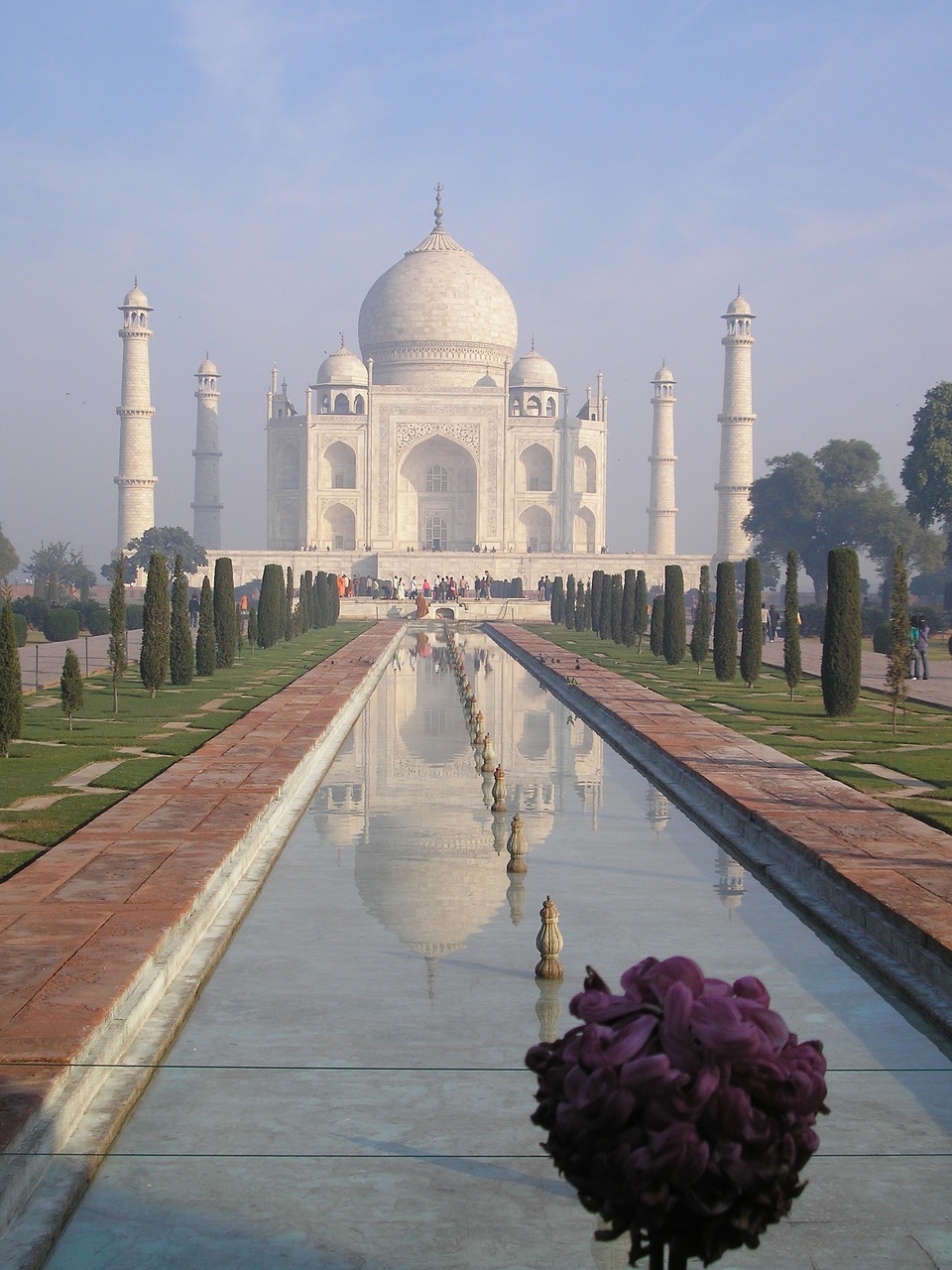
Monty is stronger on the planting of Islamic Gardens and it was a pleasure to hear him draw attention to the British planting of the Taj Mahal Garden  and Humayun’s Tomb Garden. He, or his research assistants, had the good sense to consult local experts. A British viceroy did his disappointing best to convert the Taj Mahal garden to the Gardenesque Style of  Victorian England. ‘George Nathaniel Viscount Curzon was really a very superior person’.

RSPB Lodge Sandy Wildlife Garden

Garden Finder entry for RSBP Lodge Garden


I don’t miss the Lodge Garden of the 1870s – because there is no reason to think its quality was exceptional. Nor do I miss the Lodge Garden of the 1930s, partly for the same reason and partly because the National Trust has made so many ‘improved Arts and Crafts’ gardens.

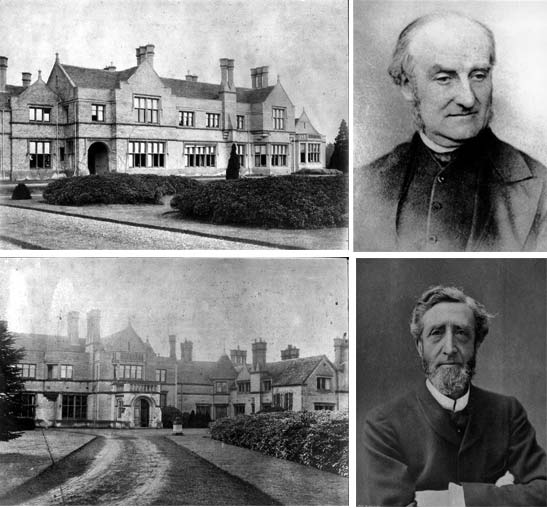
The RSBP Lodge bulding, near Sandy, was designed by Henry Clutton (above) for Arthur Wellesley Peel (below)

Photographers are able to find angles which make the Lodge Garden look National Trusty, which is the right thing to do near the house. But by taking a close look one can see that the RSBP has begun work on something more innovatory and more important. It is using its technical expertise to make a wildlife garden. There is every reason for the RSPB to know more about this and to do it an way that can be an inspiration to both amateur and professional gardeners. My suggestion is for the RSPB to make a garden that is beautiful, as well being habitat-rich. My video was taken in 2009 and I am sorry to criticise such a worthwhile effort. The Lodge Garden looks as though a group of conservation volunteers from a sixth-form college had been invited to have a bash at making a wildlife garden. There should now be a concentration on design quality.

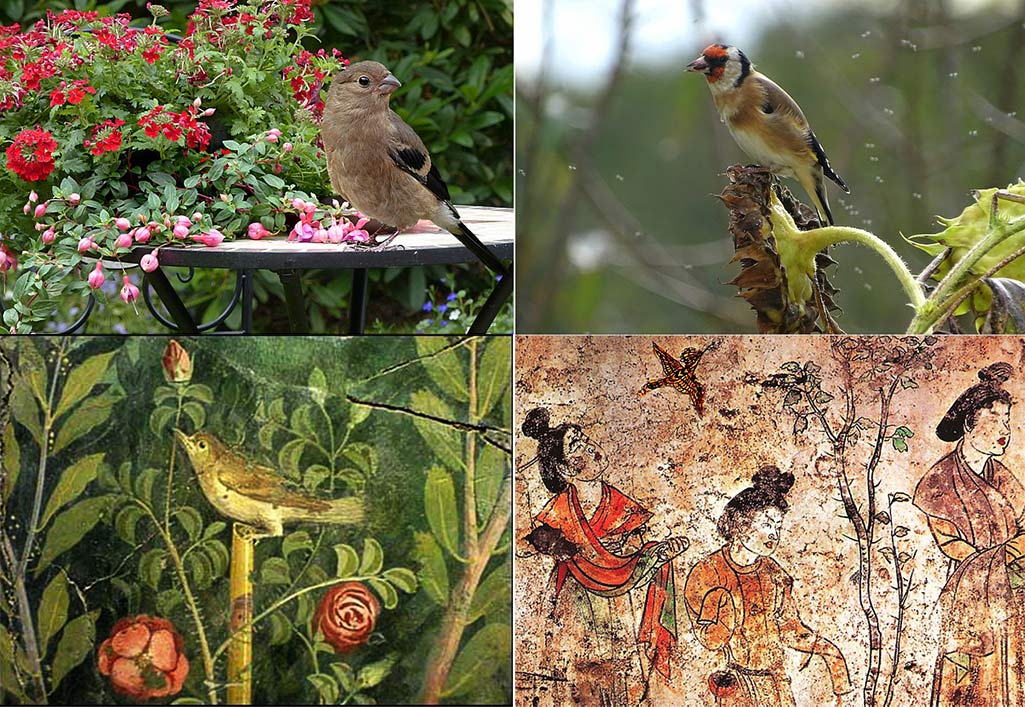
Garden birds have been popular at least since the gardens of ancient China and ancient Rome

London has 13.2% of the UK’s population and the area of private gardens  in London  37,900 hectares. Gardens tend to be larger outside London so land devoted to gardens in the UK could be 300,000 ha. Comparing this with the area of the National Nature Reserves in the UK (94,400 hectares) it is obvious that the RSPB could do a lot for the UK’s bird population by creating a first class example of an Ornithological Garden for the Lodge. Birds were highly valued in ancient Chinese and Roman gardens.

Damien Hirst of Toddington Manor

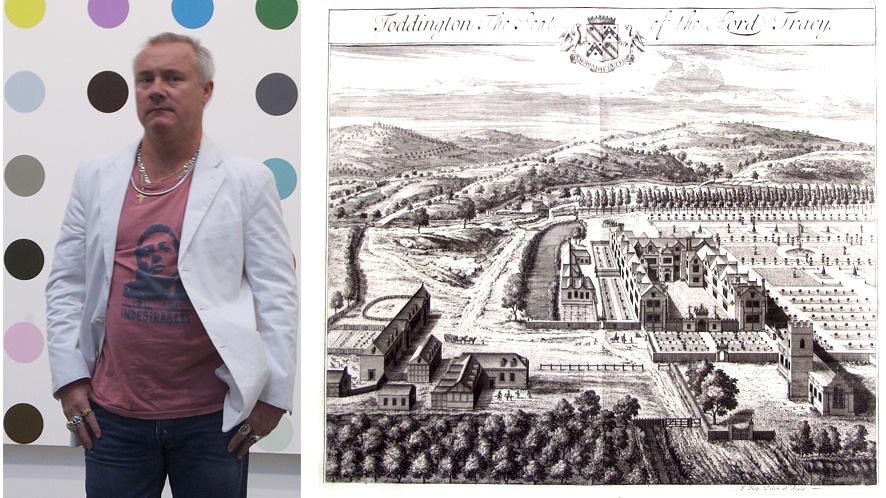
Is Damien Hirst furnishing Toddington Manor with a Young British Artist Garden? Born in 1965, he is now a now Middle Aged British Artist

Damien Hirst is the lord of Toddington Manor. The old manor house was drawn by Kip in the eighteenth century and rebuilt as a gothic revival mansion in the nineteenth century. Hirst uses the manor for his art collection and I hope he is making a YBA garden.