What should be done with the Gadaffi Golden Fist Crushing American Jet Statue from his Tripoli compound?

What should be done with the Gadaffi Golden Fist American Jet Statue

What should be done with the Gadaffi Golden Fist American Jet Sculpture?

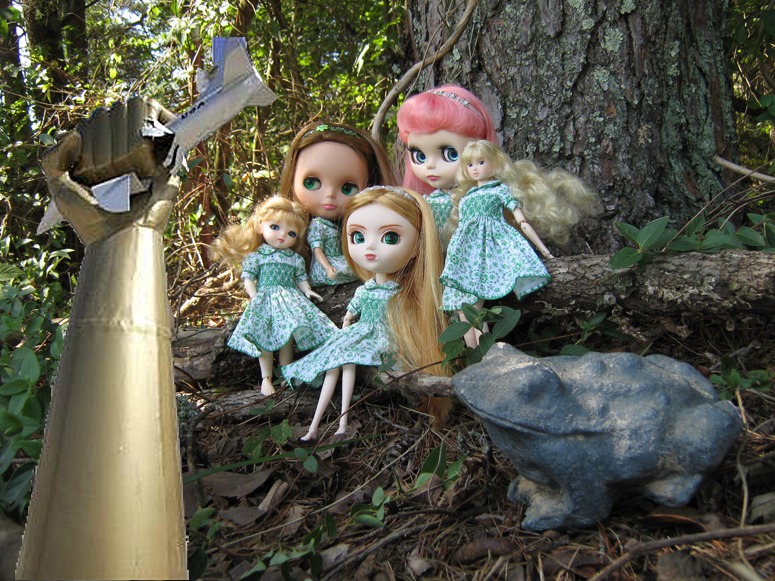
Delighted to see the approaching end of the Gadaffi regime, and having offered an urban landscape idea yesterday, I am wondering how garden designers could help today. One idea is to invite suggestions for what to do with Gadaffi’s respond Golden Fist Crushing American Jet Statue (the Bab al-Azizyah Tripoli compound, where it stands, was stormed a few hous ago). The thinking behind my suggestion is (1) it was a pity that so many statues of Marx and Lenin were destroyed when the Soviet Union fell (2) I like the way London handled a similar problem, by putting a statue of Charles I at one end of Whitehall and a statue of the man who secured the removal of his head (Oliver Cromwell) at the other end of Whitehall (3) history’s monsters should be reviled but not forgotten.
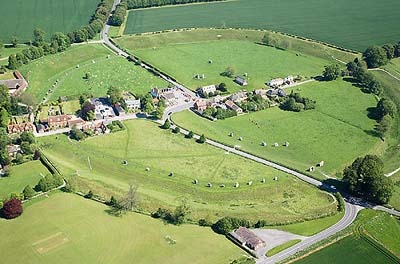
So my suggestion is to place Gadaffi’s Golden Fist American Jet Statue in a garden, to show it is harmless, and to treat it as a rejected toy viewed by frightened children. They would be adult-size plastic scultpures, to symbolise the fact that dictators are plastic-ey overgrown kids. Other ideas welcome.

Garden image courtesy susan402

Make it extraordinary

What makes the setting of a town extraordinary? What makes a development extraordinary? What makes a garden extraordinary?

Is it the subtlety of colour? Is it the unexpected? Strong formal qualities? A sense of fun? Or a location to die for?

Or the delight of the whimsical? Or recognition of the familiar?

Just what is the X-factor that makes a design extraordinary?

Re-naming Green Martyrs' Square in Tripoli

WHAT NEW NAME SHOULD TRIPOLI'S CENTRAL SQUARE HAVE?

WHAT NEW NAME SHOULD TRIPOLI'S CENTRAL SQUARE HAVE?

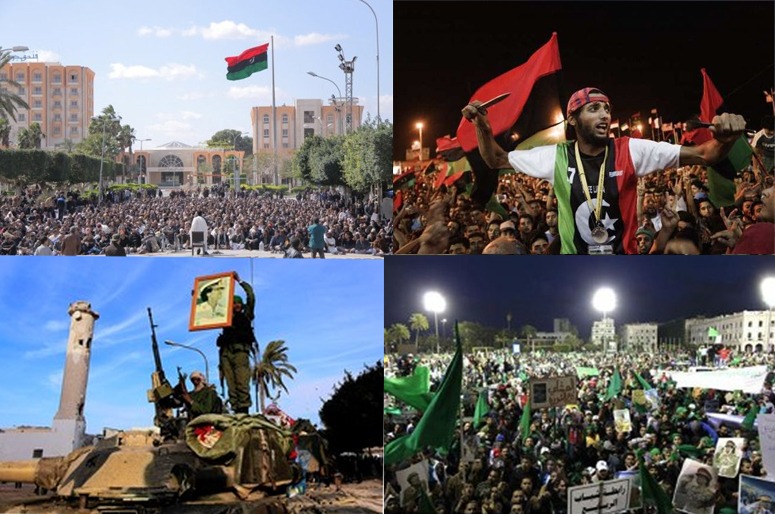
As a ‘green’ who loathes tyrants, few political events give me more pleasure than seeing one of them preparing to bite the dust, as today. But should Tripoli’s ‘Green Square’ be renamed ‘Martyrs’ Square’ as they propose? Some of the considerations are:

  • It received its present name because ‘green is the colour of Islam’
  • But ‘green’ is now closely associated with ‘green politics’
  • A ‘Martyr’ was originally a witness
  • But the word was taken over by Christianity to mean someone dies for their religion
  • These days one can be a martyr to pretty much anything

So my suggestion is to call it the Green Martyrs’ Square and associate it with (1) the coming together of two Abrahamic faiths: Islam and Christianity, which effected the revolution (2) the political aspect of the green movement (eg wide community involvement in decision making) (3) Libya’s future as a generator of green energy from solar power, when the oil runs out. The present Green Square has been used by both the parties which are struggling for power in Libya today; debate is esssential and it is better done by ‘jaw jaw’ than ‘war war’; there is a need for governmental cities, national and local, to have urban squares dedicated to public debate. See previous discussion of Parliament Square and Tiananmen Square. Debates are sometimes uncomfortable but a society without debate is on one, or more, of the roads to ruin.

Parks managers, parks police and polite gardeners

Expert gardeners should maintain good order among plants and people in public parks and gardens

Expert gardeners should maintain good order among plants and people in public parks and gardens

I had a chat with a gardener in one of London’s Royal Parks this week and he was a nice a man as you could meet anywhere. He loved his work and he loved the visitors who admire his work. Talking about a park user who seemed troubled, and who he tried to look after, he remarked that ‘One thing I know for sure is that whatever you do in this world – you get it back tenfold’. His idea was that she must have treated some people badly and now she was experiencing the consequences. Anyway, he was such a nice man that it made me wonder about the park administrator vixen who shouted at Tian Yuan with the help of a portable PA system. I think it is wrong to have separate administrations for gardening staff and policing staff. Instead, they should give the gardeners more training and more money and more responsibility – and smartphones. If they have serious trouble they should film what is happening and call on support from the real police. The video could be recorded in the police station in real time. The advantages would be (1) the public tend to love and respect good gardeners who make beautiful places (2) there would be less expenditure on parks police – and less aggro to park visitors.

Careers and jobs for landscape architects in an expanding profession

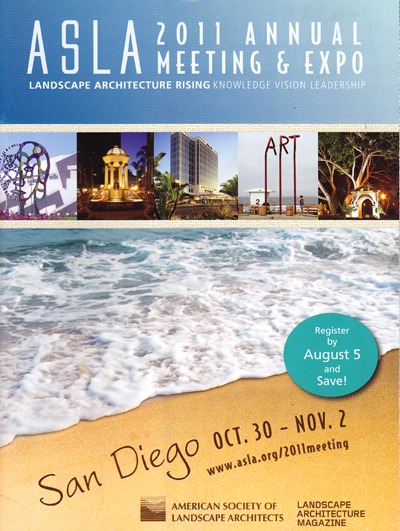
Brochure for the American Soceity of Landscape Architects ASLA 2011 Annual Meeting and Expo

Jonathan Mueller, as President of the American Society of Landscape Architects in 2011, writes that ‘As a profession, we are entring a time of unparalleled opportunity. One of great promise. One where the fruits of our collective efforts have begun to be realized. In July 2009, Engineering News-Record ran a cover article titled “Landscape Architecture Rising,” citing the ascent of landscape architects to the forefront of major engineering projects. Speaking at the Congress for the New Urbanism meeting last year, architect Andres Duany declared, “Its not cool to be an architect. Its cool to be a landscape architect. That’s the next cool thing.” The Architect’s Newspaper featured a cover story in March about the surge in major commissions goint to landscape architects, stating, “Traditionally, the architect was the master builder with landscape designers as mere ancilleries. Today that relationship is fast being reversed.”‘
They used to say that ‘When America sneezes, Britain catches a cold’ and I would like the UK to join the US on this path. It should be a great time to embark on a career in landscape architecture. I remember reading, in a British journal in the 1970s, that ‘50% of job advertisements for landscape architects fail to attract any applicants’. Given the immensity of the opportunities facing the landscape architecture profession in almost every country, the employment prospects for landscape architects may well return to this level – worldwide. However: the landscape architecture profession needs to do a great deal more to explain itself and to promote itself. The Summer 2011 issue of the LI Journal, Landscape, suggests that one of Britain’s best-known architects is helping with his remark that the day of the architect is over and ‘the day of the landscape architect is today’. Stansfield Smith would have been nearer the mark if had said that the green cities imperative makes it necessary for architects and landscape architects to work ‘hand in glove’.