Can we trust The National Trust?

When planning a visit to gardens managed by the National Trust, one checks opening times, days/months, and in my case whether dogs are allowed. Lately, though, I have realised there are more things to confirm before a sometimes vast journey is met by disappointment.


A large part of the experience of a garden/landscape is visual, so are we missing out if we cannot take good photographic images or view ‘scenes’ we expected to due to the mismanagement of landscapes?


My displeasure with The NT was prompted by recent visits to two iconic landscapes, and their less than satisfactory responses after I contacted them with my concerns. It would seem the NT has lost its focus and is swamped by policy documents etc and cant concentrate on little maintenance operations. I think this might be because it has become a huge organisation and is too preoccupied with creating strategies for the future and not concentrating on keeping present ‘customers’ happy. It is managing visitors’ experiences now and encouraging repeat visits which will keep these landscapes alive, without visitors there is little point in future management strategies. Customer satisfaction must be the priority and customer satisfaction is, admittedly, a complicated issue but it must rest on the unique experiential qualities of each individual landscape.


The two landscapes I will comment on are Studley Royal and Claremont. At both of these I encountered the same problem of obscured viewpoints. Both of these landscapes contain topographical high points that were utilised as positions from which to overlook the landscape below/beyond. Currently many of these viewpoints are obscured by undergrowth, and in some cases large trees. Most disappointingly is at Claremont where there is a viewpoint indicated on the map shown on the leaflet (more on this leaflet later!) and when one climbs up to where there should be the best view over these iconic grass terraces (the view shown in all images of this landscape) we see only large shrubs and trees in our way. NT do plan to clear it in the future, but apparently it is not a priority because ’not many people use this path’.


As for the leaflet; I was not impressed by the leaflet given to me upon entrance because of the amateur looking drawings of insects and creatures on it. Upon further investigation I became quite disheartened by its contents. The bias towards environmental concerns in this landscape was beyond logic. I thought I had come to a landscape famous for having a number of England’s most famous historical Landscape Architects/Garden Designers work on it, not to a landscape legendary for being where dragonflies flourish. I have nothing against environmental issues and in fact believe quite obviously that the designed landscape and the natural landscape should exist in unison. But let’s get our priorities right here, what is most important about this landscape, what is it special characteristic? If these dragonflies can only be found in this landscape, then fair enough they do deserve a mention, but this leaflet contained one small section on the designers (each of whom have had volumes and volumes of words published about them) and the rest of the leaflet was about bugs and insects etc.


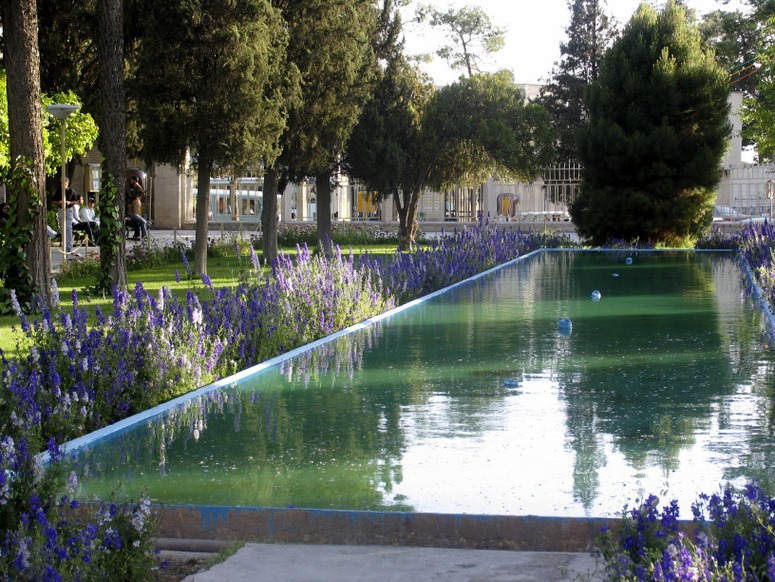
At Studley Royal (which incidentally is a World Heritage Site) I looked forward to seeing the famous Moon Ponds. The photo below shows what I found. When I asked what the NT are doing about green algae I got a very informative response explaining the difficulties in maintaining these pools as they were not designed that well. I sympathised with this and was interested to read further that there is a future £1m redevelopment proposed that ought to alleviate ‘some’ of the green algae problem. I really cannot help thinking that for much less expense than that, why cant they simply scoop out the algae on a regular basis, starting immediately.


Green clouds?

Green clouds or turf?


By contrast, the adjacent river shows the reflections my photos should have captured had the Moon Ponds been clear of algae.


White Clouds

White Clouds


 The NT are custodians of our heritage. There is always a huge bias towards architectural heritage opposed to landscape heritage anyway, this can possibly be excused. But can the mismanagement of important landscapes ensure their survival into the future? Of course I understand that on the whole and as an organisation the NT do a magnificent job as protectors and advocates, in the big picture, but are they loosing focus on the micro scale? Are these small issues only noticeable to garden historians and not the regular punter, am I being fussy? Either way, I will not be recommending anyone visit a NT trust landscape to see some specific scene unless the NT can assure that that scene is actually available for viewing. 


Stonehenge theories revisited


Stonehenge Sunrise June 22nd 2009

Stonehenge Sunrise June 22nd 2009

The paperback version of Rosemary Hill’s Stonehenge has just come out. In this witty and erudite volume she unpicks the various theories of the purpose of the stones and shows how they “say more about the theorists and their time than the place itself”. http://www.amazon.co.uk/gp/product/1861978804/ref=sib_rdr_dp

Like Pevsner and among many others I have shared Tom’s disappointment in visiting Stonehenge in the middle of the day with a thousand other tourists, and have done the same visit only once since we were no longer allowed to have picnics on the sacrificial stone.  And no one can tell me that it is not indeed a sacrificial stone, since my own time and place meant I was brought up with the romantic view of Stonehenge as described by Clive King’s immortal ‘Stig of the Dump’. In it the time-misplaced caveman Stig who lives in a chalk pit, leads our adventurous hero out of his long summer holidays and back in time to witness Stonehenge one Midsummer’s Eve. The sense of time and timelessness of the stones are ingrained via the experience of childhood.

It is in the moonlight or early morning that the stones look at their most magical, or in the drama of a storm as portrayed by Turner. One must go out of hours. The only way to visit Stonehenge in my view is then to keep your romantic beliefs, and in the current layout to keep your distance. One must see it without the crowds; the coaches and concessions; barbed wire and information panels – (the latter soon to be redone by English Heritage’s ‘intellectual access scheme’ which apparently involves rewriting all information so that it can be understood by someone with the reading age of ten.)

One of the best views of the Stones and the settings is from the footpaths behind Countess Farm, on the Amesbury roundabout. Walking up behind the Kings Barrows and looking out along the Avenue you get the sense of scale and grandeur which makes the whole plain feel like a cathedral nave with the stone circle as the trancept. One of the fairly recent proposals was to have the visitor centre at Countess Farm, with pedestrian access to the stones from there. This would be a brilliant way of regaining the atmosphere of the place, with the half mile walk allowing the time and space to feel the sense of place. The cars and coaches would be out of the view too. We would then just need to get rid of the barbed wire.

At the poet and philosopher John Michell’s memorial service last month was read this poem:

How Lord Montagu Gave Stonehenge to the Freemasons

By John Michell, Midsummer 1988

WHEN philanthropic Mr Chubb gave Stonehenge to the Nation

(He’d bought it just before he made this generous donation)

He laid down two conditions: public access as of right

And nothing to be built nearby to mar the sacred site.


The answer to these clauses form the government Trustees

Was ‘Bother Mr Chubb, we’ll do exactly as we please.

A few more buildings round Stonehenge aren’t really going to spoil it,

Beginning with a carpark and a gents’ and ladies’ toilet.


The Commissioners of Works who were the first administrators

Were succeeded by another bureaucratic apparatus

Entitled ‘English Heritage’, and what these people do

Is bugger up historic sites; their head’s Lord Montagu.


They made a fence of steel and wire which everyone bemoans

And dug a concrete tunnel from the carpark to the stones.

No one is permitted now to walk inside the ring

You’re kept behind some ropes so you can hardly see a thing.


There used to be a festival to greet the summer sun

And people would assemble there as they had always done.

In 1985 we saw the end of that tradition

Lord Montagu decided on its total abolition.


But ever since he ordered that the festival should cease

Stonehenge has been surrounded by an army of police,

And if you try to join them they get terribly excited

And tell you that it’s private and you haven’t been invited.


Now, I’m not the sort of person who’ll impetuously hasten

To spread the word that every single policeman’s a Freemason,

But many of them are you know, and here’s the subtle dodge;

Stonehenge has now been proved to be an old Masonic Lodge.


The person who revealed this – and he certainly should know-

Is Mr Russell Herner of the Grand Lodge, Ohio.

His book about Stonehenge says it was built for all eternity

To house the Master Mason and the rest of his fraternity.


So when upon the longest day, St John the Baptist’s Feast,

You see a group around Stonehenge who gaze towards the East,

They’re not just simple coppers spoiling other people’s fun,

They’re members of the brotherhood out worshipping the sun.

Perhaps there was a senior officer at the memorial, for we learn this week that all pagan police officers are to be given time off to celebrate the Summer Solstice. And all witches in the force are to be given Halloween for religious parity. Who will police the solstice then?


Please do not visit Sissinghurst Castle Garden

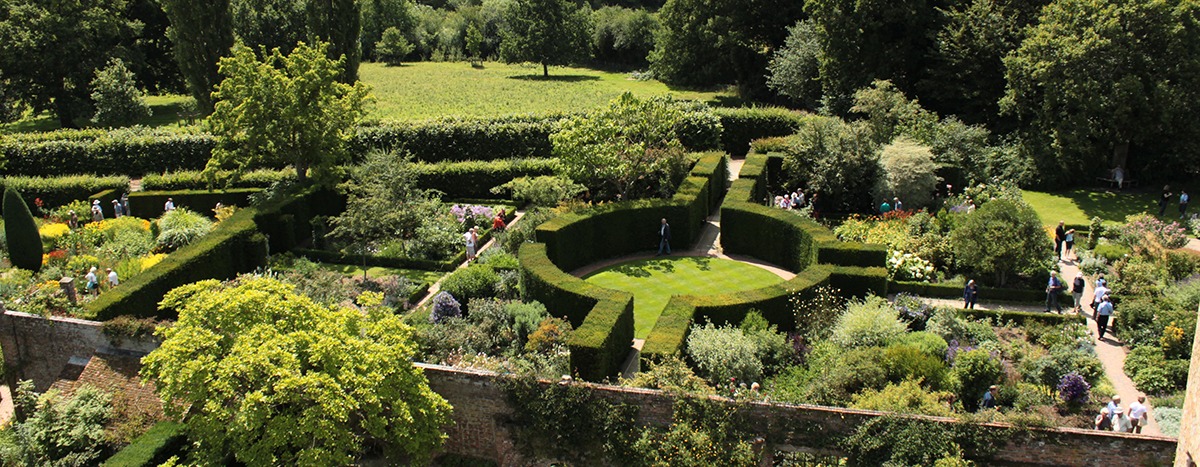
The Sissinghurst White Garden (right)

The Sissinghurst White Garden (right)

In the interests of conservation, please do not visit Sissinghurst Castle Garden. Unless of course,  you are a garden designer, owner-designer or historian:  in which case you have no alternative and should see our page on Sissinghurst garden visits.
Sissinghurst Garden should never have been marketed as a destination for coach parties, not even for the good ladies of the Gateshead Woman’s Rural Institute. I reached this elitist conclusion in the course of a visit to Sissinghurst Garden on 10th July 2009. At 10.55 am there was a traffic jam in Sissinghurst Village and it then took 15 minutes to negotiate the single-track road from the ‘turn-off’ (double entendre intended) to the Alton Towers-ish car parks. Luckily, an electric float was available for transfers to the Sissinghurst Ticket Office. We had to join a long queue for timed tickets to enter the garden and were given a ticket with a 30 minute wait for the 12 noon entry. Then we spent 20 of those 30 minutes queuing for coffee. There was no timed ticket system for the toilets but it was necessary to queue again, even for the urinals. It was not quite like visiting Bluewater Shopping Centre on the last Saturday before Christmas, but there were similarities.
Inside at last, poor old Sissinghurst Garden looked over-crowded and rather tired. The main show of white in the famous White Garden was sweaty T-shirts and some tasteless muts were dressed in reds, yellows, blues and other colours too. I asked an employee if it was often as busy as this. She said we were lucky to be here on a quiet day.
Remembering Adam Nicholson’s plea for Sissinghurst, to change and to become the World Lesbian Capital.  I remarked to my wife that if she encountered any hot lesbian action in the undergrowth, my blog would benefit from a few good nipple shots. Escaping from the crush, we went to see Adam Nicholson’s new vegetable garden. It is no re-creation of Young Adam’s boyhood rural idyll, or his teenage fantasies. It is a high-tech production facility for the restaurant. We ‘invested’ in 2 coffees and 2 slices of cake, paying £10.80 for them and remembering the bargain eats we have so often enjoyed in motorway service stations.
It all makes me wonder if Sissinghurst should become a Theme Park, managed, like Warwick Castle, by Madame Tussaud’s. Phases 11 and 12 of the Sissinghurst International Development Programme (SIDP) are going to involve cows and pigs. Why not have tended by yokels in smocks with pretty milkmaids in Tess of the d’Urbervilles outfits? Just think of the merchandising opportunities. Later phases of the SIDP are expected to include:
13. The Sissinghurst Blue Garden (over-18s only)
14. The Sissinghurst Trump Hotel
15. The Sissinghurst Resort Spa and Conference Centre
16. The Sissinghurst Golf Course
17. The Sissinghurst International Airport
18. Sissinghurst Eurostar Station
19. The M2-Sissinghurst Link Road
20. The Sissinghurst range of Gay and Lesbian Sex Toys

Lancelot Brown and Blenheim Palace Garden

by Tom Turner @ 5:47 am July 6, 2009 -- Filed under: garden history,Garden travel and tours   

100_7911I have sometimes heard myself remark that if ‘Capability’ Brown undertook a modern landscape architecture course he would be lucky to get a mark of 50%. But a few of his projects are excellent and none is more puzzling than Blenheim Palace Garden. I have been to photograph Blenheim many times and had another ‘shot’ at it last week. As usual, when I got home and looked at the pictures they are pretty flat and pretty disappointing. But after struggling with the Oxford area traffic and driving through the tightly picturesque village of Woodstock, and walking through what must have been the trade entrance, an amazing vision of the palace, the lake, the landform, the woods and the bridge opens before you. It is beautifully composed, full of awe and vast in scale. But you need a really wide angle lens to capture the scene, and I think this is why the photographs tend to be disappointing. I therefore offer you a photograph of the bridge only. It was taken from the lake edge with an angle of view approximately equal to the human eye (47 degrees on a 35mm camera) and I think it captures the scale of Blenheim much better than a wide angle lens would have done.

A view of Blenheim Palace from the bridge

A view of Blenheim Palace from the bridge

Surrey Garden Tours

by sarah @ 11:18 am June 24, 2009 -- Filed under: Garden travel and tours,Garden Visiting    Tags: , , ,


Summerhouse at Millmead, designed by Lutyens

Summerhouse at Millmead, designed by Lutyens


Once upon a glorious sunny day (actually last Tuesday), I braved a rather gruesome M25 to join Joy and Jane in the Surrey Hills Area of Outstanding Natural Beauty for one day of their garden tour visiting rarely accessible gardens designed by Gertrude Jekyll.

We were shown round each garden by the gardener, starting with Jekyll’s own garden at Munstead Wood. She began creating the garden in 1883 and commissioned her friend Edwin Lutyens to design the house.  There is something very casual and comfortable about the garden and it is easy to feel very at home there. The triangular Summer Garden, also called the Three Corner Garden, was densely populated with blooming foxgloves, iris, lupins and dhalias. Both Munstead Wood itself and adjoining The Quadrangle (Jekyll’s experimental garden) are adorned with elegant Munstead White foxgloves, with beautiful green mottling and slightly shiny leaves.

At the restored Quadrangle you can see an experiment that Jekyll never got round to herself.  She suggested that a lovely border could be created backed with redcurrant and Guelder Rose (Viburnum opulus) – and now it has been. David Austin Roses introduced a rather lovely crimson rose in 2007 called Munstead Wood and I had the opportunity to admire some fine specimens.

Later, we visted another Jekyll and Lutyens collaboration – Millmead. It is a dignified terraced town garden with a charming summer house, that has been recreated in the Jekyll style garden at Godalming Museum.

Guests stay in either Heath House (Joy’s B&B) or Nurscombe (Jane’s B&B) which I can only imagine is a very great pleasure. I popped into Nurscombe for a quick look round and had lunch at Heath House. Joy is a fine cook and even made an ice bowl embedded with flower petals to serve dessert.  I have every intention of having a go at making one myself.

I would strongly recommend booking yourself a place on the next tour (dates are 7th-10th September 2009) – see Surrey Garden Tours for more information.

Garden Hotel or Garden B&B?

by Tom Turner @ 7:03 pm June 20, 2009 -- Filed under: Asian gardens and landscapes,Garden travel and tours,Garden Visiting   


An India-inspired pavilion in the garden of the Corner House B7B in Maiden Bradley

An India-inspired pavilion in the garden of the Corner House B&B in Maiden Bradley

The latest  Gardenvisit.com Newsletter recommends holidays at home for this year of recession – and with the best summer weather for several years (so far!) the idea is working well in the UK.

I too have been visiting a lot of English gardens this summer – and looking for places to stay. My preference, always, is for accommodation with interesting gardens. Grand garden hotels, like Cliveden and Ston Easton, are luxuriously OK but not in keeping with the recession theme, or my arrive-late-leave-early habits – or my budget.

So what about B&B accommodation? I had some intersting experiences ten years ago, with greasy food, greasy carpets and odd landladies. But the property development boom of the last decade has produced some very comfortable places run by charming people with an interest in garden design. For example, I have stayed recently in Millgate House and, last week, in the Corner House in Maiden Bradley where I was very interested in the Indian garden. Most people’s idea of an Indian garden, especially in India, is an Islamic garden. But the Hindus and Buddhists had a far older and far more Indian approach to garden design – which involved roofed pavilions, garden shrines and pools.

Please email us if you run or can recommend, good accommodation with  interesting gardens, and we will put together a list.

World Garden Finder Facts

by Tom Turner @ 5:50 am April 4, 2009 -- Filed under: Garden Design,garden history,Garden travel and tours,Garden Visiting   

In March 2009 the Gardenvisit.com World Garden Finder:

  • was ten years old
  • contained 2,486 gardens in 61 countries
  • had aerial photographs and maps showing the location of every garden
  • included 3,500 images
  • included a variety of User Generated Comment: images, reviews, ratings and Head Gardener’s Comment

But we want to make it better!  Please help us – with reviews, ratings, photographs and descriptions.

The original idea for the garden finder was to provide links to gardens from my online book English garden design: history, philosophy and styles since 1650. [This book also appeared in print, in 1986 and is due to be revised and re-published]. Since 1998 we have published over 25 online books and there is an interesting job to be done in linking them to and from the garden finder descriptions.

Sissinghurst garden farm news

by Tom Turner @ 8:16 pm March 17, 2009 -- Filed under: Garden Design,Garden travel and tours,Historic garden restoration,national trust gardens   

As guessed, the rumpus was a publicity stunt exercise in TV dramatics. The BBC and the National Trust knew when they were planning the TV series on Sissinghurst that  Adam Nicholson and Sarah Raven’s ideas were going to be accepted.  So in Episode 8 of the longest-running docudrama in the first 5,000 years of garden history, we saw some of the farm land being used to grow vegetables and Sly Steve in the kitchen admitting that Sarah’s Moroccan Lamb had been popular with the guests. http://www.bbc.co.uk/iplayer/episode/b00jclx2/Sissinghurst_Episode_8/ Adam shoehorned in a final attempt to make Sissinghurst into the World’s Lesbian Capital or, at least, the World’s Sexiest Garden (with the line “Harold Nicholson loved Morocco more than any place on earth. He often had an affair there”). Adam Nicholson also remarked that “Writing is the family business. Butchers chop up pigs. We write books.” Nicely put, but was he laying a foundation for a new family business: TV? Watch this space.

PS Why does the National Trust want publicity for Sissinghurst? To attract more visitors and to have more money to spend. But to conserve the garden’s character it needs less publicity and fewer visitors.

Re-creation of the world’s oldest garden design in Egypt

The plan is Sennufer's Garden is the most famous illustration of an Egyptian garden, and the oldest accurate plan of a garden

The plan of Sennufer's Garden is the most famous illustration of an Egyptian garden, and the world's oldest accurate plan of a garden

I heard a rumor that  Sennufer’s Garden is to be re-created. This is a project I have dreamed of  (see note at foot of page on The Domain of Amun) and I believe it is the best tourism investment Egypt could make.

- the project will attract worldwide publicity
– the re-created garden will remind the world that Egypt may well be the country in which the world’s first pleasure garden was made (see blog post Where is the world’s oldest garden?)
– garden visiting is an extremely popular tourist activity, with the Alhambra said to be the most visited garden in Europe
– a new tourist attraction on the East bank in Luxor will take some of the pressure off the ancient monuments on the West bank of the Nile
– a re-created historic garden will fit well with the ambience of the resort hotels being developed on the East bank
I do not know if it has been arranged but the re-created garden is the type of project which could easily attract funding from a hotel chain, an Arab billionaire or from the Aga Khan Historic Cities Support Programme (HCSP) . Since the garden structures would be of mud brick, the cost would not be exorbitant.

The new Sennufer’s garden will  be an invaluable contribution to the world’s cultural heritage. If he has a hand in the project, congratulations to Dr. Zahi Hawass (Secretary General, The Supreme Council of Antiquities). A re-creation of the world’s oldest garden would be a wonderful event.

Other Egyptian garden plans survive but Sennufer’s Garden Plan is by far the most sophisticated and in some respects astonishingly modern. See Marie-Luise Gothein’s explanation of the plan of Sennefer’s garden.

[See also: Previous post on Asian gardens and landscapes]

Sissinghurst Garden Design and Management


Photogaph Philippe Leroyer

Photogaph Philippe Leroyer

BBC4 is showing a series of programmes about Sissinghurst Castle Garden. Here is a link to the first episode on the iPlayer – the link will not be active for long and there is a link to a BBC Sissinghurst webpage.  Adam Nicholson and Sarah Raven live in the family house, because Adam is Vita’s grandson, but Adam’s father (Nigel Nicholson) gave the property to the National Trust. The programme presents Adam and Sarah as enlightened visionaries able to understand the past and present. But the National Trust staff are presented as obstinate blockheads able to say little more than ‘This is the way we do it because this is the way we have always done it and this it the way we will continue to do it’.  Since the series runs to 8 episodes one can’t help wondering it the editing has been done for dramatic effect. Unless the National Trust  Blockheads are going to be seduced by sweet reason, the series is going to end up portraying the Trust as a disorganised rabble which leaves decisions to junior staff.

Sissinghurst gives me the impression of being too commercial and of having too many visitors. It this is what the National Trust wants, they should avoid the cowpats Adam wants to bring back as an aspect of traditional farming. The BBC slipped in the titbit that Vita had over 50 lesbian lovers and the Independent (28.2.09) refers to ‘the site’s fascination for today’s educated lesbians’. Adam predicts that ‘By Easter, there will be rivers of lesbians coming through the gates’.  It would be useful to know whether the return of traditional farming practices (‘cowpats’) would attract or repel the lesbians, and where Adam stands on the lesbian issue.  I look forward to Sissinghurst holding its first Gay Pride day. As they say, ‘history repeats itself as farce’.

« Older PostsNewer Posts »