
Europe is still frozen but we should not complain – and perhaps our predecessors did not mind the cold either. This brilliant painting of a medieval garden yard is from Les Très Riches Heures du Duc de Berry. The painting is dated to c1410 – so we can celebrate its 600th annniversary. The wattle fencing is exquisite. The sheep are better protected than on a modern farm. The beehives are in good order and produced a more nutritious sweetner than our refined and dangerous sugars. Mum is modest but the young girl and boy are exposing their genitals to the warmth of a fire. It reminds me of a lecture from the president of the students union in my first week at university. He solemnly informed his audience that if, before intercourse, a man spent an hour with his testicles between two lightbulbs it would reduce the risk of an unwanted pregnancy. I never put the theory to the test.
The sublime – in garden and landscape design
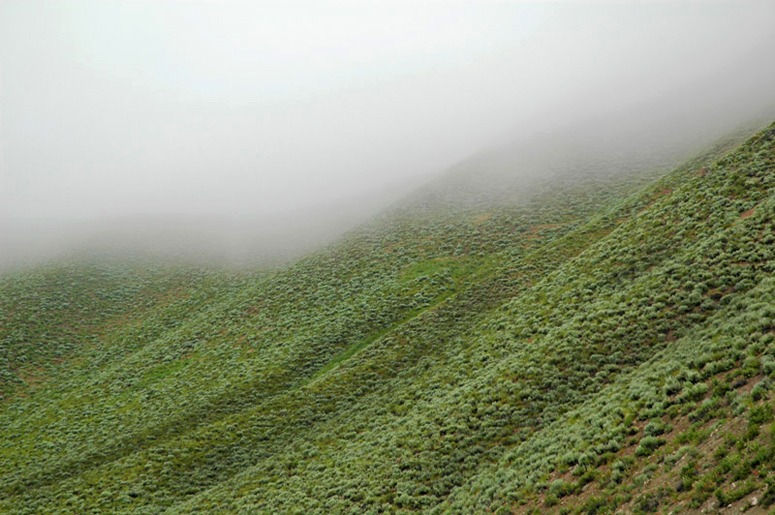
The sublime is a neglected quality in garden and landscape design. Edmund Burke associated the sublime with terror, astonishment, admiration, wonder, and respect ” hardly any thing can strike the mind with its greatness, which does not make some sort of approach towards infinity; which nothing can do whilst we are able to perceive its bounds; but to see an object distinctly, and to perceive its bounds, is one and the same thing. A clear idea is therefore another name for a little idea.” In today’s terms, the view is also beautiful.
I have visited many designed landscapes and gardens without seeing anything as sublime as this photograph – of fog and sagebush in the Rocky Mountains.
Image courtesty Josh
Liveability: understanding quality of life

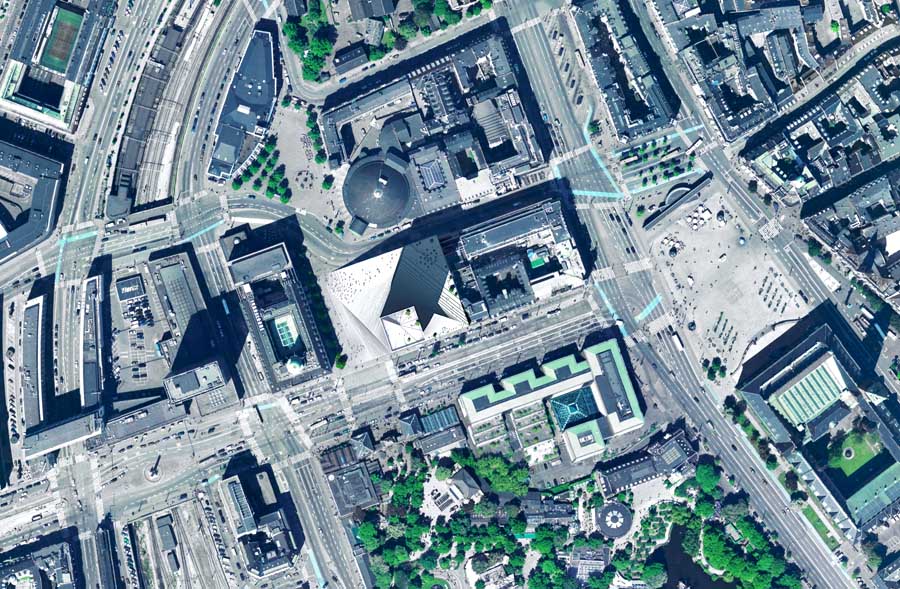
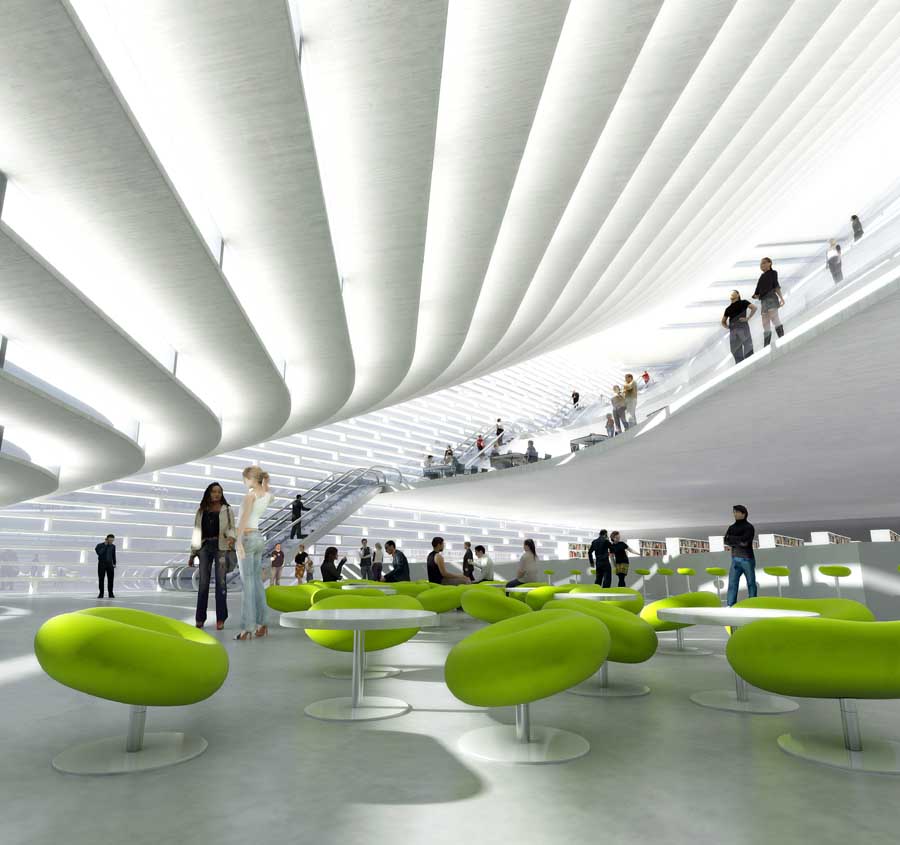
The Danish architects BIG (the Bjarke Ingels Group) have designed an extraordinary hybrid tower Scala Tower to house the municipal library, conference centre, shopping and a luxury hotel. It also provides public space to the city of Copenhagen.
Although it seems not quite fully resolved as to the programmatic and landscape elements, the way the building emerges from the ground ‘like a tree’ with a glassy bark trunk and yet sits well within the traditional urban fabric like a sinuous counterpoint is truly inspirational.
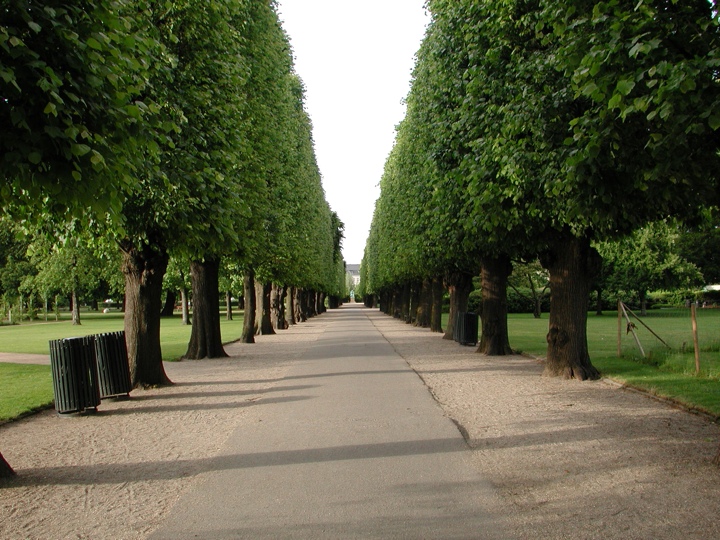
With a population of just over a million people and the famous Tivoli Garden, Kongen’s Have in the city centre and the Fredericksborg Slot Baroque gardens in Hillerod the Danes have the benefit of aesthetics, cultural and recreational opportunities aplenty.
So apart from contributing to Denmark’s already stellar reputation for being on the forefront of design how does Scala Tower contribute to the quality of life in Copenhagen? Political measures of quality of life in liveability terms are both objective [divorce rates, safety and infrastructure] and subjective [life satisfaction surveys]. So, the Danes have gained a great piece of civic infrastructure in a city which is already considered relatively crime free. I wonder whether that will show up on the next life satisfaction survey!
Urban design, GDP/capita and the theory of good city form

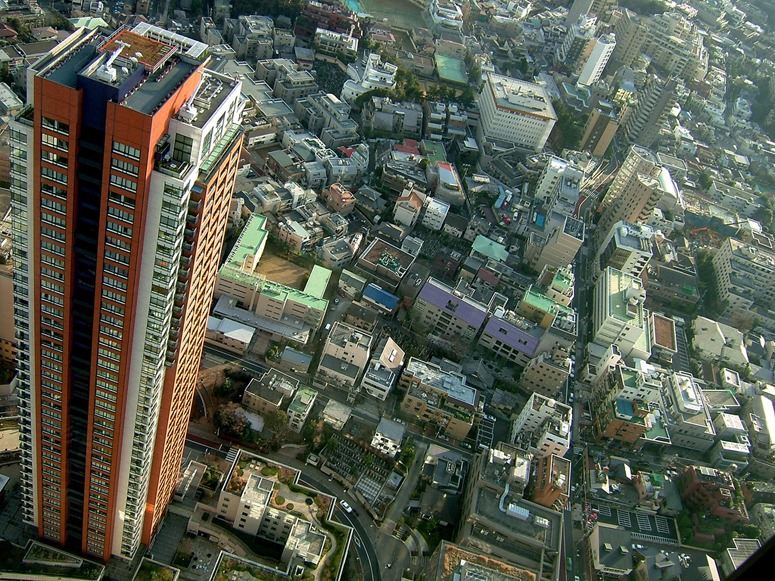
This is the world's richest city. Do you want to live here? Where is it? Does it look really American?
Kevin Lynch wrote a book on the Theory of Good City Form (MIT Press, 1981). His criteria were vitality, sense, fit, access, control, efficiency and justice. None of the criteria are readily measurable and Kevin Lynch did not identify which cities best satisfy them. One imagines he would have given Boston a good position in the ranking of North American cities. Lynch does not mention sustainability – and doesn’t everyone want more money? And so shouldn’t GDP/head be on Lynch’s list? After all, its more measureable and one can even find a ranking of cities by per capita GDP on Wikipedia. It goes like this: Tokyo $1479/head, New York City $1406/head, Los Angeles $792/head, Chicago $574/head, London $565/head, Paris $564/head, Osaka $417/head, Mexico City $390/head, Philadelphia $388/head, São Paulo $388/head. I am surprised that the city at the top of the list is four times as productive as the city in tenth position. Boston is not in the top ten and nor are Edinburgh, Rome, Kyoto, Isfahan, Munich, Hangzhou or many of the other places admired by urban designers. Are we barking up the wrong trees? Or are there no connections between the quality of the urban landscape, the desirablilty of a city as a place to live and the economic productivity of the settlement? And what has size got to do with it? Peter Hall argues that the best size for a city is about 1 million people. The top ten list of cities by GDP suggests to me that bigger cities tend to be more productive. Here are the top ten cities by size: Tokyo, Seoul, Mexico City, Delhi, Mumbai, New York City, São Paulo, Manila, Los Angeles, Shanghai.
(Above photograph of Tokyo, courtesy riverseal)
Marking the prime meridian of the world in Greenwich
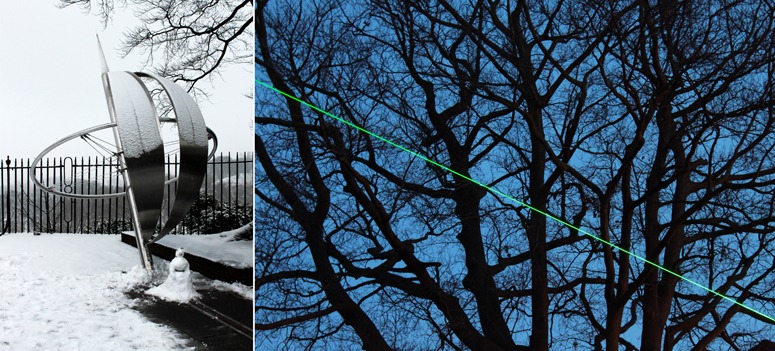
There was a time when the meridian line was neglected in Greenwich Park. This changed for the 2000 millennium celebrations and snow brings out the best in the markers. The green laser beam glistens when it snows and the sculptor who represented Queen Victoria (I assume) as a snow queen deserves a prize. I like low impact and temporary public art.
“My name is Ozymandium, queen of queens:
Look on my works, ye Mighty, and despair!”
The most popular, permanent, meridian marker is 2.5 meters below the above pics. People like to be photographed with one foot in the eastern hemisphere and one foot in the western hemisphere – but it is a terrible place for taking photographs: narrow, north-facing and ugly. I’d like to see a design for a Photographer’s Balcony so that people could photograph one another gazing, with the green laser, towards the North Pole. The Chinese are very keen on photographing each other in memorable locations and a really well designed facility would probably double the number of Chinese tourists visiting the UK, if not Europe.
Nothing but blue skies…
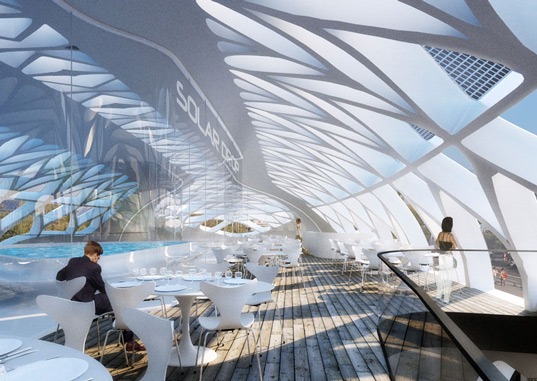
Vincent Callebaut has designed what he calls an ‘anti-smog parasite project’ for the city of Paris. He says “its role is to apply all the avant garde renewable energies so as to fight against the Parisian smog.”
Beyond its heroic environmental application Callebaut demonstrates some interesting architectural ideas some reminscent of Foster’s Gherkin gone green! He also has a sensitive feel for creating interior space with structure….an effect present in the Gherkin, but enhanced to considerable affect in this project.
Undoubtably he was a fan of meccano as a child!