Category Archives: Urban Design

Bauhaus Design Principles


Why did the Bauhuas succeed in Weimar and Dessau, while the New Bauhaus,  founded in Chicago in 1937 (which became Illinois Institute of Design) did not succeed? Laszlo Moholy-Nagy founded the New Bauhaus. A painter, photographer, filmmaker and teacher, he saw the artist as a visionary and said: “We need Utopians of genius to foreshadow the existence of the man of the future, who, in the instinctive and simple, as well as in the complicated relationships of his life, will work in harmony with the basic laws of his being.” [http://nmaa-ryder.si.edu/collections/exhibits/abstraction/moholyNagy.html] In his book Vision in Motion Moholy wrote that ‘art’ is the result of an inner drive. However, he qualified the usefulness of this inner drive by saying “only by translating an intuitive grasp of the unadulterated problems of his time into imagery, can a coherent expression be ‘best’.” 

Although the curriculum at the New Bauhaus was reputed to be the same as the basic or founding course developed by Walter Gropius for the Bauhaus in Germany, the Bauhaus in Chicago never reached the same heights of design innovation. The Chicago Bauhaus is recognised today for advancing the art of photography. In terms of design, the School is credited with changing the stylistic direction, resulting in a reduction in the then dominant ‘Beaux Arts’ tradition in America.  [http://www.bauhaus.de/english/bauhaus1919/nachfolge1919.htm]

Modernism, in one sense,  became America’s post-war style. Designers in the UK and Australia looked to the United States for the new direction. Perhaps this is the legacy of the Bauhaus? Yet, one of IIT’s (the New Bauhaus) famous sons is Charles Owen. He is known for the customer-centric process called ‘Structured Planning’:  “Structured Planning is a methodology that generates and optimises the insights and information necessary for planning customer-centric service systems, and has the added advantage of enabling traceability of decision-making, a feature that is particularly relevant in an accountability-focused government environment.” Owen’s philosophy of the customer-centric process is clearly different (if not in opposition to) the idea of the crafts-based artist expressing an inner drive which is representative of his historical time. Or is it so different?

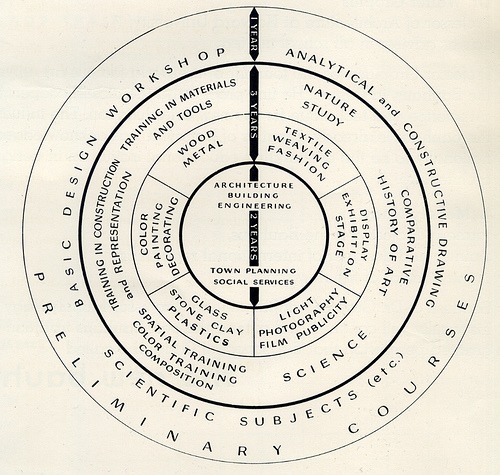
The diagram (http://flickr.com/photos/21525853@N00/2291690514/ ) is from the 1939 brochure of the New Bauhaus School of Design. It has Architecture and Engineering at its heart and Nature Study near the periphery. Garden design and landscape architecture do not appear on the diagram.

Context-sensitive design

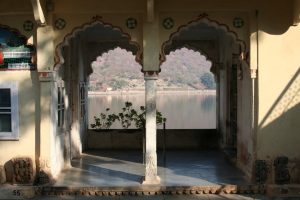
This view, in Bundi, inspired Kipling to write Kim - which is full of 'context-sensitive' local character.More design (cities, architecture, landscapes, gardens etc) should be more context-sensitive:
  • it is more sustainable (less energy, local plants, local materials etc)
  • traditions which have survived what Christopher Alexander calls ‘an endless period of time’ are likely to be adapted to local cultural and geographical circumstances
  • local character is what local residents usually want
  • local character is what tourists usually want

I am NOT however arguing against innovation, which local people and tourists can all appreciate. I am arguing that every design team MUST explain and MUST justify the contextual approach they have adopted. Similarity, Identity and Difference are all welcome in the right circumstances. Garden travel is one of life’s great pleasures – and it helps one see that Russian design should not be copied in China, French design should not be copied in Russia, American design should not be copied in Dubai, British design should not be copied in India, Japanese design should not be copied in America, etc etc etc. Mobile phones and cameras are international go-anywhere products. Designed gardens and landscapes should have local roots, however much they learn from elsewhere. Curiously, designers often understand this best when working outside the countries in which they were born.

The photograph is of the garden in Bundi where Rudyard Kipling wrote Kim, and possibly wondered:


Winds of the World give answer! They are whimpering to and fro

And what should they know of England who only England know?


Sparking the imagination

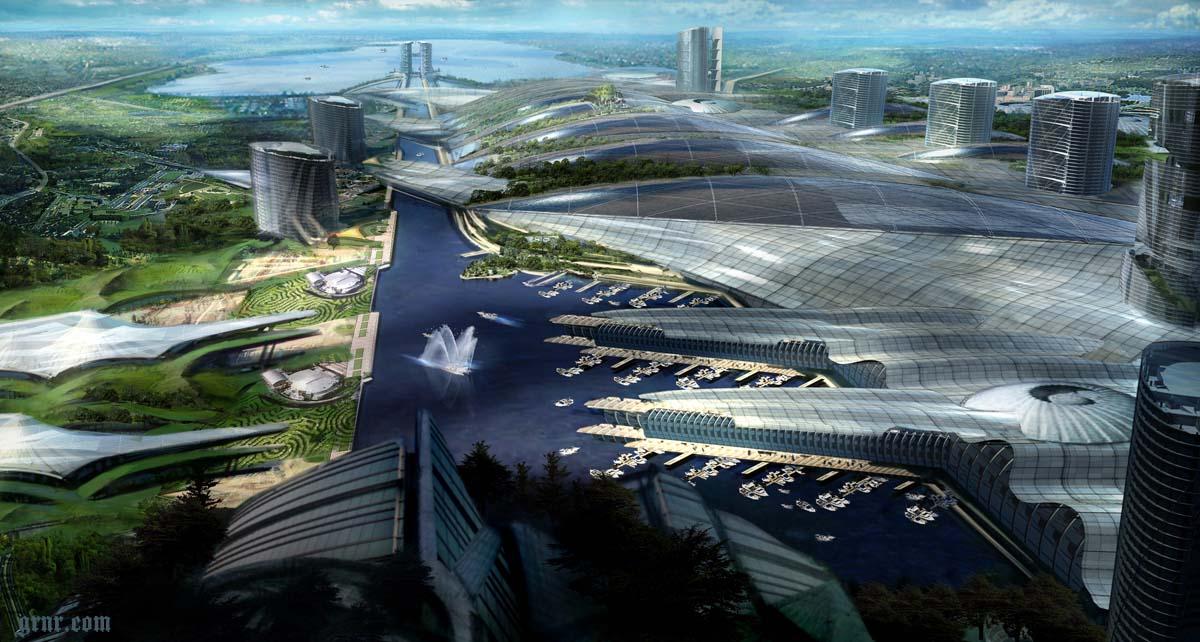
city visualisation by concept artist mark goernerCity visualisation by concept artist: markgoerner
The visualisation shown is by conceptual artist Mark Goerner. It would be interesting to surmise what premises might underlie this vision of a possible ‘future’ city? Although Mark is neither an architect or a landscape architect he has produced a vision of a probable reality that both architects and landscape architects can recognise and respond to.
I sent this picture to Tom after realizing I had confused the terms ‘aspect’ and ‘prospect’ in my previous comments [see where is this landscape?]. Tom sent through links to Repton’s discussion of aspect and prospect and Loudon’s response.
Perhaps the oversight (in not first checking terms) leading to this discussion is more valuable than I first realised. It is unfortuneately relatively common in architecture to deal with issues of sustainability by modifying climatic effects using techonology (green or otherwise), often without first having planned the use, proximity and orientation of spaces in an iterative manner. [In this discussion also no regard has been given to topographic (and other) concerns ie. founding materials, volumes and degree of incline etc on the arrangement of space.] This way of proceeding, if Repton’s comments are anything to go by, is hardly new. And, if Loudon’s response is correct (and I believe it is), this oversight is a constant source of chargin to architect’s who seek to optimise (the positive) and minimise (the negative) by design.
Prospect is an essential part of the visual experience of a building from the interior; as much as it is an essential part of the visual setting (perhaps approach…but not always) of a building. Aspect is essential to the bodily experience of a building from the interior; as much as it contributes to how the building and landscape meld in harmony to form a composite at a myriad of viewpoints and scales.
Where might this city most probably be located? Why is it situated and arranged in the way that it is? What is the relationship of built form to landscape? What sort of a place would it be to live in? Is it a sustainable city?

Where is this 'urban landscape'?


Originally uploaded by jonrawlinson

Los Angeles? Chicago? Beijing? Delhi? Ankara? Sydney? No: it is a view of Riyadh, in Saudi Arabia, from the Al Faisaliyah Center.
What a wasted opportunity. With so much faith, so much central power and so much wealth…. the designed urban ‘landscape’ could have been so very much better. Even now, they should commission a Strategic Urban Landscape Plan for the city – after running a multi-stage competition to select the best firm.
Although I rather admire the Saudi policy of not issuing tourist visas, it has prevented me from visiting the Kingdom to see if the landscape planning as quite as bad as it appears from this and other photographs. They could have had a landscape plan which was sensitive to:

  • Islam
  • Climate
  • Materials
  • Social Customs
  • Hydrology
  • Ecology
  • Etc

What’s more, it would have helped create a more-sustainable landscape in preparation for when Saudi Arabia’s water and oil have been depleted. Both are ‘quarried’ on a non-renewable basis.

Integrating design with nature or nature with design

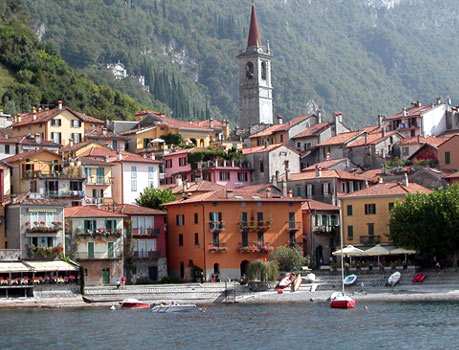
Verrena on Lake Como

Verrena on Lake Como

In their paper ‘Being Here – Attitude, Place and  Design for Sustainability’ presented at the Allemandi  Conference Craig Badke and Stuart Walker discuss the  the difference between ‘having’ and ‘being’ for sustainable design.

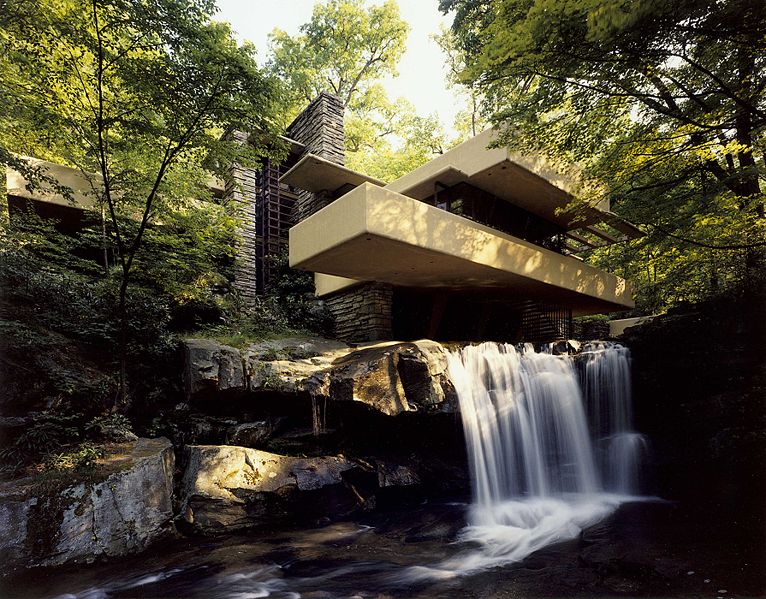
In these two examples, the historic town of Verrena on Lake Como and Frank Lloyd Wright’s modern organic masterpiece ‘Fallingwater’, architecture and nature exist in a symbiotic relationship. Both respond to topography and stunning natural settings creating a strong sense of place. Note in both instances the use of outdoor terraces and potted plants to create transitional public/private spaces between the indoors and outdoors.

Falling water by Frank Lloyd Wright

Falling water by Frank Lloyd Wright

Having which implies ‘possession’ to some extent;  depends on the ability to control of something external to oneself, whilst being rather suggests the ‘enjoyment’ of what is present to oneself without the need to possess it. It enables the person to exist in radical freedom in relationship to the environment; not to exploit the environment but to harmonise with it.

Surely it is possible to promote such an approach to our urban environments?

Public Art in Barking Town Square

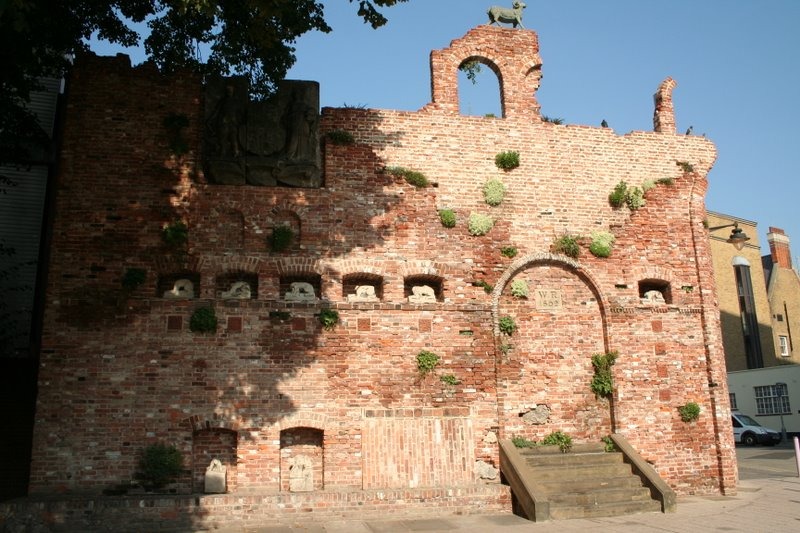
Public art bounds Barking Town Square

Nothwithstanding our criticism of the urban design of Barking Town Square, Muf deserve an award for an excellent piece of public art on the northeast side of the Square. Muf state that ‘The folly screens the flank wall of Iceland supermarket and makes the fourth elevation to the town square. The folly is comprised of architectural salvage and recovers the texture of lost historic fabric of the town centre; it stands as a mementomori to this current cycle of regeneration.’

Unlike the usual ‘Turd in the Plaza’ approach to public art, this wall:

(1) serves an urban design objective by enclosing the space

(2) picks up on the historic context of Barking

(3) pleases the eye without being attention-seeking

I wish we could have more context-sensitive public art.