
Theorising the possible

Whatever happened to beauty?

Modern art turned the viewer’s gaze inward to the inner world rather than outward to the external world. In doing so, modern artists prefiguring existential and phenomenological accounts of perception highlighting that art is not only seen, it is experienced.

In this first post of a series, with thanks to Tom for his comments and suggestions, I shall explore the work and artistic legacy of the Futurists.

At the turn of the twentieth century a young ecletic group of artists in a hurry collaborated under the banner of Futurism. The Futurists in particular grappled with the role of perception in artmarking.

They were concerned to portray the world as it is experienced and viewed, and perhaps more importantly as it could be, through a richer perceptual lens free of the constraints of the academie which had become ossified and rule bound.

The Futurists in their abstractions were concerned with expressing the emotional state of the artist rather than depicting nature. This interest in the emotional state of the artist/observer of life arose from in part from the sculpturer Boccioni insistence on the work of art as an essential manifestation of reality, an aspect of sensation, rather than as an activity of the spirit.

It is thought that the philosophy of Bergson was an important influence on the Futurists. Berguson espoused two types of knowledge objective and subjective. Objective knowledge is “conceptual knowledge directed towards the requirements of our practical life and lending itself to the analytical procedures of the natural sciences” while subjective knowledge “is a projection of our intimate self-awareness onto the external world.” Berguson termed this intuition.

Boccioni attempted to describe the proces of intuition the ‘terrible tension’ as he experienced it:

“the artist seeks to maintain himself continuously ‘in the inside of the object, to live its changeability and to grasp its unity.”

See article by Brian Petrie, ‘Boccioni and Bergson’.  The Burlington Magazine Vol 116, No 852, Modern Art 1908-25) pp140147.

It is possible to unpick this concern of the Futurists with close attention to the disappearance of beauty from the discourse of aesthetics. Arthur Coleman Danto in ‘The Abuse of Beauty’ believes beauty lost its descriptive power with the early Logical Positivists. Instead the word came to stand for an expression of overall admiration. He says:

“Beyond what could be dismissed as ‘its emotive meaning’, the idea of beauty appeared to be cognitively void – and that in part accounted for the vacuity of aesthetics as a discipline, which had banked so heavily on beauty as its central concept.” 

The Futurists in grappling with these concepts enriched our understanding both of artmaking and visual perception.

http://www.uweb.ucsb.edu/~gnorton/Manifesto.html
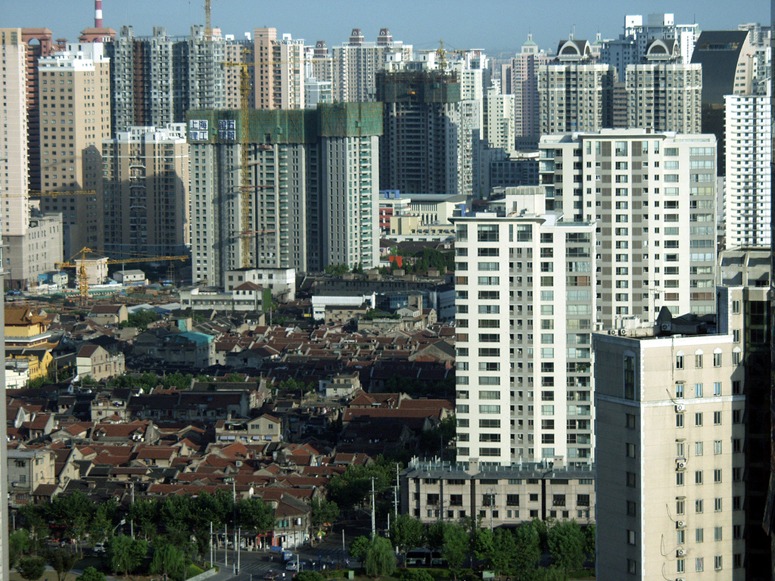

Modernist planning and design for Shanghai's urban landscape

How could the urban landscape design have been done better?


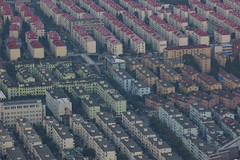
If you look carefully at the pavilion-ettes on top of some of the buildings, you can tell this is a Chinese city. But I see the photograph as an illustration of the way in which context-insensitive modernist design theory is laying waste the ancient cities of China. There a surviving patch of the old city form in the foreground and glitch of marching blocks in the background. It is easy to criticise – but given the available resources, how could things have been done better? As suburban Shanghai demonstrates beyond the realms of doubt, they could certainly be a lot worse! The simplest change is that the blocks should be substantially vegetated: on roofs, balconies and walls. Shanghai is a warm wet city and this would be an adaptation to the geographical context. This policy is being adopted in a wealthy and Chinese-influenced city: Singapore.

(image courtesy leonardo_bonnani)


CH3-893.jpg

Originally uploaded by herwigphoto.com


The economic, asethetic and landscape case for the UK adopting a sustainable GM-free organic agricultural policy

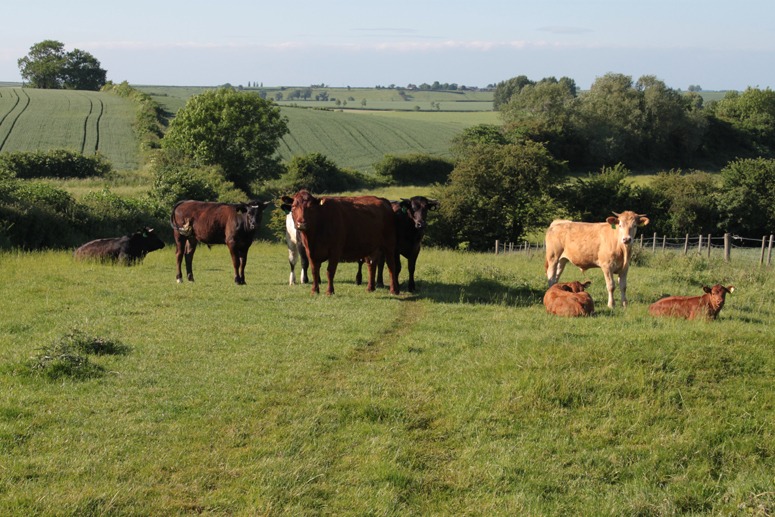
Happy cows in Laxton Medieval Village

Sustainable landscape farming: happy cows in Laxton Medieval Village

Many scientists argue that ‘we’ should accept genetically modified (GM) foods – for a whole range of scientific and economic reasons. Though sceptical of the scientific logic I do not know enough about genetic modification to take issue with them. But on the economic issue I am convinced they are wrong in the specific case of the UK. So I was delighted to read that Professor Robert Watson, (chief scientist at the World Bank and also chief scientist of UK’s Department for Environment, Food and Rural Affairs) said: “Are transgenics the simple answer to hunger and poverty? I would argue, no.A fortiori GM foods are not the answer for the UK. The benighted officials at the DEFFRA do not seem to appreciate the significance of the fact that England, Scotland and Wales are an island, or that our landscape is very productive and very beautiful. These geographical facts provide an amazing economic opportunity: Britain can become a niche supplier of the highest quality foods in the temperate world. If they are foolish enough, let everyone else go for low-cost, low-quality foods. It will not be possible to stop GM foods spreading across land borders. Island nations, like Britain and Australia, have the opportunity to become producers of exceptionally high quality foods. The UK should only produce organic foods. GM crops should be utterly banished. Everyone should know that buying British foods is a guarantee of quality. The benighted officials at DEFFRA should take note of the fact that in almost every market the producers who deliver the highest quality can charge the highest prices and, usually, generate the highest profits.
I love the English landscape and would be delighted to see photographs of wonderful crops and animals used, in beautiful surroundings, as marketing devices for The World’s Best Food.
PS Personally, I support the precautionary principle and have no wish to eat GM-produced Frankenstein Foods. But this is not my present argument.
Note: beyond the happy cattle in the above photograph one can see the remains of the last village in England which still uses the medieval system of land tenure. It is Laxton. I love it and the photograph was taken this week. Wouldn’t you rather your beef came from here than from a factory farm, awash with antibiotics? I was vegetarian between the ages of (about) 6 and 16. My father, who was a doctor, ridiculed me. But he went to visit a slaughterhouse about 40 years later and was revolted to see them cutting the abcesses out of factory-farmed cows and then sending the ‘good bits’ to the supermarkets. He then became a vegetarian.

Is there too much of Kew Gardens at Wakehurst Place?

urst Place on the cover of English Garden Design (left) and in June 2010

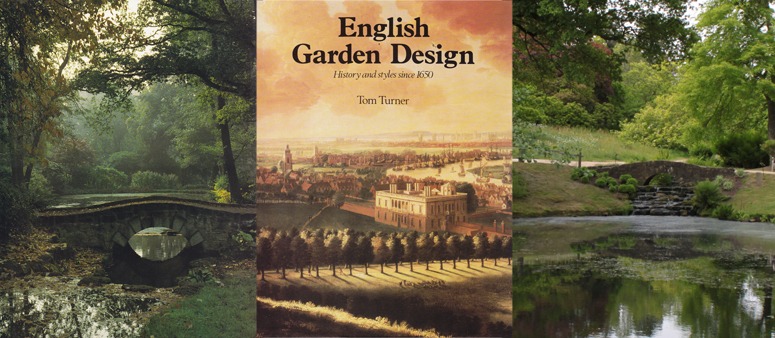
Wakehurst Place on the cover of English Garden Design (left) and in June 2010

‘Father, forgive them, for they know exactly what they do’. (adapted from Luke 23:34). I have always liked Wakehurst Place and have put it on the dustjacket of a book – but I criticised Wakehurst Place last year and after another recent visit am being driven to conclude that it is being over-Kewed.
A plaque near the house is dedicated to ‘Sir Henry Price Bt. who in 1963 presented these lovely gardens for the education and enjoyment of all who visit them’. Two questions must be asked ‘Education in what?’ and ‘Enjoyment of what?’ The apparent aim is to convert a beautiful place into a spotty collection of specimens.
When Wakehurst Place first appeared on Gardenvisit.com, about 10 years ago, we received an anquished email along the lines ”Call us pigs or Pakis if you must but please PLEASE do not call us Gardenesque’. But why shouldn’t Wakehurst Place be a place for ‘education’ and ‘enjoyment’ related to the Gardenesque Style? Properly understood and executed, it is one of the most-English and most-appreciated styles of garden design. My recommendations for Wakehurst Place are:
– an Arts and Crafts area around the house
– a Gardenesque section at the head of the valley
– a full-scale Landscape transition to a Sublime lake at the foot of the valley
But as Geoffrey Jellicoe argued, Creative Conservation is often the best policy for historic gardens and landscapes. Should this be wanted, the garden managers could also consider
– seasonal and thematic ribbons interlacing the estate
But an even more important step would be to appoint a Design Manager for Wakehurst Place. If the manager’s skills are only horticultural then the future of gardens is to become more botanical, less Beautiful, less Picturesque, less Gardenesque and less Sublime. Let’s hope I’m wrong.

Note1: the above photographs of the bridge at the head of the valley are looking in opposite directions

Note2: by ‘over-Kewed’ I mean ‘too much of an emphasis on botany’ – Kew Gardens are in fact getting better looking year-by-year.

In search of Sustainable Gardens…

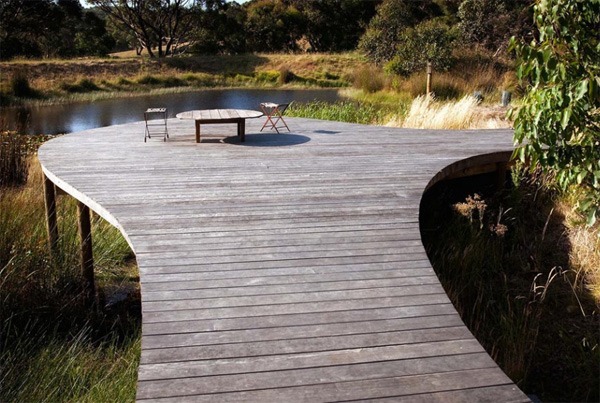
So what is the sustainable aesthetic about? I suggest a few characteristics might be common to the sustainable garden aesthetic:

*  mimicking nature 

* minimal interference with the landscape

* native plant selection

* eco-material selection ie timber and stone

* bushland settings

* curved lines

* low water, low chemical and low maintenance

* absence of paths, boundary fences and made roads

For a garden see: http://www.e-ga.com.au 

For a plant aesthetic see:  http://www.flickr.com/photos/42478440@N00/517961141 

For an idea of how art & sustainability (green design) might have a more dramatic relationship also see the El Molino garden, a blend of formalism and naturalism http://www.anthonyexter.com/gardens/el_molino/2.php which possibly focuses on reduced resource use (water and energy) and plant selection , rather than a strictly natural aesthetic in the form, layout and background to the scheme.


So just what is sustainability?

Is it possible to sign a declaration to say your home is Sustainable and yet not truly have a sustainable property?  Signing a declaration on the transfer of property is the approach that has been adopted in the residential sector in Queensland. The success of this approach depends on your definition of sustainability, and whether a number of  ‘sustainability features’ are sufficient to warrant the label sustainable.

The community debate about the benefits of the legislative reforms has started.  Some in the real estate industry have seized the initiative and have viewed ‘energy’ sustainability as a branding opportunity. This trend follow similar initiatives in the US.

However, what is being addressed here is ‘the below the line emissions’  on the McKinsey cost curve.

What is being missed?

Before airconditioning and heating, is passive solar design of the building envelope, before passive solar design of the envelope is the design of the garden, before the design of the garden is the orientation and siting building, before the orientation and siting of the building is the layout of the plan, before the layout of the plan is the analysis of the site, before the analysis of the site is the selection of the site, before the selection of the site is the design of the subdivision….

Sustainability as is demonstrated by Orchid House can be costly, so where does sustainability begin and end?

Image courtesy http://www.lmearchitecture.com/featherstone-house-images.htm