The geographical origins of landscape architecture in Scotland
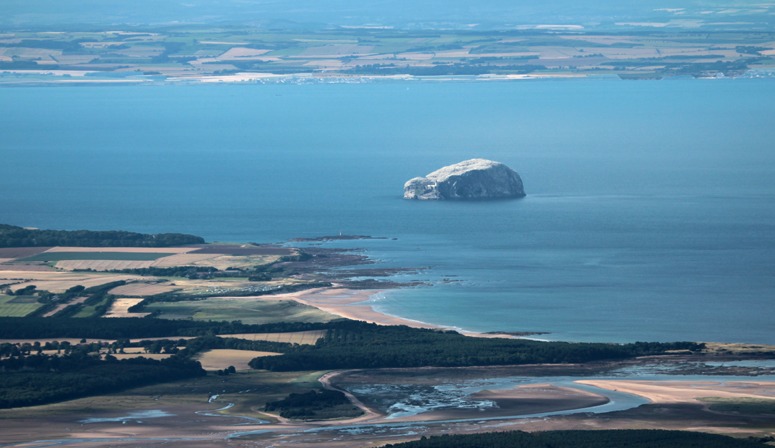
James Hutton lived 15 km south of the Bass Rock and used the geology of the region to support his Theory of the Earth, which argued that the Earth had evolved slowly, rather than being created in a week (as described in the Bible).
Gilbert Laing Meason invented the term ‘landscape architecture’, in 1828. Meason lived near Forfar (60 km north of the Bass Rock) which might be visible on the above photograph if it had been taken on a clearer day
John Claudius Loudon was the most prolific writer on gardens and architecture of his age. He designed some of the first public parks, proposed a system of Breathing Zones for London and transmitted the term ‘landscape architecture’ to Downing and Olmsted . Loudon spent his childhood at Gogar 40 km west of the Bass Rock
John Muir is regarded as the Father of America’s National Parks. John Muir was born in Dunbar (15 km from the Bass Rock) and the estuary in the foreground of the above photograph is now the John Muir Country Park.
Patrick Geddes, the first European to use ‘landscape architect’ as a professional title was the most innovative town and country planner of the twentieth century. Patrick Geddes was born near Perth (25 km north of the Bass Rock) and lived in Dundee and Edinburgh
Ian McHarg wrote the most influential landscape architecture book of the twentieth century (Design with nature) and contributed to the development of Geographical Information Systems (GIS) McHarg was born in Clydebank, 80 km west of the Bass Rock and near the boundary between the tectonic plates which were joined to make Britain
George Eliot wrote, in Adam Bede, that ‘a gardener is Scotch, as a French teacher is Parisian‘. She lived 1819–1880 and would have been on even stronger ground if writing about landscape architecture and planning!
The Bass Rock (centre of photo) is one of many extinct volcanoes which form the landscape architecture of Scotland's Central Belt
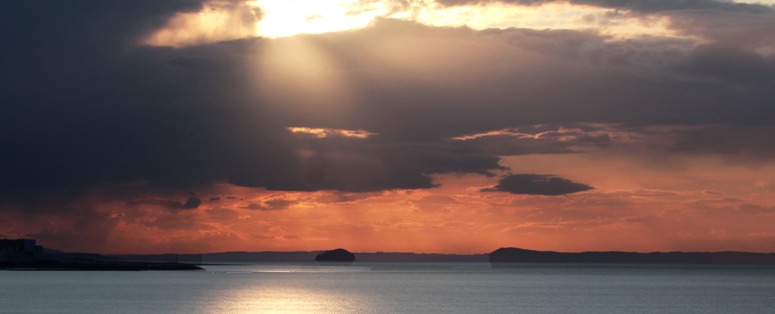
See map history of How Britain was Formed. When the sun is setting (above) one gets a glimpse of how the region looked when the boundary between the Gondwana and Euramerica plates was full of volcanic activity, as Iceland is today, but the Devonian climate was hotter and drier.
![[1]](http://www.gardenvisit.com/assets/madge/room105_garden_design/600x/room105_garden_design_600x.jpg)
![[2]](http://www.soundslikeaustin.com/wp-content/uploads/2011/05/landscape-architecture-4.jpg)
![[3]](http://www.soundslikeaustin.com/wp-content/uploads/2011/05/landscape-architecture-1.jpg)
![[4]](http://www.bustler.net/images/uploads/riai_nsw_awards_08_08.jpg)
![[5]](http://www.inhabitat.com/wp-content/uploads/schiavelloplants.jpg)
![[6]](http://bedzine.com/blog/wp-content/uploads/2009/11/symbiotic2.jpg)
![[7]](http://www.ecosalon.com/wp-content/uploads/2009/01/fukuoka_green_roof2.jpg)
![[9]](http://www.linesandcolors.com/images/2007-07/turner_450.jpg)
