
Category Archives: Asian gardens and landscapes

History of Asian garden and landscape design book

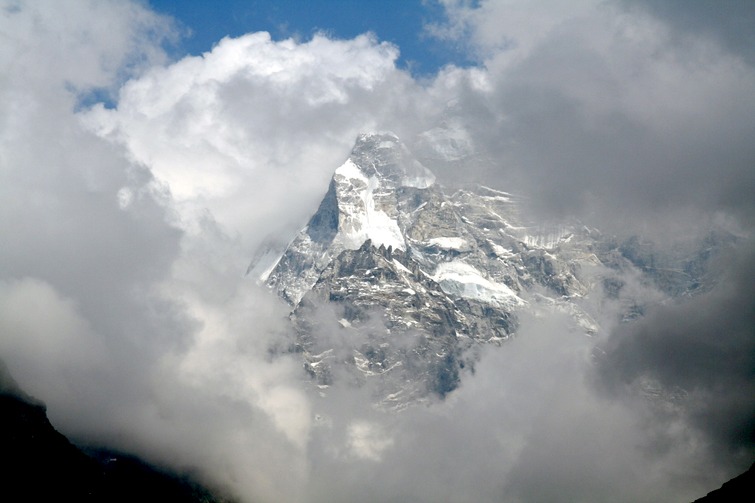
Himalayas by Ilker Ender

Himalayas by Ilker Ender

Phew!

My ‘Tomfool Project’ to write a history of Asian gardens and landscape architecture is done: I have just posted the CS (computer-script) to the publisher. The main subjects are Ancient Garden Design,  Islamic Garden Design, Indian Garden Design, Chinese Garden Design,  Japanese Garden Design and modern landscape architecture across Asia.  The text files, drawings and photographs fit on one DVD, so all I have done is re-arrange some binary code, unless you count taking over 100,000 photographs. The easier-to-write chapters drew on other work but the difficult chapters took a year each for research and travel. The sensible alternatives would have been not to have begun the project or to have started 40 years earlier by learning half a dozen Asian languages. But I enjoyed the work and will be a lucky man if the ‘royalties’ pay for the travel – so you could say the books will be sold at ‘cost price minus’. It reminds me of the advice I received from Arnold Weddle about 30 years ago. We were making use of adjoining urinals at the time and I think the conversation went like this:

‘Hi Tom, how are you and what are you doing’. Ignoring the obvious, I replied ‘Fine – I’m writing a book, actually it’s about Landscape planning‘. Arnold, who had recently founded the journal Urban and landscape planning, replied: ‘Hmmm. Don’t expect to make any money by writing books’

Weddle was a wise man and I often quote another of his remarks. In Techniques of landscape architecture he wrote that the landscape profession is distinguished from its related professions by looking beyond their ‘closely drawn technical limits’ and ‘narrowly drawn territorial boundaries’. Though not quite what he had in mind, I have taken his advice in Asian gardens by relating garden design to the religions, mountains,  forests, deserts, social customs, art and architecture of Asia. As you can imagine, this has involved a number of topics in which I might wish to have more expertise.  Ananda  Coomaraswamy would have been a good man for the job, helped by one of his photographer wives and his ability to think in English, Hindi, Greek, Latin, Sanskrit, Pali, Persian and Chinese.

[See also: next post on Asian gardens and landscapes]
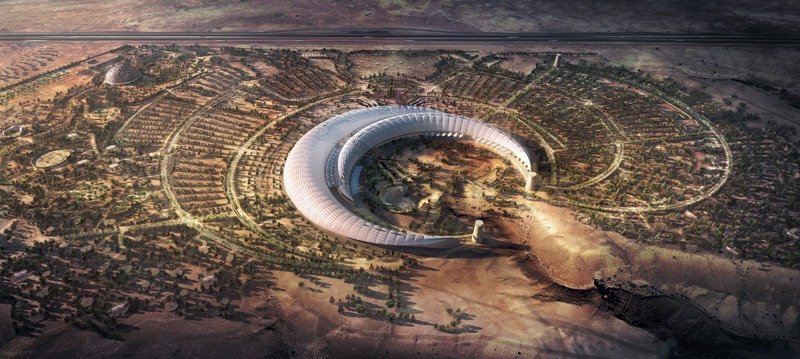
An excellent landscape design for the King Abdullah International Gardens

kaig_aerial_02_smallHaving slagged off the design of their capital city, I am only too pleased to congratulate the Saudis on the design of a new Botanic Garden. It reminds me of a photograph from the Hubble Space Telescope – perhaps of a swirling galaxy. This is highly appropriate for a garden which looks back to the origins of life on earth and forward to a more sustainable future. Siteworks began in 2008  and the expected construction period is 3 years.

The landscape architect and project team leader  for the  King Abdullah International Gardens was  Nick Sweet of Barton Willimore.  Some 150 hectares of the 160 ha site will be planted with indigenous species. They will be watered only by stormwater outlets and treated sewage effluent generated on site. All the power will be solar, all wastes will be recycled and 93% of the construction materials (by volume) will be obtained from the site (rock, stone, gravel, soil). Only electric vehicles charged from the solar array on site will be used for visitors.  What more could one ask? I have  every hope of it becoming that rarest of rare delights: an excellent work of landscape architecture.

PS to King Abdullah: next time Saudi Arabia needs a New Town – make sure the design team is led by a landscape architect. You can expect the most favourable benefit: cost ratio for any project in your Kingdom’s recent history.


Lumbini Garden – Buddha's birthplace

I came across this drawing of the Buddha’s birthplace recently and it reminded me what a cruel thing Kenzo Tange did at Lumbini. Like Corbusier, Tange was a gifted designer and a terrible planner.

An ability to design objects (eg buildings) sometimes goes with an understanding of outdoor space, and gardens, but in the case of these two leading architects from West and East it did not. ‘Baroque Buddhism’ is as unwelcome as ‘Baroque Communism’, in politics and in design.

The illustration shows the scene which Fa-hsien described in c400 CE:
“Fifty li east from the city (ie from Kapilavastu) was a garden, named Lumbini, where the queen entered the pond and bathed. Having come forth from the pond on the northern bank, after walking twenty paces, she lifted up her hand, laid hold of a branch of a tree, and, with her face to the east, gave birth to the heir-apparent. When he fell to the ground, he immediately walked seven paces. Two dragon-kings appeared and washed his body. At the place where they did so, there was immediately formed a well, and from it, as well as from the above pond, where the queen bathed, the monks even now constantly take the water, and drink it.”