
Category Archives: Garden Design

Beliefs, gardens, design and #GardenBeliefs

Beliefs have led to the planting of Nelumbo nucifera the Sacred Lotus since ancient times

Beliefs have led to the planting of Nelumbo nucifera the Sacred Lotus since ancient times

Beliefs have always influenced garden design styles, just as they influence contemporary gardens. And  just as they will surely influence future gardens. I do not have a religion but I do believe in beliefs and in their importance for designers. Neil MacGregor’s radio series on Living with Gods is therefore of great interest to me. Taking objects and places as examples, MacGregor explains the beliefs that led to their creation. This is what I tried to do when writing histories of Asian, European and British garden design.  So when I can see a connections between what MacGregor say and the history of gardens I will blog and tweet about them using the hastag #GardenBeliefs. I am hoping he will devote a programme to Nelumbo nucifera the Sacred Lotus – but doubt it. It was a celebrated garden plant long before the Buddha made it a very famous garden plant as recorded in the story of the Flower Sermon:

Toward the end of his life, the Buddha took his disciples to a quiet pond for instruction. As they had done so many times before, the Buddha’s followers sat in a small circle around him, and waited for the teaching. But this time the Buddha had no words. He reached into the muck and pulled up a lotus flower. And he held it silently before them, its roots dripping mud and water. The disciples were greatly confused. Buddha quietly displayed the lotus to each of them. In turn, the disciples did their best to expound upon the meaning of the flower: what it symbollized, and how it fit into the body of Buddha’s teaching. When at last the Buddha came to his follower Mahakasyapa, the disciple suddenly understood. He smiled and began to laugh. Buddha handed the lotus to Mahakasyapa and began to speak. “What can be said I have said to you,” smiled the Buddha, “and what cannot be said, I have given to Mahakashyapa.”

Alan Watts a great interpreter of Buddhist ideas for westerners made a wise comment on contemporary religious ideas (he uses the term ‘faith’ where I  use ‘belief’):

The present phase of human thought and history … almost compels us to face reality with open minds, and you can only know God through an open mind just as you can only see the sky through a clear window. You will not see the sky if you have covered the glass with blue paint. But “religious” people who resist the scraping of the paint from the glass, who regard the scientific attitude with fear and mistrust, and confuse faith with clinging to certain ideas, are curiously ignorant of laws of the spiritual life which they might find in their own traditional records.
Seven restoration projects of garden history importance – two in Greenwich Park

Historic garden restoration projects

A proposal for 7 historic garden restoration projects in the preface to the first edition of Tom Turner’s English Garden Design

I proposed 7 garden restoration projects in 1986, and reported on what had happened in 1998:

The Preface to the 1986 printed edition of this book made ‘ a personal plea for some restoration projects which would be of special historical value as examples of poorly represented styles’. The plea had no influence upon events but the following update may be of interest to readers: (1)  The semi-circular parterre at Hampton Court, known as the Fountain Garden, has not changed. But the nearby Privy Garden has been restored with the greatest possible care for historical accuracy. I believe this was an error of judgement: the Privy Garden is an unremarkable as a Baroque parterre but looked good in its picturesque 1986 condition. The Fountain Garden remains rather ugly but would have been very splendid – if restored in the manner of the Privy Garden. (2)  The Giant Steps in Greenwich Park have not been restored. The Royal Parks Agency commissioned a design for a Baroque water cascade on the site. It was opposed by the local people. I can see a strong case for restoring the original steps which would have been like Bridgeman’s theatre at Claremont Landscape Garden. Or one could make a respectable case for a new design on the site. But ‘restoring’ a cascade which never existed would have been illogical. (3)  The Leasowes is now run as a country park. (4)  Nothing has been done about the parterre at Melbourne Hall or the ornamental farm at Great Tew (5)  Gertrude Jekyll’s garden at Munstead Wood is, I am delighted to report, being restored.

It’s time for another update:

  1. The semi-circular parterre at Hampton Court has not been restored and the Privy Garden still lacks the aesthetic quality it had before it was restored
  2. ‘Restoration’ of the Giant Steps in Greenwich Park is under consideration and may well happen – I will do a blog post about this soon
  3. The Leasowes is still run as a country park and with little regard for the outstanding importance of William Shenstone’s conception
  4. Nothing has been done about the parterre at Melbourne Hall
  5. Nothing has been done about  the ferme ornée at Great Tew
  6. Good restoration work has been done at Munstead Wood and it is open to the public by appointment
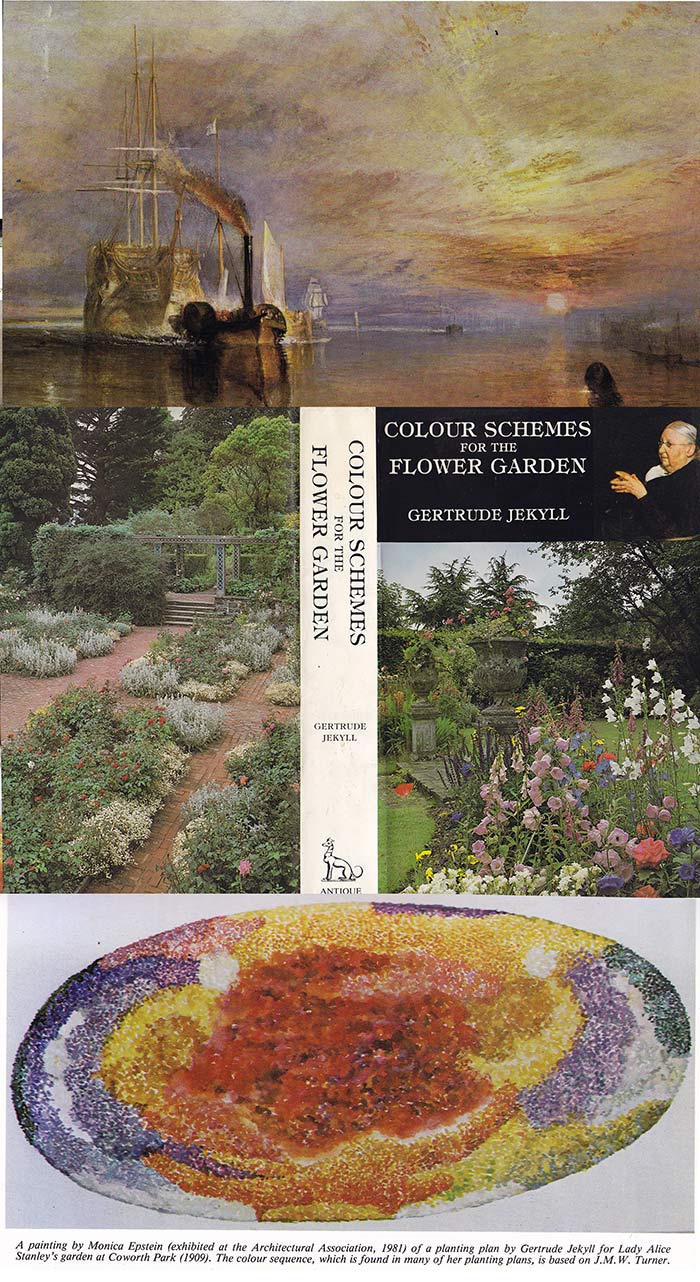
  7. I suggested ‘some full-scale Gertrude Jekyll borders with colour schemes based on J.M.W. Turner’s colour theory’
The herbaceous border in Greenwich Park is not a national disgrace

The herbaceous border in Greenwich Park is not a national disgrace

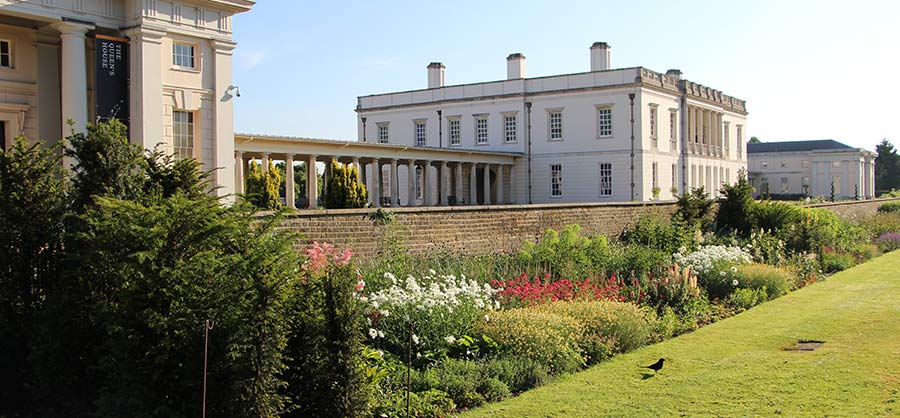
With regard to the 7th suggestion, I was thinking about the long border in Greenwich Park but did not mention it because the Giant Steps seemed more important. In 2013, The Royal Parks appointed Chris Beardshaw to ‘completely redesign the border’. I have often admired his work at Chelsea and am sure he did a good job for Greenwich. But there are lessons to be learned:

  1. The quality of the long border is poor. This may because you can’t just ask an expert to design a herbaceous border. You need to expert to have responsibility for its management and review the design very frequently. It’s best to have the expert working on the border and thinking about it all the time. Is this plant doing too well? Why is that plant suffering? Would it be better if those two plants were not side by side? do those colours go together?
  2. The Royal Parks Agency (as it used to be) lacked expertise in the design and the design history of parks, gardens and landscapes. So they probably did a poor job in briefing Chris Beardshaw.
  3. The Royal Parks are really bad at involving volunteers in the management of parks and gardens. This is a tragic wasted opportunity for bringing in resources of mind and brain and involving the community.
Gertrude Jekyll's brilliant idea for the colour planning of herbaceous borders has never yet been deployed at the large scale and superb viewing conditions Greenwich Park could provide

Gertrude Jekyll’s brilliant idea for the colour planning of herbaceous borders has never yet been deployed at the large scale and superb viewing conditions Greenwich Park could provide

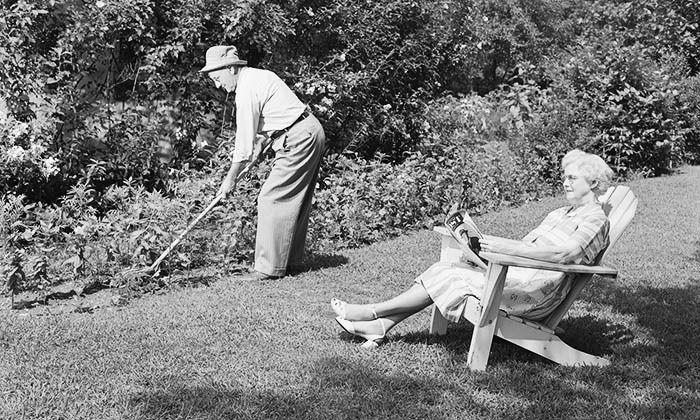
English lawns in 1964

Lawn and Adirondak Chair (Guardian, 1964)

Lawn and Adirondack Chair (Guardian, 1964)

The Guardian has just reprinted a 1964 article on lawns by Moira Savonius, who also wrote books on fungi and on flowers. She sees lawns as a ‘cult’. My impression is that grass cutting has declined in public parks and stately homes but that the area they occupy in private gardens is but slightly diminished – and maybe not at all if you allow for fact that motor mowers were , relatively, much  more expensive in 1964 and so many more people ‘neglected’ their grass in the suburbs. A curious feature of the black and white photo accompanying the article is the Adirondack Chair – I believe they were most uncommon in 1960s Britain.

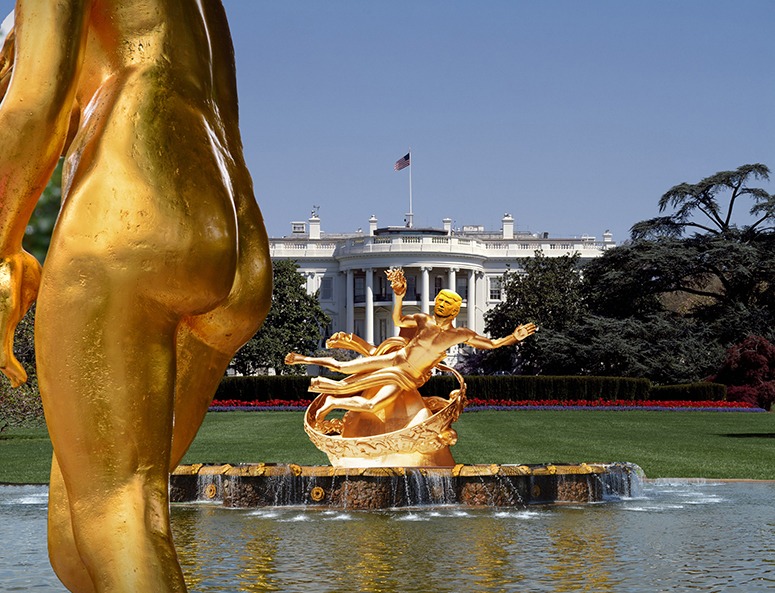
Donald Trump unveils new White House garden design

Trump White House Garden Design

Golden opportunity for garden design lover

The design objectives were to make fellow Americans feel great about themselves, to restore women to their proper place in American life and to show that the garden of the White House can serve a higher purpose than Michelle Obamacare for sustainable vegetables. The designer is believed to have been recommended by a Mr Putin who has an important position in Russia and good taste in golden statues of bimbos.

A cub journalist working for Gardenvisit.com was invited to be a judge on the internal competition for redesigning the garden of the Trump White House in Washington DC. She was flattered but turned down the opportunity when required to wear a gold bikini.

Michelham Priory Medieval Garden

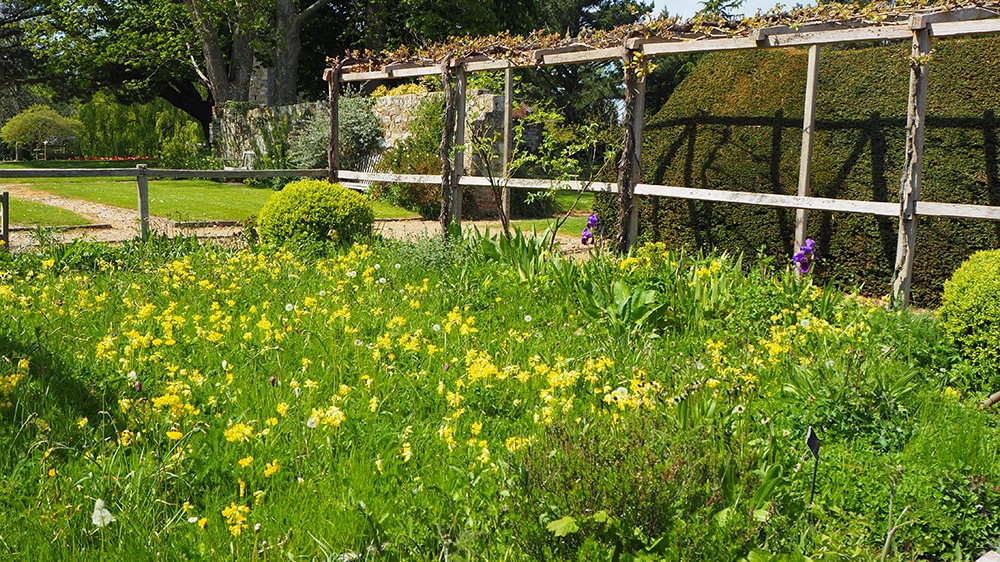
Michelham Priory Garden is a delightfully tranquil moated manor house in East Sussex. What I like most about it is the recreated medieval garden. And what I like most about the medieval garden is the ‘flowery mead’ and the turf seats. Our knowledge of Michelham – and of medieval gardens in general – is not enough to say whether or not the details are accurate. But, to me, these details feel right and this is not a feeling I have about comparable recreations, either by the Garden History Museum or National Trust. Nor do I have this feeling about cathedral cloister garths. They are all managed with lawn mowers and this device was invented in 1830. The usual problem with medieval recreations is that their designers are muddled about the differences between medieval, renaissance and baroque gardens. So they use clipped hedges, which were a baroque feature, to make renaissance-style knot gardens. It does not make sense!

Michelham Priory Medieval Garden

The ‘flowery mead’ in Michelham Priory Medieval Garden

Capability Brown: Lenses on a Landscape Genius Exhibition 22 June – 29 July 2016

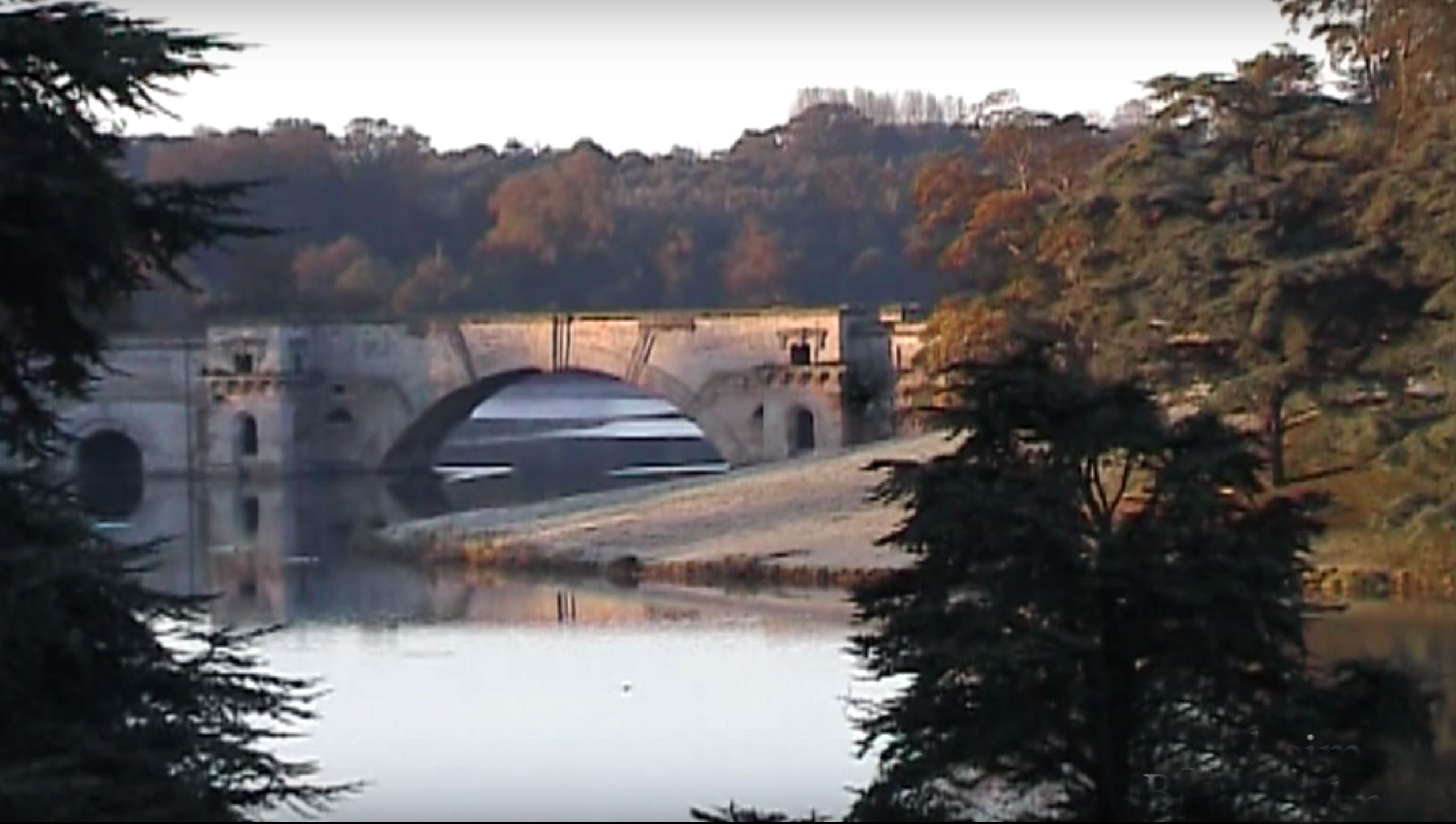
Capability Brown designed the landscape park at Blenheim Palace

Capability Brown designed the landscape park at Blenheim Palace


The Landscape Foundation has organised an exhibition of photographs of Capability Brown’s work. It will be on show at the Building Centre, Store Street, London WC1E 7BT, from 22 June to 29 July.
Brown’s reputation has been in flux. Sky-high at the time of his death and at the time of his 300th centenary, in 2016, it had a profound slump from late 18th century to the early 20th century. For artists and novelists, this is not uncommon and re-examinations can be done by examining their original works. For works of landscape architecture, this is scarcely possible, because they are in constant change. So a photographic exhibition is an excellent idea. We can examine Brown’s work at one point in time.
See also
Capability Brown in Kent – book review by Tom Turner
Was Lancelot Capability Brown a landscape designer of genius?