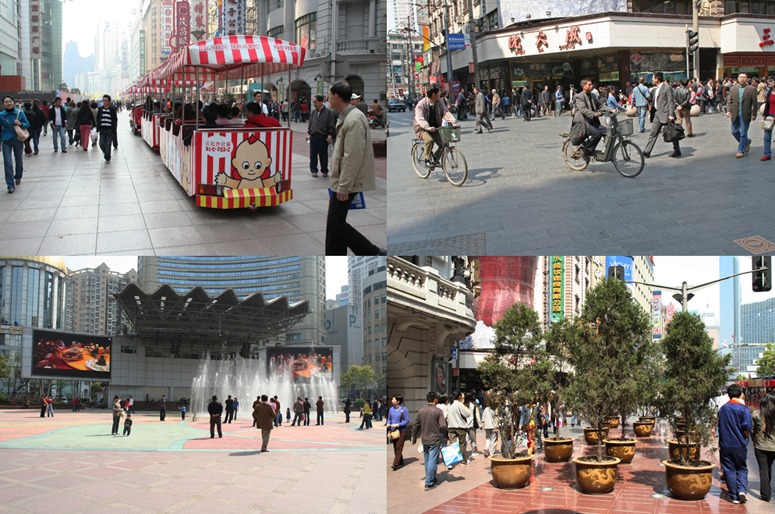
Shared space street landscape in Nanjing Road Shanghai 南京路

Shared pedestrian-vehicle-plants-fountains-bike-space in Nanjing Street Shanghai

Shared pedestrian-vehicle-plants-fountains-bike-space in Nanjing Road Shanghai

The segregation of pedestrians from vehicles, by sidewalk pavements, has a relatively short history in China – and so the Chinese may find sharing space easier than the Europeans. The west has sold the souls of its cities to engineers – who are less public spirited and more concerned with the welfare of their own professions than one might wish. That is how the streets of Europe became highways with pedestrians squashed onto sidewalks. Nanjing Road in Shanghai, to the casual visitor, is a fine example of shared space dominated by pedestrians. Points to note:

  • the electric float for passenger transport – with a door for every seat loading and unloading is simple
  • electric and human-powered bicycles are allowed to mingle with the pedestrians where other streets cross the shared space
  • fountains overlooked by LCD screens make a lively piazza garden-type
  • ceramic pots decorate the street scene

I can’t imagine that the ‘imaginative’ engineers who control London’s ‘shared’ streets (eg around Covent Garden) would permit these innovations. They would for example want fountains and screens to be in plaza, pots to be screwed down and electric vehicles to be enclosed busses.
Before the Japanese invasion (as “Nanking Road”) it was a place the European’s to ‘ride’ in their vehicles. It ran from the Bund (which is still the Bund) to Shanghai Race Course, which is now the People’s Park. I congratulate Shangai’s urban designers on the transformations. The Chinese word 路, usually translated as ‘road’ is comprised of the characters for ‘foot’ and ‘place’ – making it an appropiate cagetorization for this type of space. The English word ‘road’ derives from the very ‘to ride’ and is therefore less appropriate. The English word ‘street’ would be a better choice. It derives from the Latin strata, from the verb sternere “to lay down, spread out, pave”. I therefore suggesting changing the name to ‘Nanjing Street.’
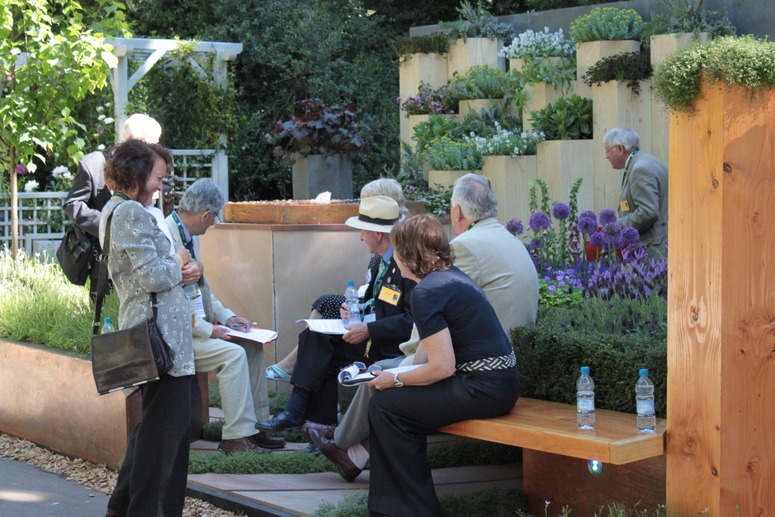
How does a garden design win a Gold Medal and be judged Best in Show at Chelsea?

Judging garden designs for gold medals and Best in Show at the 2010 Chelsea Flower Show

Judging garden designs for gold medals and Best in Show at the 2010 Chelsea Flower Show

Alan Titchmarsh set the scene on BBC2 (8pm on 25.5.2010) ‘Today at the world’s foremost gardening event… the eyes of football fans may be focussed on South Africa and the World cup… but… a garden medal here at Chelsea is as prized as any footballing trophy’. He then asked the Chair of the Judges, Michael Balston: ‘What makes this garden stand out as best in show for you?’. Balston replied ‘Well it satisfied all the criteria we need in order to make it a good garden in terms of impact in terms of design and planting and for us the colour works so well – I mean the contrast between the corten and the verbascum is something which just wow-ed us.’ Andrew Wilson, writing in the Telegraph from the standpoint of Chair of the Assessors explains that ‘The marking criteria include allowances for originality and the level of ambition inherent in what the designer is trying to achieve. They include percentages for overall design quality or character, the sense of theatre which is important in show garden design (these are not real gardens) which is often to be viewed from outside the garden boundary. Marks are also given for construction and the appropriate use of materials in accordance to the brief and for planting design, associations and quality. All of these considerations are related back to the brief and the fundamental design intention as identified by the show garden designer, not simply decided at the whim of individuals or panels of judges. In this way the system delivers a mainly objective view rather than a wholly subjective response.,,. The panel is made up of designers, contractors and horticulturists.’
My respones to the above are (1) Michael Balston is a designer but his criteria are inadequate: good gardens should have the Vitruvian virtues: Commodity, Firmness and Delight (2) John Sales was neither a designer nor a design critic (3) Andrew Wilson is a designer and a critic but wrong in his view that design judgment can be ‘mainly objective’ (4) the designer’s ‘brief’ is a red herring which should not feature in the assessment process (5) considerations relating to use of plants and materials are akin to judging a World Cup team by its turnout and strip (6) all the members of the judging panel should be design critics (7) I would not want the Pulitzer Prize to be assessed by printers or the Turner Prize to be judged by paintbrush manufacturers (8) there should be no contractors or horticulturalists on the judging panel for the Chelsea Show Gardens – unless they are also good design critics
See review of 2010 Chelsea Flower Show

Steeling the Chelsea Flower Show in 2010

Steeling garden design at Chelsea sharpens design quality

Steeling sharpens design quality at the Chelsea Flower Show

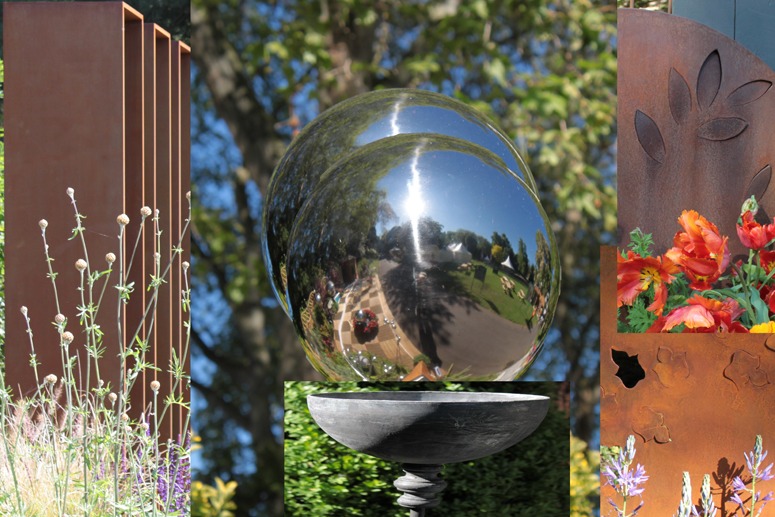
In doing our annual review of the show gardens at the Chelsea Flower Show, it struck me that the use of steel is becoming a feature of the show. I saw mild steel, corten steel, galvanized steel and painted steel. Varied steel colours contrast and harmonize with flowers and foliage – and crisp line sharpan designs. So are designers steeling the show?- or are they getting good prices from a recession-bound steel industry? Time will tell.

See:
Iron garden planters and pots
Steel garden planters and pots
Stainless steel garden planters and pots

London's cycle superhighways are not meant to be beautiful or pleasurable or expensive

London's 'super' cycle highways are designed for ugliness

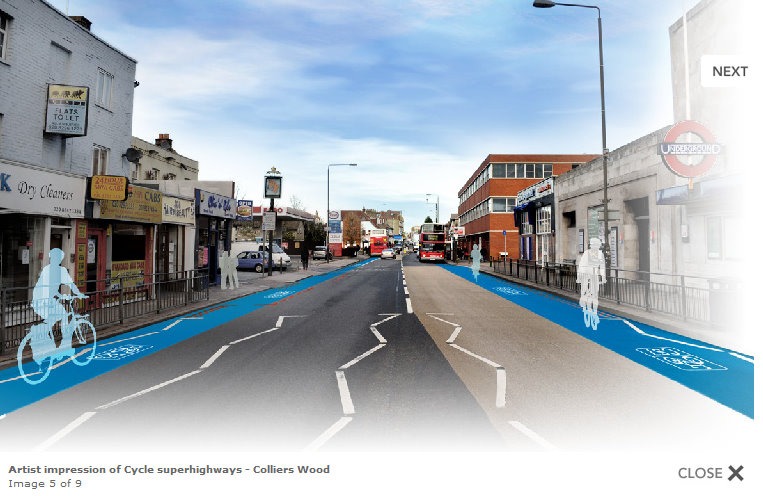
London's 'super' cycle highways are designed for ugliness. The 'artist's impression' shows threatening busses and cyclists who are already ghosts.

Transport for London TfL has an implementation programme for Cycle Superhighways and claims that they will be ‘safe, fast, direct routes into central London from outer London. The first two routes open in Summer 2010 with ten more being introduced by 2015.’
‘Highway’ comes from the Old English heiweg “main road from one town to another” and planning them as direct routes from origins to destinations is unusually sensible for UK cycleroute planning. But I object to their being described as ‘super’. They will be narrow, ugly,pale blue, bargain basement tracks. See for example the implementation schedule for the ‘Super Highway’ from Barking to Tower Gateway. The work can be done quickly because it is merely a paint job – and the chosen shade of blue is suspiciously close to that used by the Tory party during its recent election campaign.
A really super cycle highway would be ‘ ‘safe, fast, direct, quiet, clean, beautiful – and expensive’. So they should employ landscape architects, not engineers with paint brushes, to do the work. I worry that badly conceived cycle paths will get little use – so that the planners will then argue that it was a waste of money. They should (1) go ahead with the present plans as a quick stopgap measure (2) design AT LEAST ONE truly excellent cycle route to show what could be achieved.

Do the English appreciate good urban landscape design – in Lewisham or anywhere?

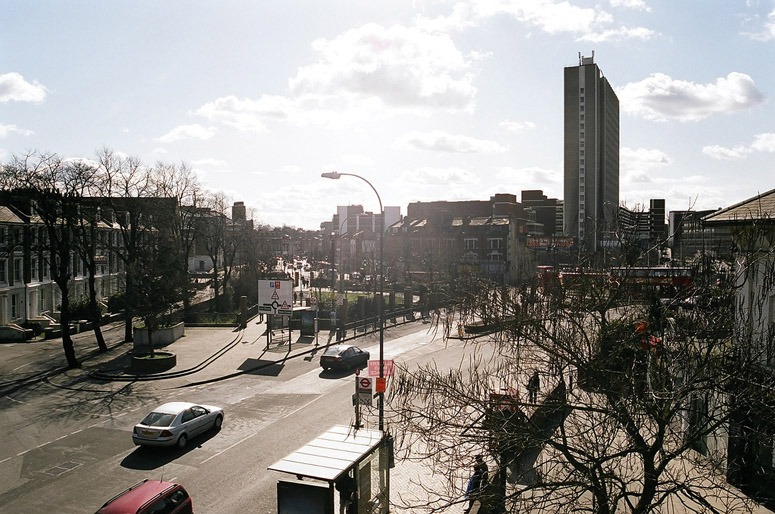
Lewisham residents did NOT want their urban landscape to be like this

Lewisham residents did NOT want their urban landscape to be like this

I have been reading a book by Jeremy Paxman (the BBC’s rotweiller) on The English. Among many well-phrased and unoriginal points Paxman states that ‘the redevelopment of English cities has been left in the hands of stupid, short-sighted and sometimes corrupt local councils, aided and abetted by third-rate architects and get-rich-quick builders. If ever evidence were needed of English contempt for the urban way of life, it is there in concrete and steel’. Self-criticism is always welcome but, like most attack dogs, Paxman only scratches the surface. The English love their towns and I have known many talented architects, landscape architects and urban designers who have worked on them. But good design requires good patronage. The deep problem is that England’s municipalities are frail twigs at the ends of the long branches of central government. Councils raise little of their own money and they have little freedom in how it is spent. So they did not, cannot and have not given local people what they want. There is a glimpse of Old Lewisham on the left of the photograph. It then had a major road driven through its heart – in the name of ‘modernisation’. When fashions changed, Lewisham High Street was part-pedestrianized and a covered shopping centre was built. If any tourists have ever come to see the drab results, it was probably to visit the memorial to a race riot – the 1977 Battle of Lewisham. Paxman may have been there as a cub reporter but on a BBC salary of £1m++ but now lives in a charming Oxfordshire village (Stonor) which is protected from change by the planning system he castigates. The BBC probably send him home in luxury limousines from which he glimpses sufficient Lewisham look-alikes to bare his teeth at the humble designers who toil to make them better.

The roundabout area, called Lewisham Gateway, is scheduled for re-re-re-development. You can see the council’s vision for the Gateway Development. The area beyond the roundabout road-sign is a part-buried river. Maybe Paxman thinks the English hate rivers?

Image courtesy tomroyal .

Chaumont garden design competition 2010

The Hortitherapie sensorielle design won at Chaumont in 2010

The Hortitherapie sensorielle design won at Chaumont in 2010


Congratulations to Stefano MARINAZ, Francesca VACIRCA and Daniela TONEGATTI for having their garden built at the 2010 Chaumont sur Loire Garden Design Festival in France. The three Italian designers met when studying on the masters programme in landscape architecture at the University of Greenwich.
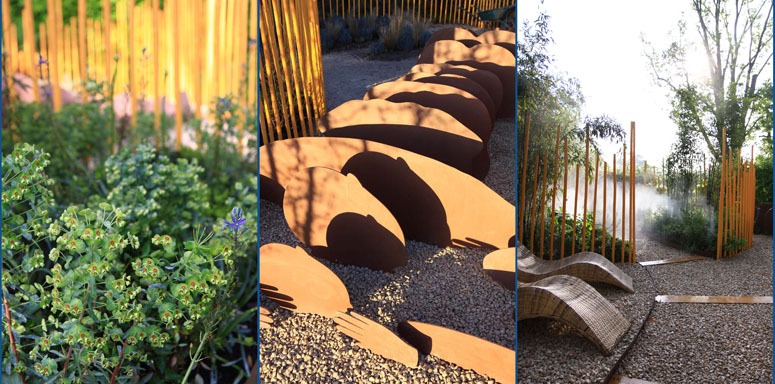
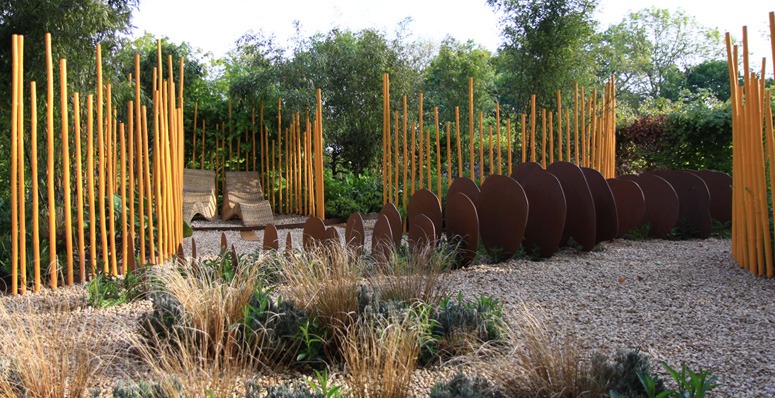
The garden design concept for Hortitherapie sensorielle was to create a place where plants restore balance and harmony to the visitor’s body and mind. A sculpture of a resting woman (above centre, and below) draws visitors into the first garden compartment. She relaxes among the plants, calmed by a wavy line of bamboo canes. Another compartment has a sauna garden releasing fragrance and wrapping visitors a misty scent, delivering well-being. The potager compartment reminds visitors of the plants which produce kitchen aromas. It is a biodynamic vegetable garden. These plants can also be planted among vegetables to attract pollinating insects and deter predatory insects. The massage garden guides visitors through plants with different textures and scents. They massage the visitors’ legs and soothe their spirits. The perfume garden shows the beneficial oils and elixirs which have been extracted from herbs for centuries. They are in colourful jars. As Oscar Wilde remarked: “Nothing can cure the soul but the senses, just as nothing can cure the senses but the soul”.
Landscape and garden designers should pay more attention to design competitions: successes in this field is one of the most reliable and most rewarding avenues to professional success.