Living green bridges are vernacular landscape biotecture

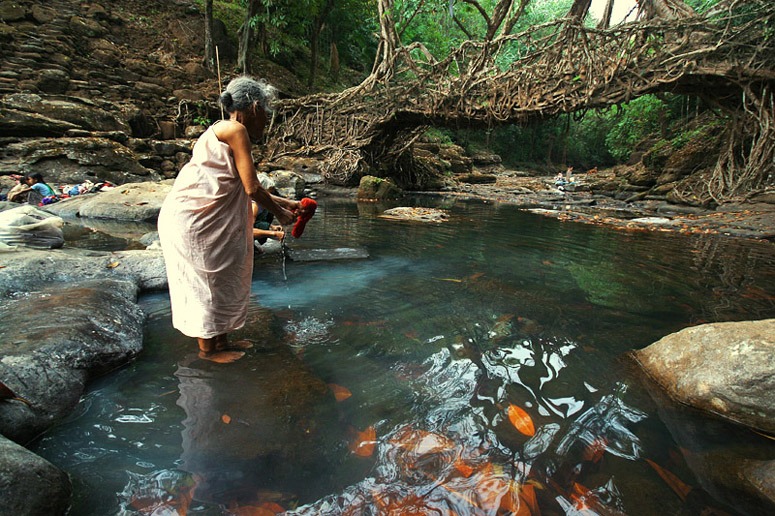
Living bridges? I found a nineteenth century drawing of living green bridge in 2009 and was delighted to find that they still exist. We can see it as vernacular landscape biotecture (using the word biotecture as a contraction of biological archiecture). The above example of a living root bridge is near Mawlynnong in the Khasi hills, in the Indian State of Meghalaya. Before you rush out any bridge construction detail based on this photograph please remember that ‘Meghalaya’y means The Abode of Clouds. Assam is to the north and Bangladesh on the south. A village near Cherrapunji in the Khasi Hills is the wettest place on earth with an annual rainfall of just under 12000mm (ie 24 times London’s average annual rainfall of 500mm). One could attempt a living bridge with willows in England, but I think it would turn into a dam, because the branches would root into the water.
Image courtesy Seema KK.

Theme Parks

A design without a concept is usually not worth much. Where is the boundary where a concept becomes a theme? Where is the boundary where a theme becomes kitsch? And where is the boundary where a concept becomes art? Is there a context in which we can compare Disneyland with the Garden of Cosmic Speculation? Or with Little Sparta? Is Rousham merely an Augustan Theme Park? And where does Portmeirion fit in? Many clients – particularly in young, brash economies – confuse themes and concepts, how can we advise them? Does the West still have noble, Augustan-type concepts to offer the world, or do we only do cartoons these days?

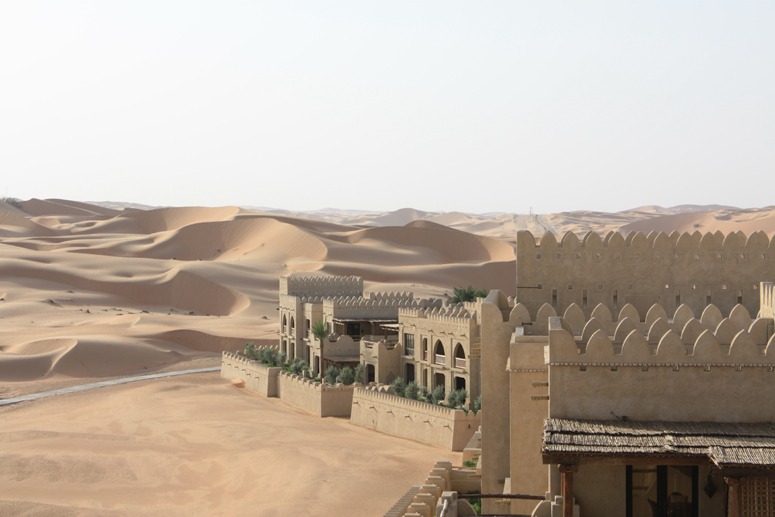
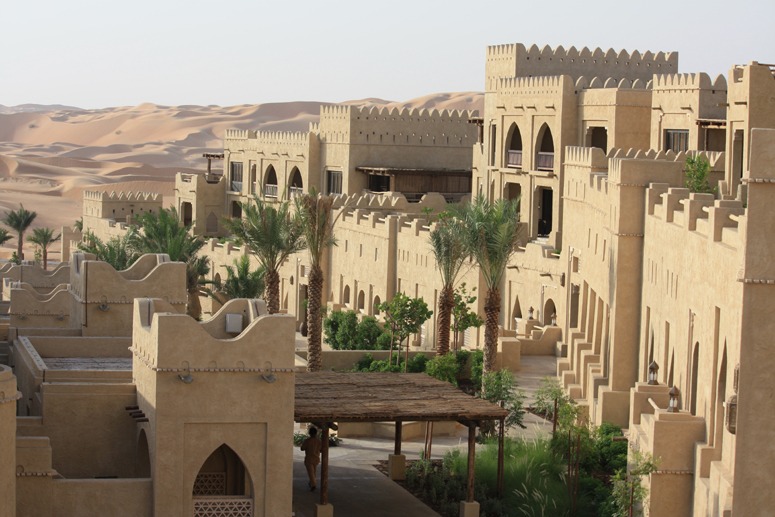
The images show the Qasr Al Sarab Hotel on the fringe of Abu Dhabi’s Liwa Desert, based on an image engineer’s imagination of Arabia and very Disneyesque in its dreamweaving – but ultimately inauthentic – attention to detail.

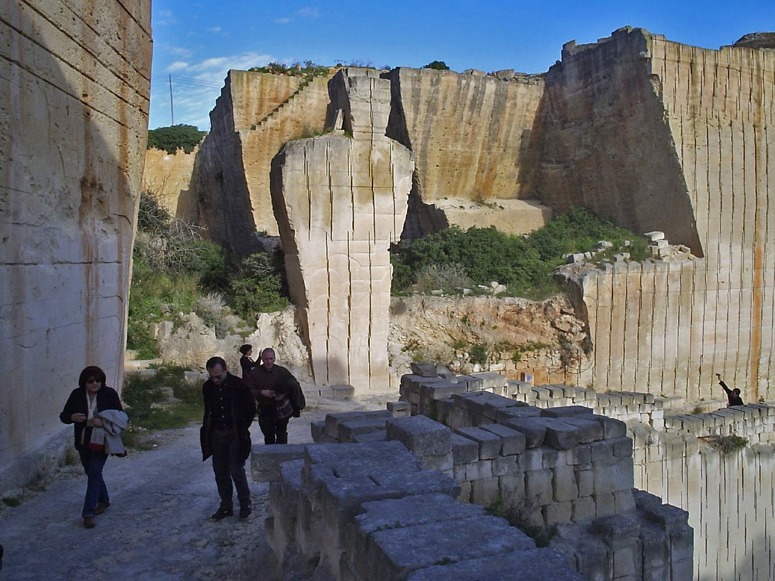
Quarry garden sculpture at Pedreres de s'Hostal as an example of the after-use of mineral workings

Quarries are famed for their propensity to create ‘a scar on the landscape’. But they can also produce wonderful results, as land sculpture on a supra-human scale and majesty. This has led me to conclude that the Permission for new quarrying projects should only be given when a restoration and after-use plan has been prepared and agreed with the planning authorities. BUT there is also a possibility of making something good, and something which is a work of art, when the after-use of the mineral working was not planned in advance. The Pedreres de s’Hostal quarry is a good example of this.
The Pedreres de s’Hostal stone quarry on the island of Minorca, Spain became disused in 1994. It was then taken over by a non-for-profit organization (Líthica) and is being made into a post-industrial heritage park

Image courtesy Carlos Pons

Is new urbanism old?

The 10 principles of New Urbanism are:

1. Walkability
2. Connectivity
3. Mixed use and diversity
4. Mixed housing
5. Quality architecture and urban design
6. Traditional neighbourhood structure
7. Increased density
8. Smart transportation
9. Sustainability
10. Quality of life

According the wikipedia entry “This new system of development, with its rigorous separation of uses, became known as “conventional suburban development” or pejoratively as urban sprawl, arose after World War II. The majority of U.S. citizens now live in suburban communities built in the last fifty years, and automobile use per capita has soared.

Although New Urbanism as an organized movement would only arise later, a number of activists and thinkers soon began to criticize the modernist planning techniques being put into practice. Social philosopher and historian Lewis Mumford criticized the “anti-urban” development of post-war America. The Death and Life of Great American Cities, written by Jane Jacobs in the early 1960s, called for planners to reconsider the single-use housing projects, large car-dependent thoroughfares, and segregated commercial centers that had become the “norm.”

Rooted in these early dissenters, New Urbanism emerged in the 1970s and 80s with the urban visions and theoretical models for the reconstruction of the “European” city proposed by architect Leon Krier, and the “pattern language” theories of Christopher Alexander.”

New urbanism was fundamentally a social planning movement although it has morphed more recently to include at least a minimalist environmental agenda. Wendy Morris says new urbanism was “….Initially A Reaction to Sprawl…..Now A Basis for Sustainable Urban Growth/Smart Growth…….and a response to Climate Change and Peak Oil…and a Basis for Addressing Physical Health and
Social Well-being.”

Can the old theory of New Urbanism be adapted to adequately address new environmental concerns?

John Ruskin: picturesque tourism, poverty, love, life and sex

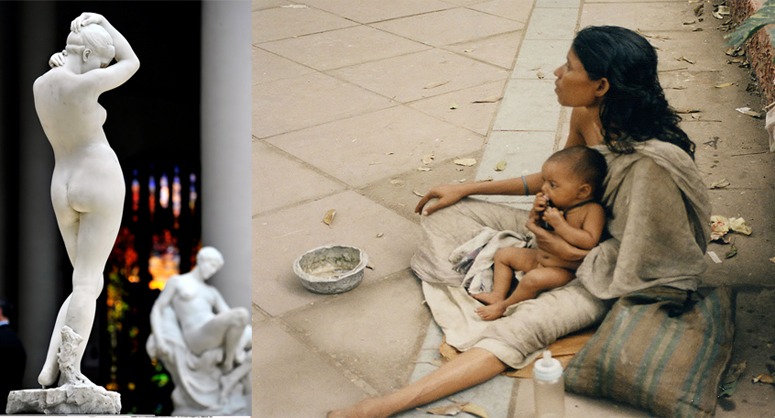
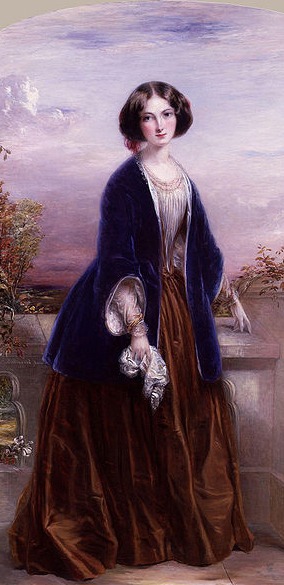
John Ruskin was one of the most brilliant writers of the nineteenth century. We all tread in his picturesque footsteps when exploring foreign cities and taking street photographs. But take care. Ruskin wrote that “Yesterday, I came on a poor little child lying flat on the pavement in Bologna – sleeping like a corpse – possibly from too litte food. I pulled up immediately – not in pity, but in delight at the folds of its poor little ragged chemise over the thin bosom – and gave the mother money – not in charity, but to keep the flies off it while I made a sketch. I don’t see how this it to be avoided, but it is very hardening.” Or was he a hard man? The beautiful Effie Gray (right) thought him oppressive. Her marriage to Ruskin was never consumated because, it is said, he knew of female beauty only from marble statues and was horrified to discover that real girls had pubic hair. Effie divorced Ruskin and had 8 children by his friend, the Pre-Raphaelite painter, Sir John Everett Millais.

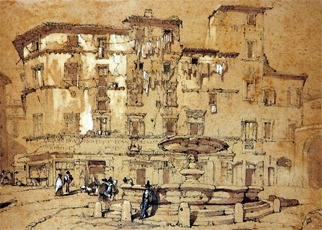
Above image of India courtesy Dey Alexander. Below drawing, by Ruskin, of Piazza Santa Maria del Pianto, Rome.


Panda pandemonium

China’s number one mascot the giant panda (ailuropoda melanoleuca) are only found in the bamboo forests of south western China. “They occupy 6 small forest fragments in the provinces of Sichuan, Gansu and Shaanxi. (5,400 square miles).”

The panda is well travelled in popular culture, as well as being a local hero. With the recent release of Kung Fu Panda, the panda Po looks set to win over another generation of children to panda love.

Habitat fragmentation (by roads and railroads) and destruction and poaching (for their pelts) are still major threats to the Giant Panda, even though poachers and smugglers have received death penalties or long prison terms. Pandas are often injured in traps and snares set for other animals.

Emerging threats to the panda populations are mining, hydropower and tourism. A giant panda may consume 26-83 pounds of bamboo a day to meet its energy requirements.