
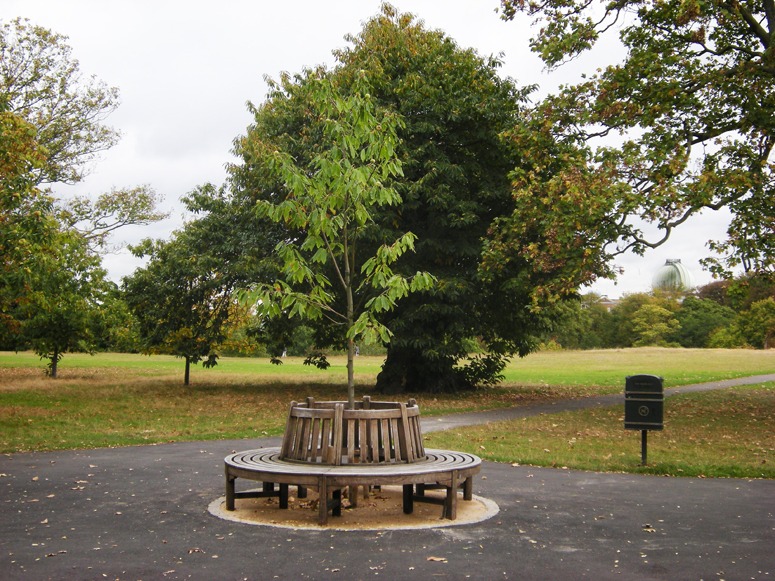
New ancient chestunt tree in Greenwich Park
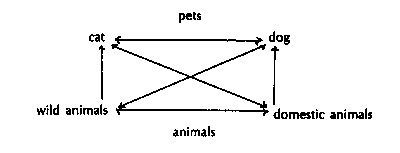
Roland Barthes' diagram deals with the wild:domestic binary pair and applies to trees as well as animals
New ancient chestunt tree in Greenwich Park
Roland Barthes' diagram deals with the wild:domestic binary pair and applies to trees as well as animals
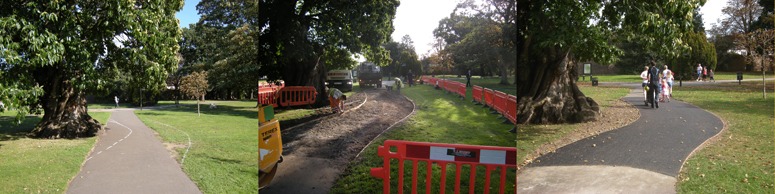
This is the right way to look after England's ancient trees
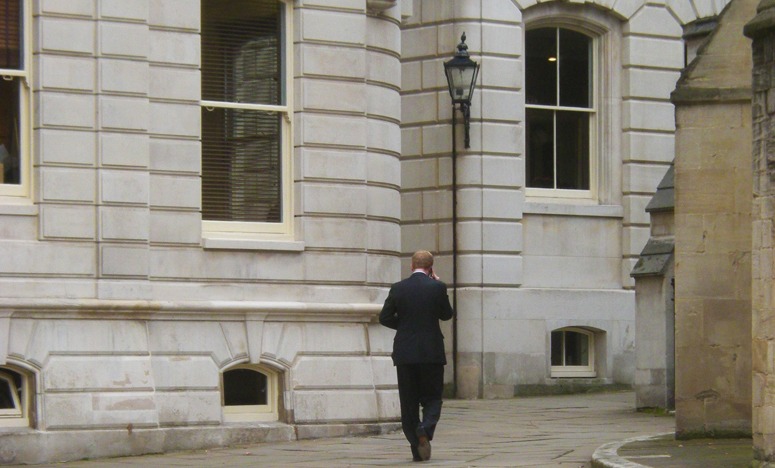
As this man walked past me I heard him bark into his mobile phone ‘I could pay the mortgate on a 5-bedroom farm in Devon for what I’m paying to rent in London’ (the photograph was taken outside the Temple Church, made famous by Dan Brown’s Da Vinci Code, in the Inns of Court). Joel Garreau, in Edge City: Life on the New Frontier, 1991, suggested that the South of England from Dover to Bristol is effectively one large Edge City. That city is pushing into the West Country, with steep increases in property prices. The internet allows skilled residents to particpate in the knowledge economy while enjoying a peaceful landscape. This was, of course, Ebenezer Howard’s Garden City dream. Is the country made more or less sustainable when knowledge workers move out of London?
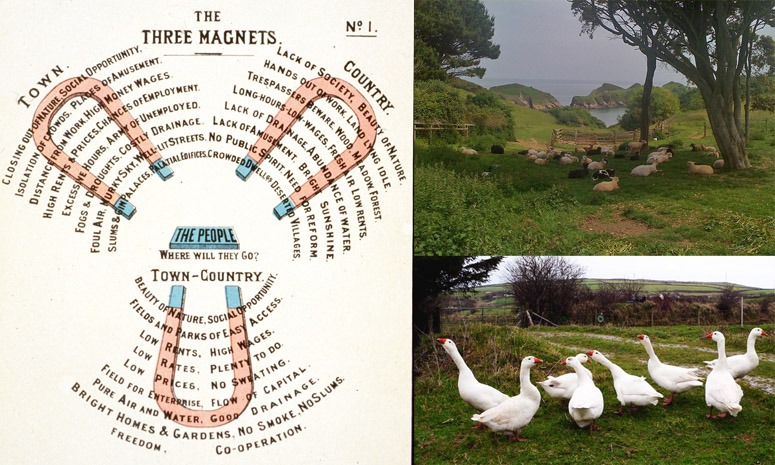
With broadband, the Devon countryside can become TOWN-COUNTRY
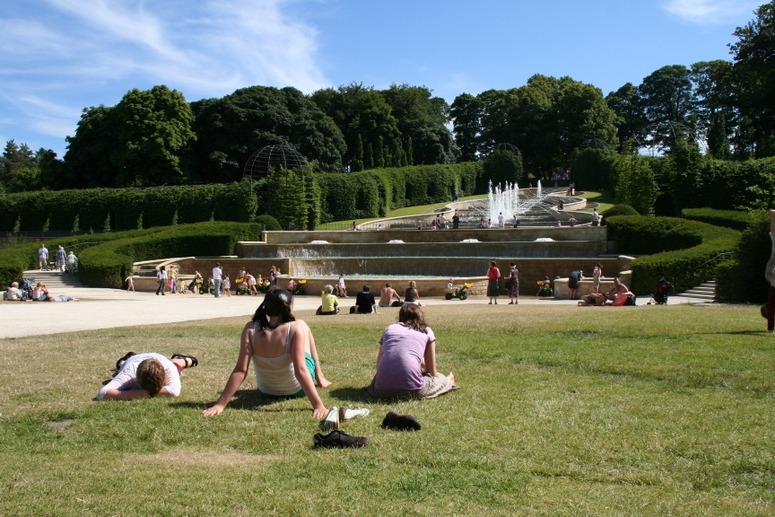
Does Alnwick have the greatest garden made in the twentieth century?
My view is that Jacques Wirtz is a good designer but that most of the work was done by his sons. I believe one son holds a qualification in landscape architecture from what is now the Erasmushogeschool in Brussels, and was regarded as a weak student. The other son is an agricultural engineer. Caveat emptor. The Duchess made a big mistake in not appointing Tadao Ando, who was invited to Alnwick. Ian August’s book reports the conversation with Ando. He said ‘”I want to design this whole garden myself. In my opinion, there is no great garden designer alive today” – this sitting next to Jacques Wirtz – “and no great garden has been built in the last hundred years”. We sat, stunned. The insult to the Wirtzes was worse for being so casually delivered, but Ando seemed oblivious’. The simple truth is that Ando, who trained as a carpenter, not an architect, is a great designer and, with help, could have done a really great job. Instead of this, the Duchess has what might be a display garden for an upmarket garden centre and ‘leisure attraction’. The lesson is that a good client, when ‘stunned’ by a good designer, should pause for thought. A week’s meditation in a hotel designed by Tadao Ando might helped to concentrate her mind.
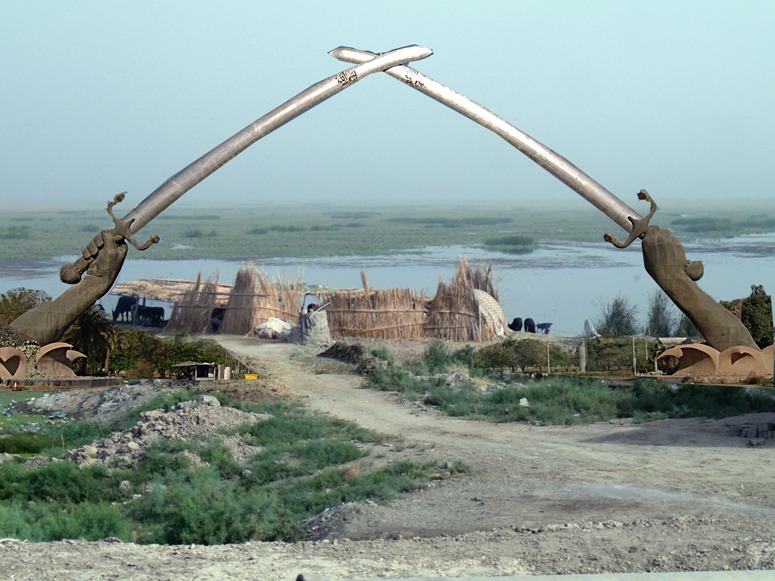
Saddam Hussein’s Victory Arch in Baghdad is being restored – with mixed feelings among commentators. Meanwhile, the habitat of the Marsh Arabs is also being restored. But the Marshes, which are often identified as the geographical location of the Garden of Eden story, now have only a few thousand inhabitants instead of the half-million who lived there before the wicked Saddam Hussein drained the marshes. My proposal is to make an area of marshland around the Victory Arch in Baghdad to symbolise the victory of the wetlands over the dictator. It could also create a tourist attraction, a wildlife resort, a water management facility and a recreation area for the oppressed people of Baghdad. The name of the city could mean Bag “god” + dād “given”, translating to “God-given” or “God’s gift”. Or it could mean Bağ “garden” + dād “fair”, translating to “The fair Garden”.
Images courtesy pennstatelive james_gordon_los_angeles
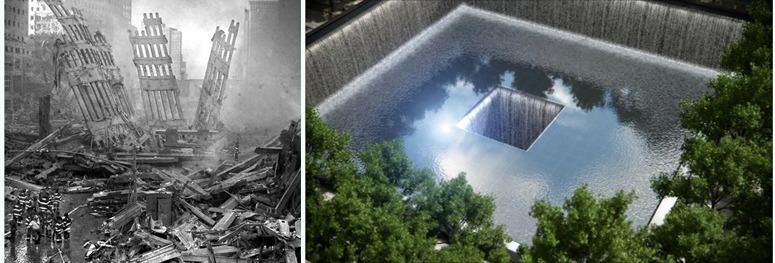
9/11 World Trade Center Memorial Landscape Architecture
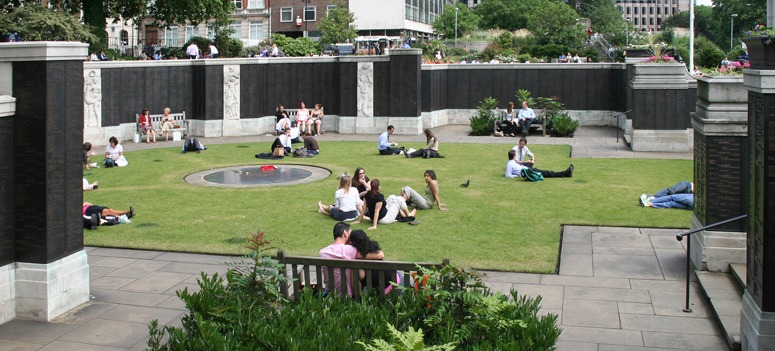
The precedent for sunken memorials with names carved on polished stone walls