Is it garden design? Is it fine art? Is it conceptual art? Is it beautiful?

Question "But is it art?"

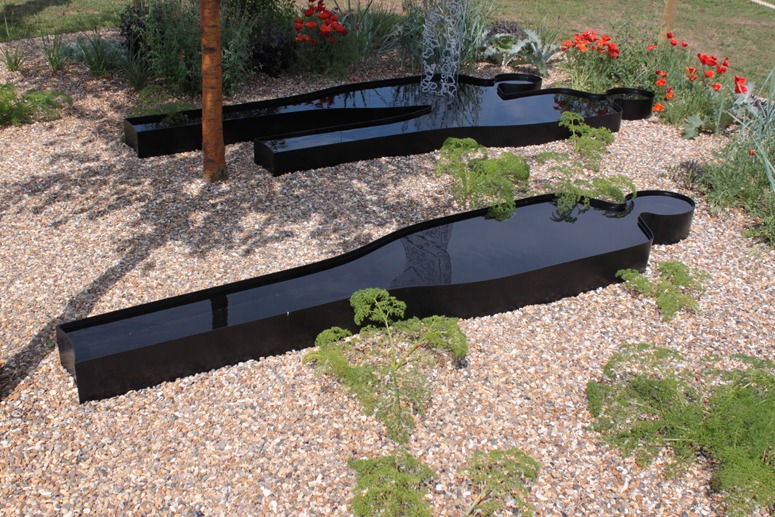
A few years ago, the RHS introduced the interesting category of Conceptual Gardens to the Hampton Court Flower Show. The above example, from the 2011 Show, is by Andrew Cook, Nicola Greaves, Camilla Moreton. The concept is explained as follows ‘Raising awareness of skin cancer this circular gravel garden, designed by students from Falmouth University, is a place where plants can plants bask in the sunlight whilst humans (represented as shadows on the ground) can escape to the shady shelter of the trees which line the garden.’
Let’s try some Qs&As:
Q ‘Is it a garden design?’ : A ‘It makes use of plants and it has an aesthetic quality, but it does not have the traditional garden roles (producing food, a place to sit, beside a house, etc)’
Q ‘Is it fine art?’ : A ‘It passes the test of having been in an exhibition, and this section of the Hampton Court Show could be counted an art exhibition, so “maybe”. ‘But it falls short of the requirements for fine art in having an explict message which makes it too like an advertisement (for skin cancer awareness)’
Q ‘Is it conceptual?’ A ‘Yes to the extent that it rests on an idea. But no because of the nature of the idea in question: it is far too “obvious”‘
Q ‘Does it produce the pleasurable quiver and sharp intake of breath which often comes from viewing a work of art?’ A ‘No.’
Q ‘Is it beautiful’ A ‘Not quite. The watery figures are good with the gravel and umbelifers. But the tree interrupts the composition, the wire sculpture spoils the purity of the figures and the peripheral planting is an untidy distraction’

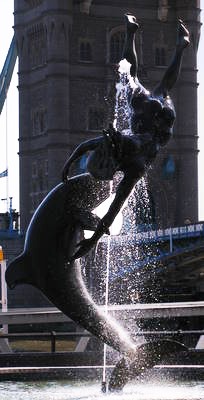
Patronage – and the lovliest dolphin and naked boy fountain in the world

Dolphin boy fountain by David Wynne

I once worked in the garden of the David Wynne, who made this fountain – and am glad that his client was not the Caliph El Madhi

What a beautiful fountain, with the silver dolphin and the naked boy!.

A Greek of Constantinople made it, who came travelling hither in the days of my father, the Caliph El Madhi (may earth be gentle to his body and Paradise refreshing to his soul!). He showed this fountain to my father, who was exceptionally pleased, and asked the Greek if he could make more as fine. “A hundred,” replied the delighted infidel. Whereupon my father cried, “Impale the pig.” Which having been done, this fountain remains the loveliest in the world.

The fountain delighted David Wynne’s clients and, I guess, it pleases most visitors to Tower Bridge in London. My advice to those who commission public art is: beware of abstract art. They should think in terms of cultural strata. However much the the organizer of a disco may adore Karlheinz Stockhausen, it would not be a popular choice for the playlist.

Garden design and the history of art

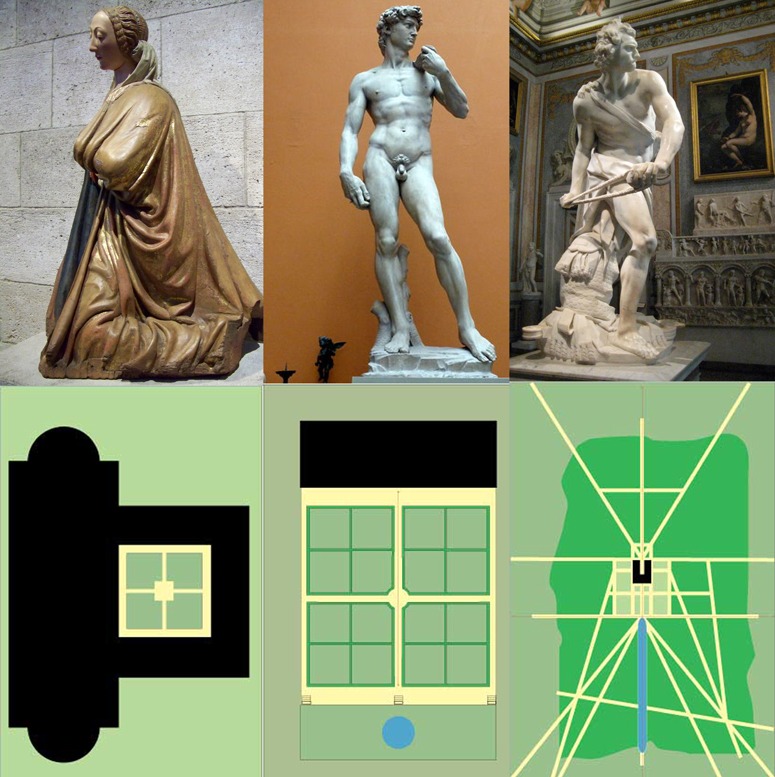
Developments in gardens parallel developments in the fine arts


The top pictures show a medieval statue, Michaelangelo’s David and Bernini’s David.
The lower pictures show a medieval garden, a renaissance garden and a baroque garden.
The pairs represent the devotional attitude of the middle ages, the static calm of the renaissance the drama of the baroque.
I think there are closer parallels between the histories of gardens and fine art than between the histories of gardens and dynasties, which makes me doubtful about the categorisation of British gardens as Tudor, Stuart, Georgian, Victorian, Edwardian etc. Nor do I think kings and queens have had a leading role in the development of garden design. So why are royal names so popular in Britain? Are garden historians flunkies? And how do the Irish manage without royal names for garden styles?

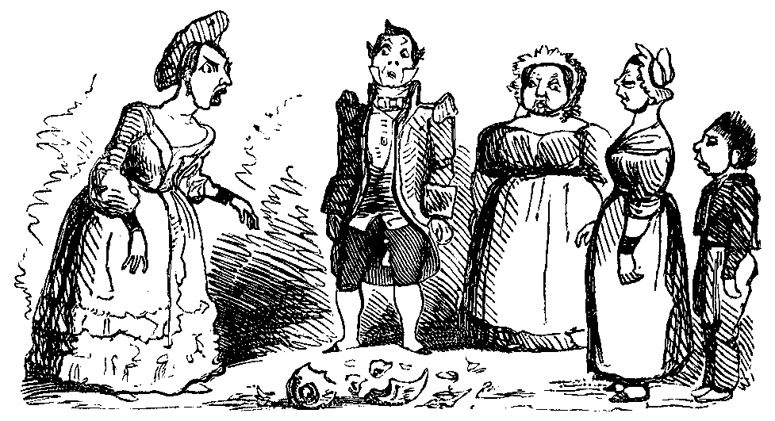
Are garden historians flunkies?

John Evelyn's garden at Sayes Court and the Convoys Wharf Urban Landscape Master Plan

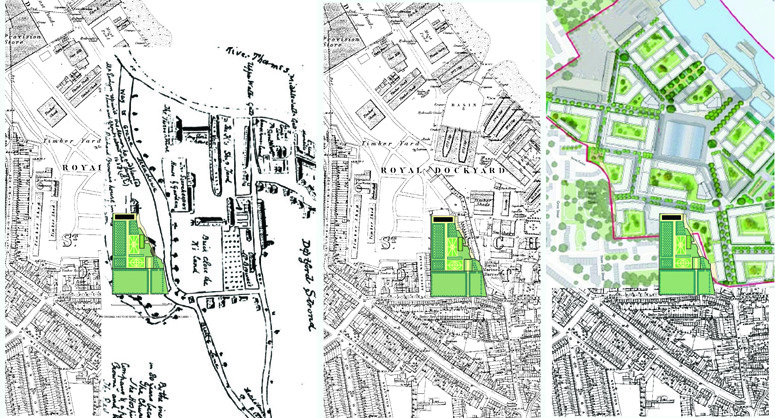
John Evelyn's garden superimposed on plans of the Convoys Wharf site in the seventeenth century, the nineteenth century and, one hopes not, the twentyfirst century

Steen Eiler Rasmussen concluded the second edition of his brilliant book London: the Unique City with these prophetic words: ‘Thus the foolish mistakes of other countries are imported everywhere, and at the end of a few years all cities will be equally ugly and equally devoid of individuality. This is the bitter END’. So what would he think of the Hutchison Whampoa Master Plan for Convoys Wharf? He would detest it, utterly. The architects are Aedas, who claim that ‘ We provide international expertise with innate knowledge and understanding of local cultures’. Evidently, this expertise does not extend to the local culture of Deptford – unless they think it is the same as the culture of London/England/Europe or the World. The planning consultants, let it be recorded, is by bptw . Their website promises ‘responsible architecture executed with imagination’. Maybe the firm can do this. Maybe the client’s brief made it impossible at Convoys Wharf. Or maybe what the project required was a firm of Urban Landscape Designers, rather than a firm which sees its main business as architecture. The architecture makes one yearn for the imaginative approach one sees in Dubai. The spatial pattern resembles that of the Ferrier Estate in Kidbrooke, the planting design is what Chris Baines calls ‘a green desert with lollipops’. I am not an admirer of the scheme – and I much regret that John Evelyn’s design for Sayes Court has been cast into what Leon Trotsky called ‘the dustbin of history’. It is a quotation which gives us a lead into the origins of the Convoys Wharf design. In days gone by it might have graced a Parisian banlieue (like Sarcelles), a suburb of East Berlin – or even Moscow itself. With specific regard to the Sayes Court Garden, we should remember that (1) Evelyn, beyond doubt, was the greatest English garden theorist of the seventeenth century (2) Evelyn played a key role in introducing Baroque ideas on garden design to London (3) the Convoys Wharf site would never have come into public ownership were it not for the generosity of John Evelyn (4) Sayes Court was very nearly the first property to be saved by the National Trust.
THEREFORE the Convoys Wharf site demands a context-sensitive urban landscape design.
Wikipamia shows the present condition of the Convoys Wharf site and the Sayes Court Estate. Also see the Convoys Wharf Planning Application Documents.
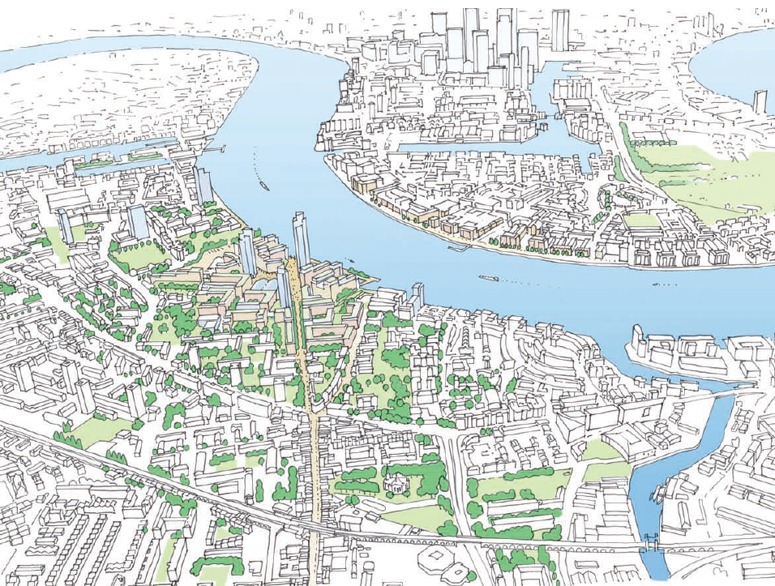
This drawing purports to show 'Landscape, Townscape and Visual Amenity' . Phooey

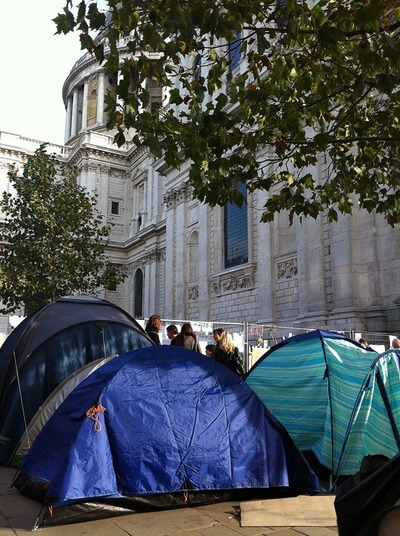
Free street camping in Central London

Free camping in Central London

It used to be a regrettable fact that London did not have a campsite for those who find hotel prices steep. So the anti-capitalism protestors currently occupying the space in front of St Paul’s Cathedral have done backpackers a big favour. The Church, the police and the Corporation of London have, today, decided to take no action against the protestors. My conclusion is that anyone who wants to camp in a London street, square or public park only has to say ‘I am an anti-capitalist’ and they will be allowed to camp for free. At this time of year, my recommendation is to look for a pitch near the vent from an office building. Tramps have always know these places are well-supplied with hot air.
image courtesy spinkney

La Primavera, Plato, Alchemy, Love, Flora and Venus in a garden grove with a flowery mead

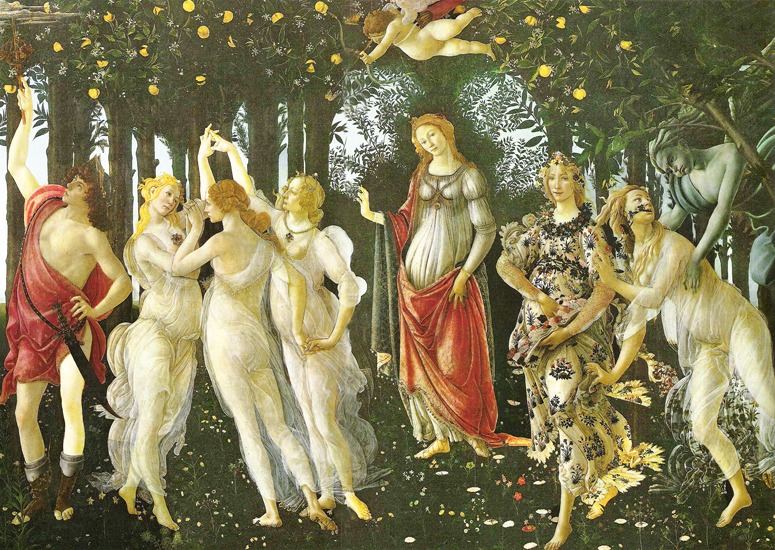
La Primavera (‘Spring’) was painted by Sandro Botticelli c1482 and is one of the world’s most popular paintings. It shows a playful group of young maidens, two males and one putti. They are in a garden grove of orange trees with a flowery mead beneath their feet. The charming scene is interpreted as an allegory of Neoplatonic and Alchemical love, according to the philosophy of Marsilio Ficino. Venus is the central figure, as she is in many garden scenes. The Zephyr on the on the right tries to rape Chloris but then transforms her into Flora (the goddess of flowers). Alchemists believed one must go through difficult times in the progress of the soul towards perfection, as base metals must go through fire to become gold. The garden represents the physical world and the painting was partly inspired by Ovid’s description of the arrival of Spring