Category Archives: Urban Design

Barking Town Square does not deserve a public open space award

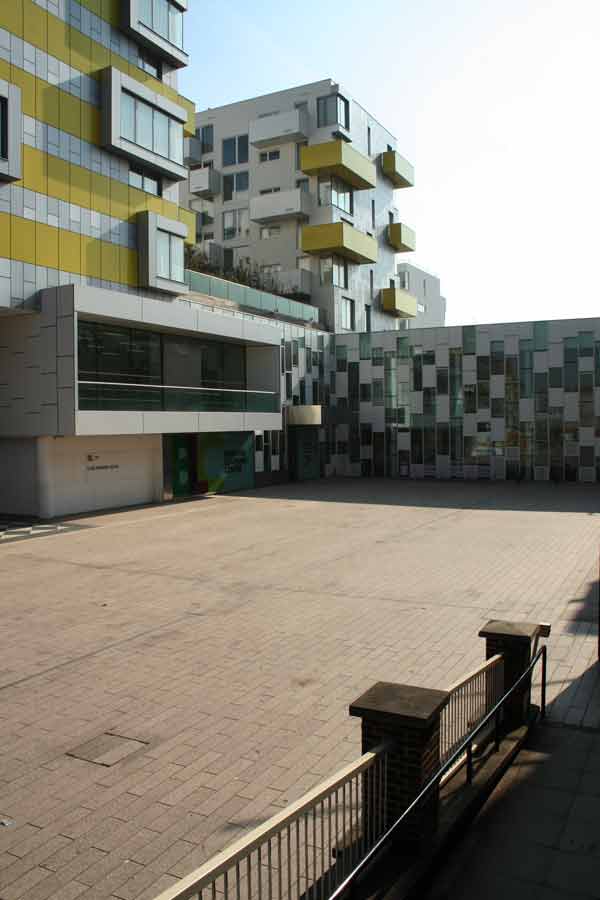
Barking Town Square by Muf Architecture Art should not have won the 5th European Prize for Urban Public Space, however good the architecture

I’d never been to Barking. But in 2008 Barking Town Square won the the 5th European Prize for Urban Public Space so I went to have a look. Sorry about the weak pun, but the judges are Barking Mad. The main building has a sentimental Bauhaus-ey charm but the urban space is a plain rectangle of pink Spanish granite, laid in stretcher bond for no good reason. The hoardings illustrate some planting to come but the “Public Open Space” is a void, an empty space, a nothing. The judges all represent organizations which promote the art of architecture, which is fair enough, because the building is OK, but this is NOT a good urban square. It is as though Jane Jacobs and William H Whyte had never lived. There is no mixed use: the adjoining buildings are all municipal, without the shops and cafes which might have provided users. There is nowhere to sit, ignoring wisdom of Jan Ghel. The ‘square’ is almost a cul-de-sac, ignoring Ed Bacon and Bill Hillier. The paving is non-SUDS. The only redeeming feature is a piece of public art described as a “7 metre high folly [which] recreates a fragment of the imaginary lost past of Barking”. But why re-create an imaginary lost past? Barking had a medieval abbey. Captain Cook was married in a Barking church. Then there is the cultural context. Barking has one of the largest immigrant communities in London, with many from the Punjab and Sub-Saharan Africa – neither of which region is known to admire the Bauhaus. Some architects show genius in urban design. Muf muffed it.

Note: The photograph was taken at about 11.30 am on an unseasonably warm autumn day (28th September 2008). The good urban spaces in London were overflowing with people. The places which remind one of pre-1989 East Berlin were empty.
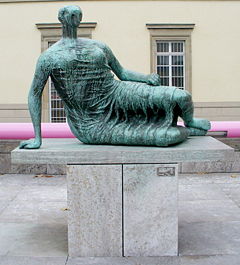
Contextual design and sculpture in Castleford

Our guest contributor, Christine Storry writes that ‘Intuitively, I think the place to start thinking about the issues of identity for the area is with arguably Castleford’s most famous son, sculptor Henry Moore.’

Moore had a deep interest in the siting of his work and often makes me feel a little guilty about reading on trains: he said it was a waste of a wonderful opportunity to observe the landscape. The photograph is of Moore’s bronze “Die Liegende”  in Stuttgart (image source: http://en.wikipedia.org/wiki/Henry_Moore).

If my memory serves me correctly, I think I heard the architect of a dull paving design for Castleford Town Center say that there were patches of black paving to reflect the underlying coal seam. This would count as a response to context but I doubt if it would command as much support as giving Moore an honoured place in Castleford’s urban landscape.

Architecture in context

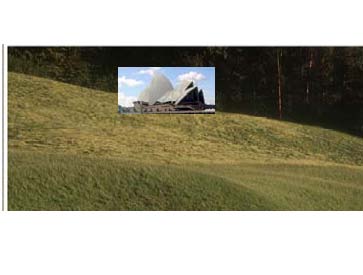
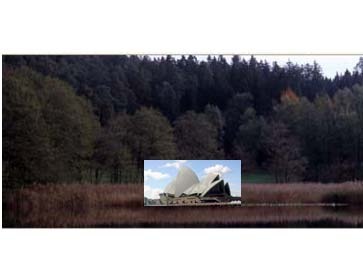
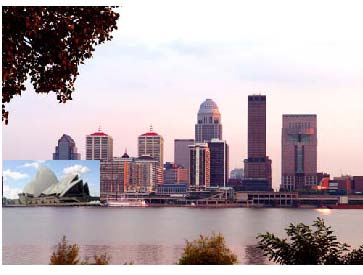
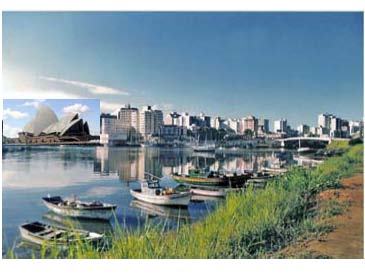
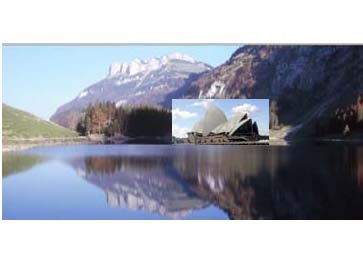
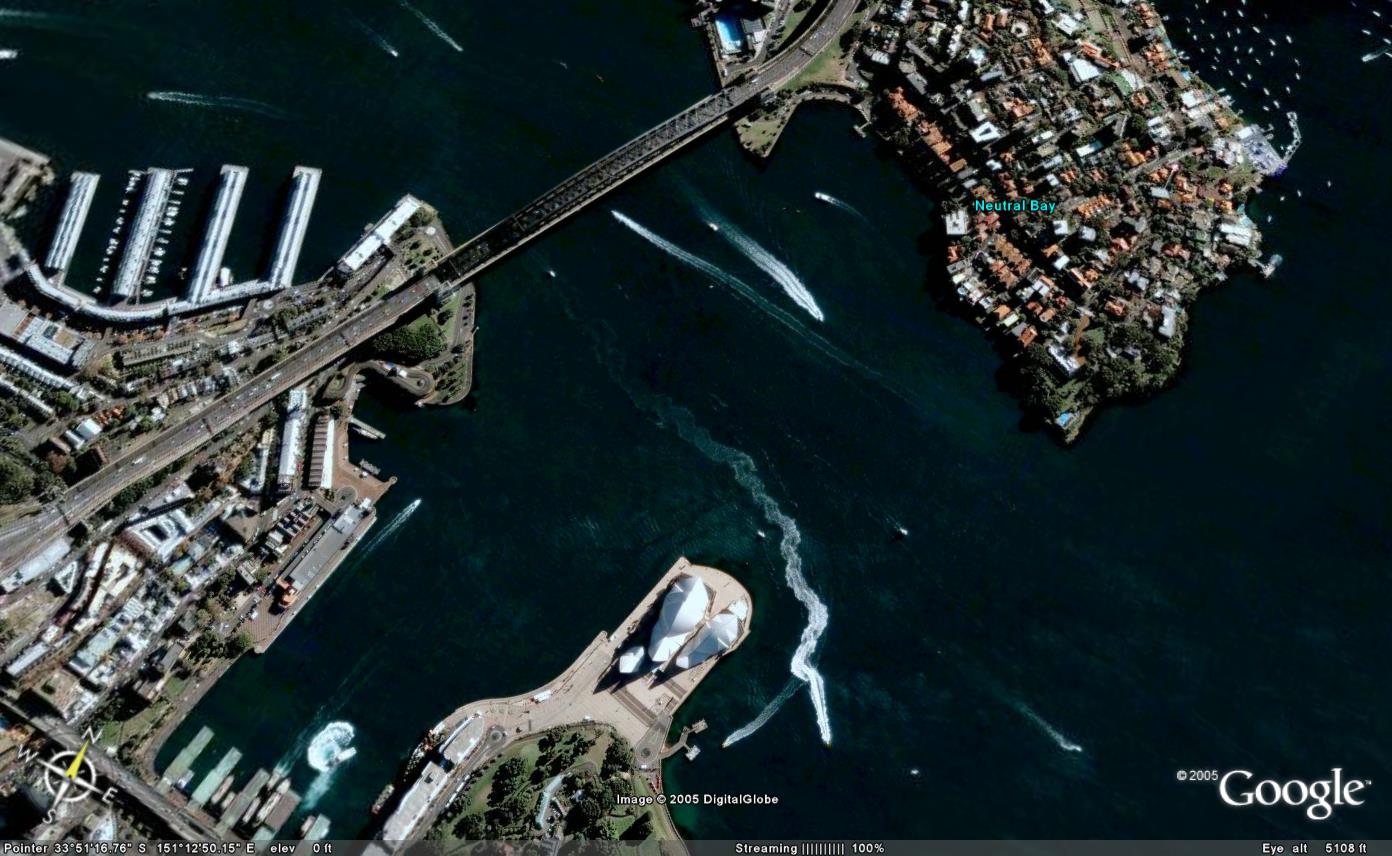
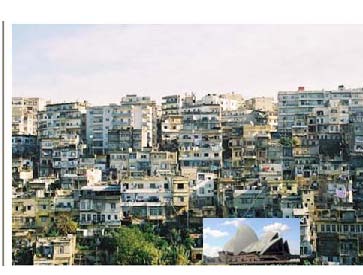
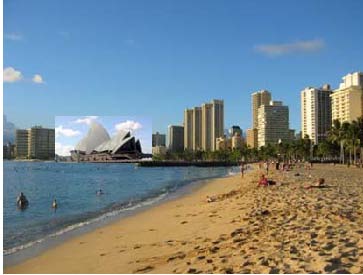
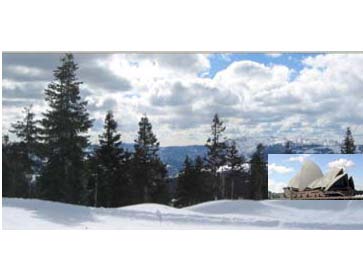
Following our discussion of Design Theory, Christine Storry has prepared these interesting collages of a building in different landscape contexts. She asks: ‘What do they illustrate? That there is a symbiotic relationship between a locale and architecture. Even great architecture. Architects might draw buildings on white or yellow paper or in model or paper space but buildings are built on a site and in a location with all that that means!’ 
Building in a winter landscape
Building in grassland
Building by a forest
Building on a waterfront
Building by a river
Building in the mountains

Sydney Opera House from the air (from Google Earth)

Building amongst lesser buildings

Design theory in architecture and landscape

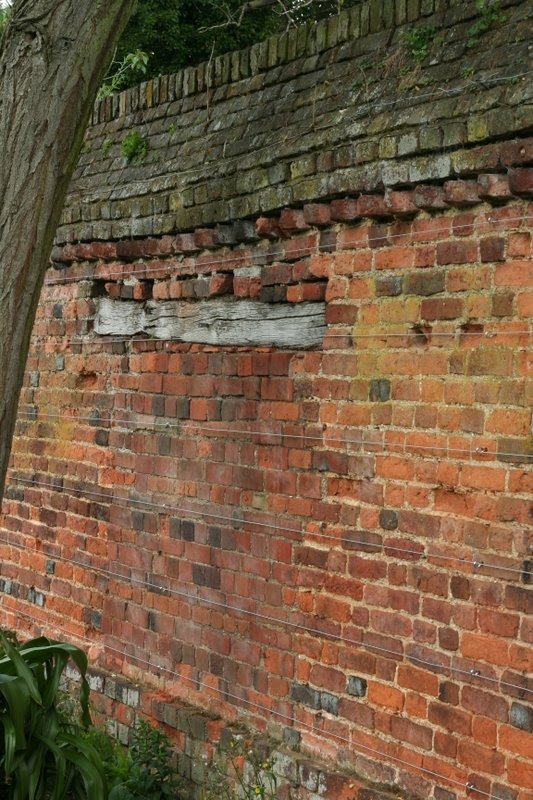
The softness of lime mortar has allowed the doorway in an old garden wall to  be filled with respect to the bond pattern.

An email arrived today with the comment that ‘My primary interest is in design excellence (aesthetics) & I have been writing about how architecture is an art, and unlike other fine arts it is a practical art: a public art.’ But that ‘… because of the demands of sustainability there needs to be a way of re-thinking how we do architecture, privileging design. Central to this idea is that architecture is functional (modernist programme), sceniographic (post-modernist) and meaningful (post-postmodernist agenda)!?’

I agree that architecture and landscape architecture are applied arts. But in this, they do not differ from garment design, furniture design, etc. All should be functional and are best when they have high aesthetic quality. Sustainability considerations apply to each of these arts: if the world is running out of resources then we need to be more economical. This is, amongst other things, an argument for using lime mortar instead of cement mortar. Lime bonded brickwork and stonework can be disassembled, allowing design changes the the reuse of materials.

The public aspect of some applied arts raises other issues. The furniture in my home would seem to be entirely my own concern. But if I want to build a tall modern building in a medieval village then this becomes a matter of legitimate public concern. Ditto for the Martha Schwarz post-modern amhphitheatre in Castleford, especially because a bunch of idiots dipped their hands into the public purse to fund the park.

‘Meaning’ is another issue. A modernist approach to the Castleford Park would have been to discover what people wanted for the space and then make provision for their activities. The postmodern approach, as used by Schwarz, was to give the space a ‘meaning’. I do not know what words she used – could it have been to ‘echo a Roman approach to open space design, as exemplified by the Colisseum’ – but they must have been something inappropriate. A post-Postmodern approach to the Castleford park would have involved recognition of the multifarious interests of local people combined with intelligent design leadership. Beliefs shared between the public and the designer would have facilitated their combination. Flying in a US Design Queen might have worked in the context of shared beliefs.

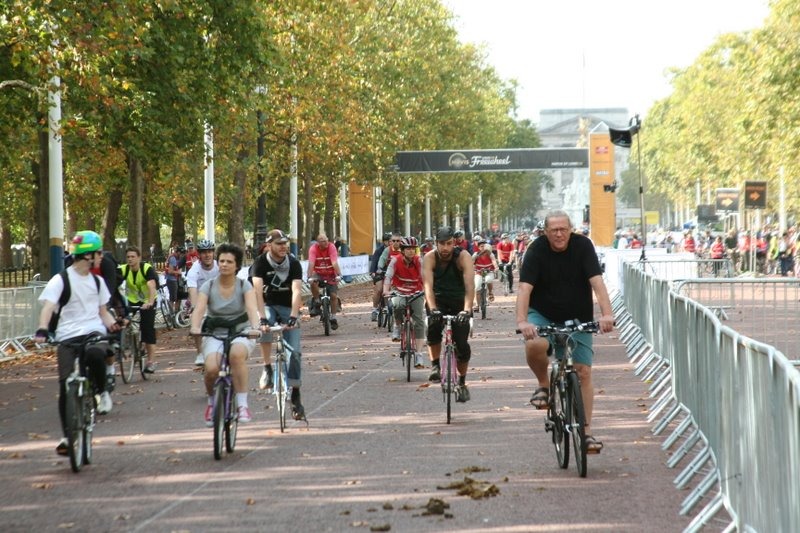
London's Olympic cycling routes

When London cycle routes are safe, beautiful and direct, they will be very popular. Motor vehicles can then be confined to indirect backstreets.

Doubtless, the 2012 athletes will be provided with excellent tracks. But will the cycle paths used to reach the Olympic path be of a decent standard? Maybe.

London had a ‘Cycle to Work Week’ c1974 and I decided to take part. Since then, I have been a regular London cyclist. It felt like pioneering to begin with but cycle usage in the capital has been increasing steadily. Official policy on cycling has also changed and now appears to be as follows:

  1. Appoint platoons of cycle planning officers to commission regiments of consultants on cycle planning.
  2. Include cyclist-friendly policies in local plans (UDPs)
  3. Proliferate signs to mark the London Cycle Network (LCN)
  4. Paint any unwanted patches of roadspace green and call them cycle routes
  5. Ignore routes which are popular with cyclists
  6. Spend as little money as possible on cycle routes
  7. Use traffic calming devices, known as chicanes, to kill and maim as many cyclists as possible.
  8. Introduce bendy busses, described as ‘public transport’, to mop up survirors and make London safe, once again, for vehicles powered by the infernal combustion engine.

So, on the whole, I am lack optimism about the legacy of the London Olympics including a single high-quality cycle route. There are only two reasons for optimism: London’s Mayor (Boris Johnson) and the present leader of the Tory Party (David Cameron) are both keen cyclists. But so was a former Minister of Transport (Sir George Younger) and he managed to achieve nothing of value.

In order to make cycle routes useful and beautiful, cycle route planning and design should be taken out of the hands of transport engineers. The job should be done by landscape architects – but only those who are themselves cyclists.

The Olympic landscape architecture of firework displays

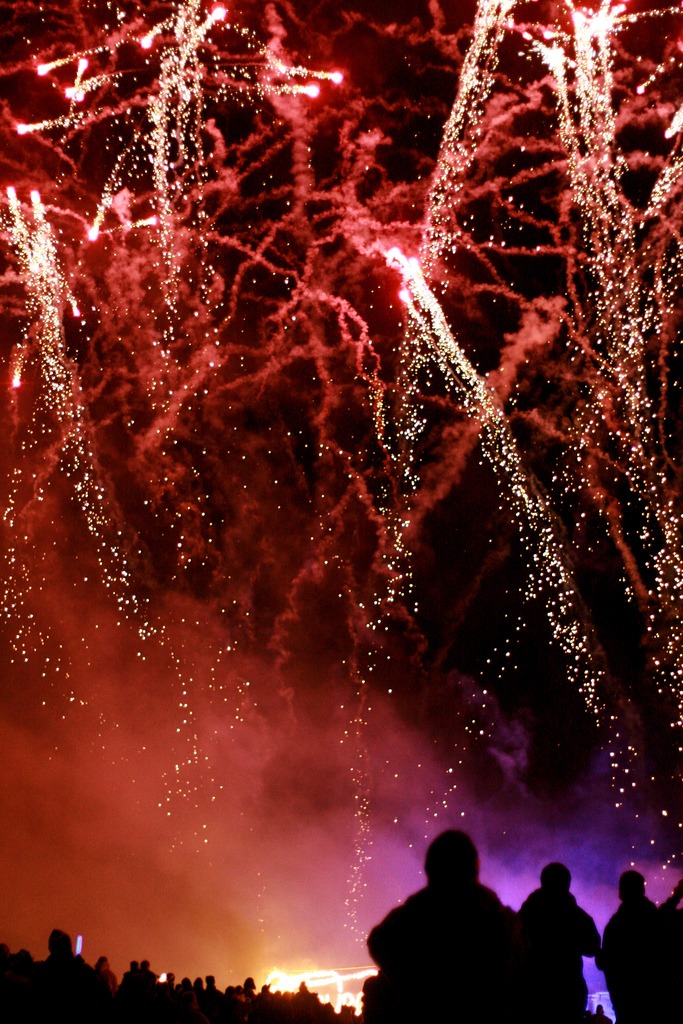
With the hatred of competitive sport one learns best in a boys school, the only parts of the 2008 Olympics I watched on TV were the opening fireworks and the closing ceremony. China’s ancient prowess in fineworks and landscape painting were much in evidence.

Edinburgh: fireworks with landscape and architecture

My home town, Edinburgh, ushers in each new year with brilliant use of its castle as a stage and Princess Street as the front stalls (photo Jenni Douglas). Beijing had fireworks running around the Bird’s Nest and dashing into the city (photo Kathy Zhuang). London had a great display on The Mall in 2002 to celebrate the Queen’s Golden Jubilee. In 2012, it should have a display which bursts out of the Olympic Park, tears up Thames and visits each of the Royal Parks. Such a show, would be a small thank-you to all those unfortunate Londoners, like me, who are forced to contribute hard-earned cash to an otherwise hateful sporting event. Obviously, landscape architects must be involved in planning the landscape fireworkitecture.

See notes on London’s 2012 Olympic Park Development Project.