
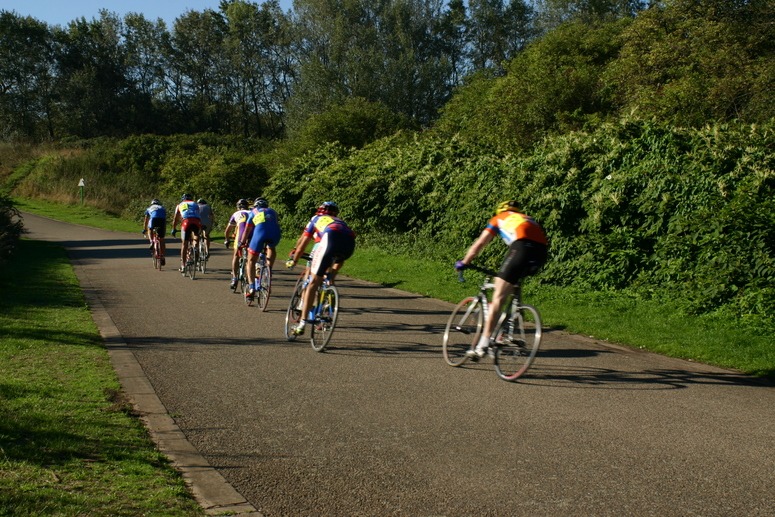
Planning cycle routes is the healthiest, fastest, cheapest, greenest and most ecological approach to greener rural and urban transport in the coming age of Peak Oil
Planning cycle routes is the healthiest, fastest, cheapest, greenest and most ecological approach to greener rural and urban transport in the coming age of Peak Oil
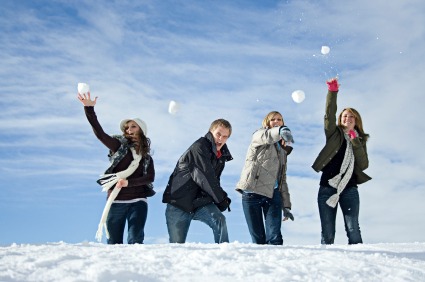
Tom once the winter is over you will be free of snowball throwing teenagers! Then perhaps, given your recent acquisition of expertise in the art of dodging snowballs through firsthand experience, you can give lessons on snowball etiquette in urban and rural areas and advice for the unwary…
I found this description of teenage snowball warfare that might be of assistance in compiling the necessary advice.
Here are several scenerios with which to contextualise your advice:
Scenerio One: A seventy year-old was arrested for allegedly pointing a gun at snowball throwing teenagers.
Scenerio Two: The police and hoodies engage in snowball fight.
Scenerio Three: A man kidnaps a teenager for throwing a snowball.
Scenerio Four: Girl throws a snowball at a boy.
Scenerio Five: Police hunt teenagers throwing snowballs at traffic.
Here is some helpful opinions from the general snowball fight interested public. Overzealous teenagers, snowballs and transportation seem to be a particularly potent mix.
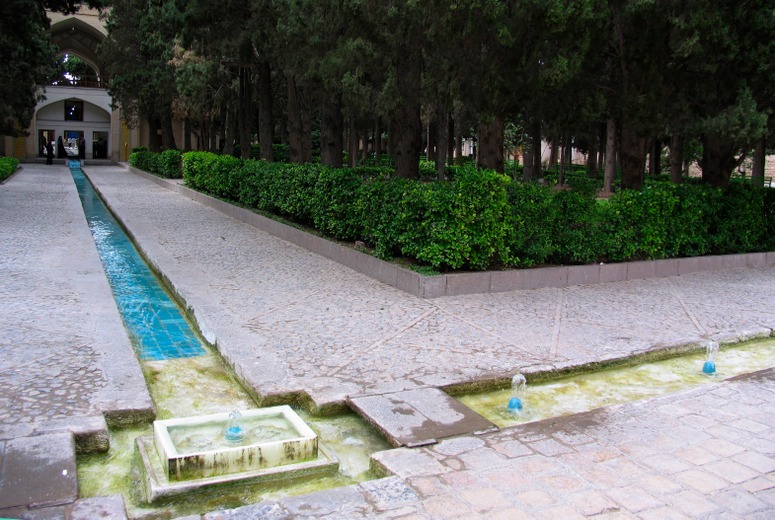
An interesting conservation resulted from shoving myself into the wall of a garden pavilion in order to take this photograph of the Bagh-e Fin garden in Kashan, Iran
When visiting the Bagh-e Fin, on 15th June 2004, one of the curators noticed me in a painful position outside his office. I was taking a photograph. He asked why I was doing it. I said I was interested in garden history. He asked if I thought the Bagh-e Fin was of equal historical importance to the great gardens of Europe. I said ‘Yes – probally more so, because it is the best surviving example of the world’s oldest garden design tradition, originating in the Fertile Crescent’. But, I said, it could be looked after even better than was then the case. ‘What should we do?’, he asked. I said I would make a proposal and send it to him. As we drove north into the desert, I sketched in the back of the car. A friend translated my comment into Farsi and we posted it to him. A reply is still awaited. In case the Bagh-e Fin Conservation Plan has been mislaid, it is now published it on the Gardenvisit website.
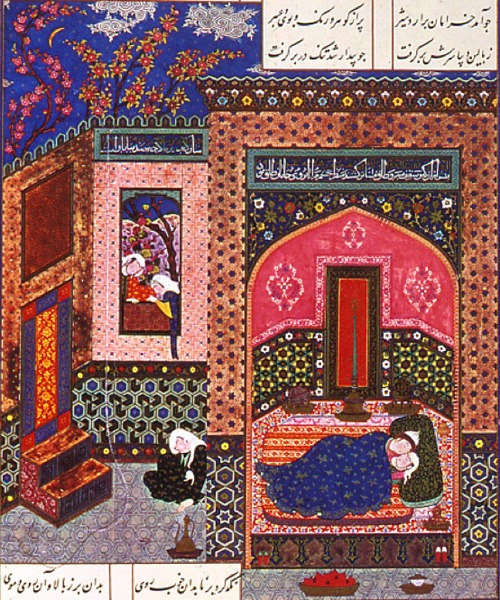
Ardashir with the slave girl, Gulnat, who loved him
I wish Iran would devote less effort to enriching uranium and more to enriching Iranian gardens and conserving Persian gardens. Persia was one of the central powers in garden history, drawing upon and influencing Mesopotamia, Central Asia, India and Islam. My own modest proposal for conserving the Bagh-e Fin will be the subject of a future blog post.
Omar Khayyám (1048-1131), born in Nishapur, was an astronomer and a garden poet. The Rubiayat of Omar Khayyam, 1120 CE, begins:
I
Wake! For the Sun behind yon Eastern height
Has chased the Session of the Stars from Night;
And to the field of Heav’n ascending, strikes
The Sultan’s Turret with a Shaft of Light.
Awake Morning: For the sun behind yon eastern height.]
II
Before the phantom of False morning died,
Methought a Voice within the Tavern cried,
“When all the Temple is prepared within,
Why lags the drowsy Worshipper outside?”
III
And, as the Cock crew, those who stood before
The Tavern shouted – “Open then the Door!
You know how little while we have to stay,
And, once departed, may return no more.”
IV
Now the New Year reviving old Desires,
The thoughtful Soul to Solitude retires,
Where the White Hand of Moses on the Bough
Puts out, and Jesus from the Ground suspires.
V
Iram indeed is gone with all his Rose,
And Jamshyd’s Sev’n – ring’d Cup where no one knows;
But still a Ruby gushes from the Vine,
And many a Garden by the Water blows.
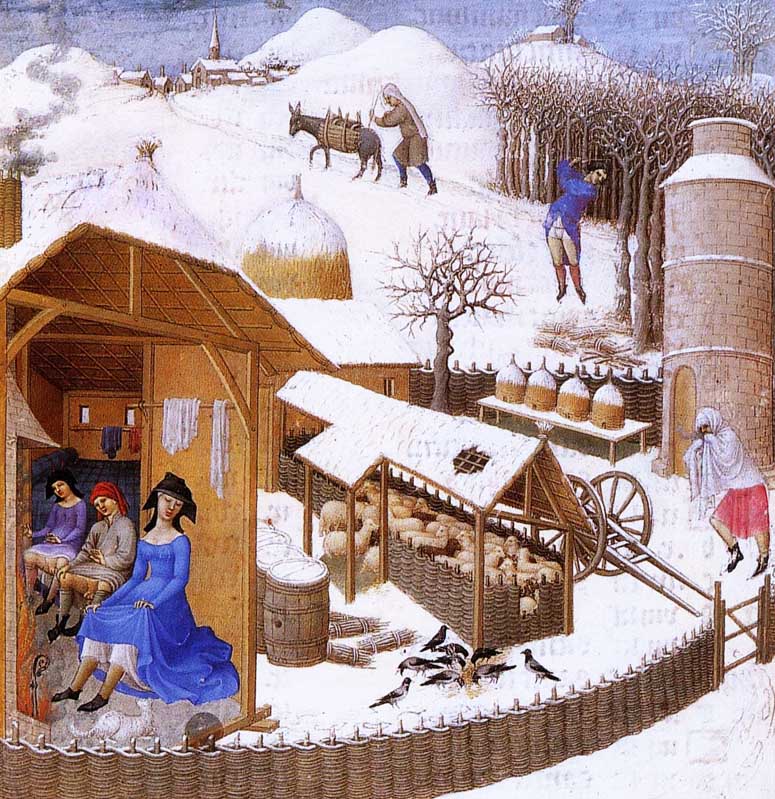 Europe is still frozen but we should not complain – and perhaps our predecessors did not mind the cold either. This brilliant painting of a medieval garden yard is from Les Très Riches Heures du Duc de Berry. The painting is dated to c1410 – so we can celebrate its 600th annniversary. The wattle fencing is exquisite. The sheep are better protected than on a modern farm. The beehives are in good order and produced a more nutritious sweetner than our refined and dangerous sugars. Mum is modest but the young girl and boy are exposing their genitals to the warmth of a fire. It reminds me of a lecture from the president of the students union in my first week at university. He solemnly informed his audience that if, before intercourse, a man spent an hour with his testicles between two lightbulbs it would reduce the risk of an unwanted pregnancy. I never put the theory to the test.
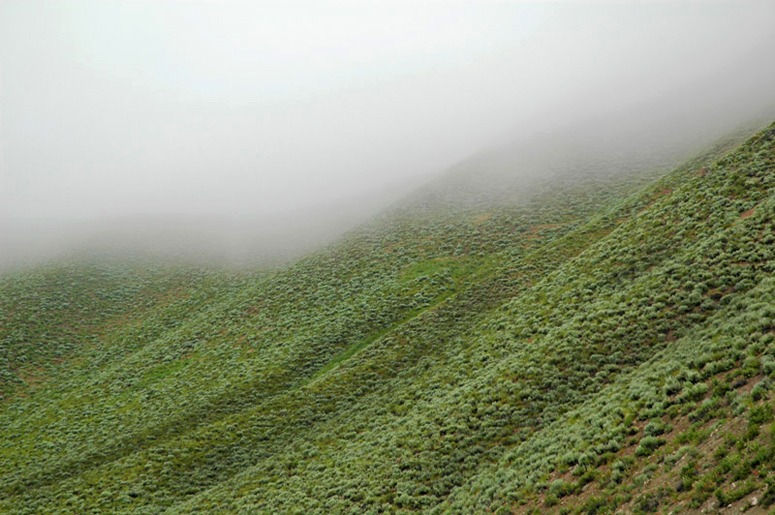
The sublime is a neglected quality in garden and landscape design. Edmund Burke associated the sublime with terror, astonishment, admiration, wonder, and respect ” hardly any thing can strike the mind with its greatness, which does not make some sort of approach towards infinity; which nothing can do whilst we are able to perceive its bounds; but to see an object distinctly, and to perceive its bounds, is one and the same thing. A clear idea is therefore another name for a little idea.” In today’s terms, the view is also beautiful.
I have visited many designed landscapes and gardens without seeing anything as sublime as this photograph – of fog and sagebush in the Rocky Mountains.
Image courtesty Josh