Greenwich landscape architecture urban design project 2011

by Tom Turner @ 2:25 pm December 9, 2011 -- Filed under: Landscape Architecture,London urban design   


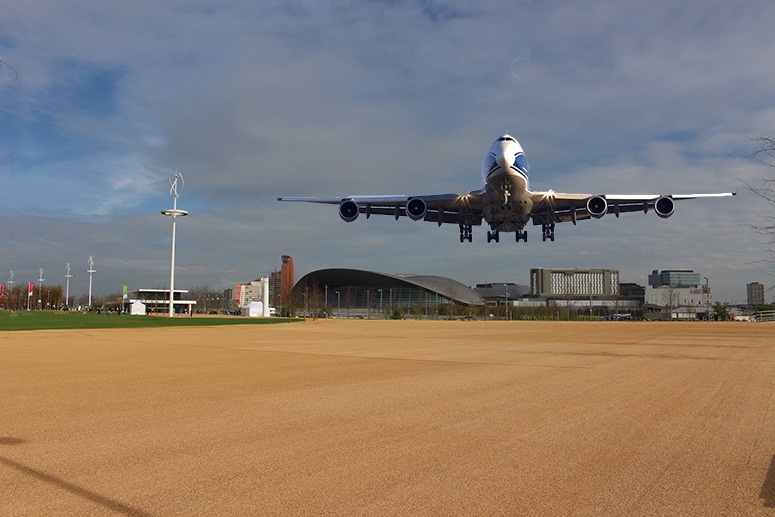
The Isle of Dogs to Silvertown reach of the River Thames is becoming de-industrialised. This project looks 300 years back, 3 years forward, 30 years forward and 300 years forward. It has a musical theme, reflected in the cello playing, which envisages a succession of waterfront areas, with the tempo moving from fast to slow as the river flows east. The zones are linked by two greenway corridors: (1) a modulating waterfront greenway-blueway (2) an inland service corridor with a Highline-style greenway above, for sustainable green transport, shopping and leisure.
The project was done by University of Greenwich MA Landscape Architecture students in the autumn of 2011.

John Evelyn’s garden at Sayes Court and the Convoys Wharf Urban Landscape Master Plan

by Tom Turner @ 6:54 am November 4, 2011 -- Filed under: context-sensitive design,garden history,landscape and garden archaeology,London urban design,Urban Design   

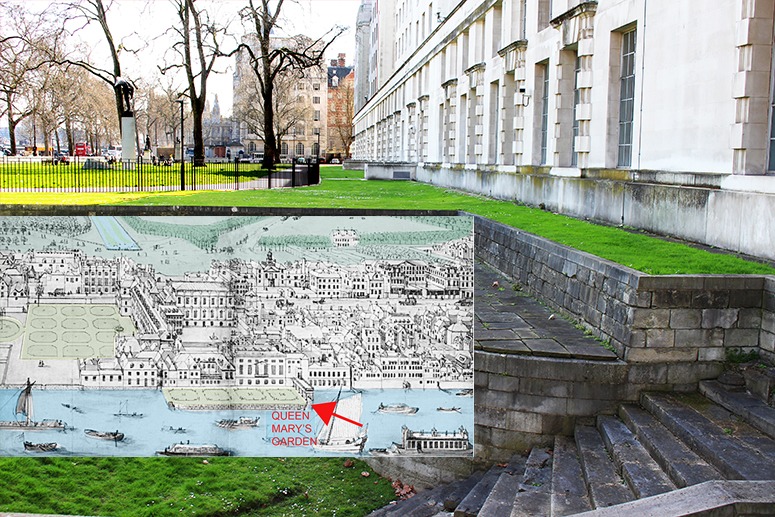
John Evelyn's garden superimposed on plans of the Convoys Wharf site in the seventeenth century, the nineteenth century and, one hopes not, the twentyfirst century

Steen Eiler Rasmussen concluded the second edition of his brilliant book London: the Unique City with these prophetic words: ‘Thus the foolish mistakes of other countries are imported everywhere, and at the end of a few years all cities will be equally ugly and equally devoid of individuality. This is the bitter END’. So what would he think of the Hutchison Whampoa Master Plan for Convoys Wharf? He would detest it, utterly. The architects are Aedas, who claim that ‘ We provide international expertise with innate knowledge and understanding of local cultures’. Evidently, this expertise does not extend to the local culture of Deptford – unless they think it is the same as the culture of London/England/Europe or the World. The planning consultants, let it be recorded, is by bptw . Their website promises ‘responsible architecture executed with imagination’. Maybe the firm can do this. Maybe the client’s brief made it impossible at Convoys Wharf. Or maybe what the project required was a firm of Urban Landscape Designers, rather than a firm which sees its main business as architecture. The architecture makes one yearn for the imaginative approach one sees in Dubai. The spatial pattern resembles that of the Ferrier Estate in Kidbrooke, the planting design is what Chris Baines calls ‘a green desert with lollipops’. I am not an admirer of the scheme – and I much regret that John Evelyn’s design for Sayes Court has been cast into what Leon Trotsky called ‘the dustbin of history’. It is a quotation which gives us a lead into the origins of the Convoys Wharf design. In days gone by it might have graced a Parisian banlieue (like Sarcelles), a suburb of East Berlin – or even Moscow itself. With specific regard to the Sayes Court Garden, we should remember that (1) Evelyn, beyond doubt, was the greatest English garden theorist of the seventeenth century (2) Evelyn played a key role in introducing Baroque ideas on garden design to London (3) the Convoys Wharf site would never have come into public ownership were it not for the generosity of John Evelyn (4) Sayes Court was very nearly the first property to be saved by the National Trust.
THEREFORE the Convoys Wharf site demands a context-sensitive urban landscape design.
Wikipamia shows the present condition of the Convoys Wharf site and the Sayes Court Estate. Also see the Convoys Wharf Planning Application Documents.

This drawing purports to show 'Landscape, Townscape and Visual Amenity' . Phooey

Healing hurts: past

The big picture of the London Riots is very disturbing. The burnt out shell of the 140 year old Reeves furniture store is symbolic of the losses London has suffered. “It is now likely that the damage which was ‘worse than the blitz’ would force the ravaged building to be demolished and rebuilt.” How to explain the mindless and pointless destruction and the reckless endangering of life supposedly by a twentyone year old?

So is it social division, or a bizarre new form of recreation to relieve ennui, the result of political correctness, a new phenomenon of virtual gangs or some other cause?

More importantly, how should London rebuilt to heal hurts past and with a renewed confidence as the Olympic city? And what lessons does the experiences in London hold for the sustainable urban design and planning of other complex global cities?

Olympic 2012 Park landscape and architecture

by Tom Turner @ 12:21 pm August 3, 2011 -- Filed under: Landscape Architecture,landscape planning,London urban design   

In 2005 I made my predictions and stated an intent to monitor the progress of the 2012 London Olympic Park. I took 500+ photographs of the site and hoped to follow the changes. This did not work, because they had to close off public access to the site, but I was kindly invited to view progress on 22.7.2011. The first point to strike me, on the jaw, was the total inability of the architects to work together. There is no relationship of any kind between the sports buildings. What, one might ask, can one expect of Zaha Hadid (Aquatics Centre), Michael Hopkins (Velopark), Populous (Olympic Stadium) or MAKE (Handball Arena)? This is an easy question to answer: I expected them to TALK to each other and to create a whole which is more than the sum of its parts, more than a bag of Liquorice Allsorts. I also expected the client to ensure that this conversation took place and had a fruitful outcome. But they didn’t. The landscape architects could have done the design co-ordination, had they been asked. Instead, they have designed a swathe of greenspace which can be expected to help in unifying the outdoor landscape. The underlying principles are ‘Bauhaus’: the outdoor form of the buildings reflects their internal function. The buildings have an outdoor setting which is more nature than garden (like the Meisterhäuser in Dessau). Someone, as yet unidentified, had the excellent idea of having acres and acres of wildflower meadow flowing around the buildings and along the river. It will be colourspace instead of greenspace and it will help distinguish the 2012 Olympic park from a 1980s British Garden Festival.
A very disappointing aspect of the Olympic 2012 Park is that the general public will have NO ACCESS in 2012. We Londoners have paid for many of the facilities. We will have our city greatly disrupted during the games. But there are no plans to let us see our park. Only the ticket holders will have this privilege – and a great many more people applied for tickets than have received tickets. A friend bid for £3000 of tickets and got none. After the Olympic Games end the plan is to keep the park closed and set about the task of transforming it for public access some time in 2013. I urge a re-consideration. They should open the park to FREE PUBLIC ACCESS FOR AT LEAST TEN DAYS AFTER THE END OF THE GAMES.
My 2005 comment on the prospects for the 2012 Olympic Park gave reasons for optimism and reasons for pessimism. In July 2011 the site looked like a road widening scheme near an airport, so I can’t say. My guesses are (1) the wildflowers will be wonderful (2) the buildings, as individual objects, will be handsome (3) there is a risk of the end product resembling a collision between an airport and garden festival. Let’s hope I’m wrong.
The below photograph, also taken from outsidethe park, shows what might have been achieved inside the park if more of the vernacular Lea Valley could have been retained. My belief is that it could have been done and that it has not been done.

Is Forum Magnum the stupidest urban landscape design in London?

by Tom Turner @ 9:47 am July 25, 2011 -- Filed under: London urban design,Urban Design   

What should be done to improve the urban landscape design of this space?

I pass Forum Magnum Square quite often and took this photo to show it at a busy period: 5.30 pm on the afternoon of Sunday 26th June 2011. Forum Magnum Square is 100m from one of Europe’s largest tourist attractions. My180° photo was taken from the white cross in the centre of this map. London’s parks and open spaces were jammed with people. It was, for London, a hot day (27°) and people were seeking shade everywhere. I guess anyone can say why the space is empty. But what should be done? A biodiversity meadow? A beer garden? A tourist market? A food court? Another building? A fishing pond? A fernery? A monument to victims of torture? I think they should hold 2-stage competitions for the re-design of places like this: Stage 1 – to find an imaginative use; Stage 2 – design the space to accommodate the new use. In New York City they use incentive zoning to create POPS = Privately Owned Public Space. Great idea. Forum Magnum is Latin for Great Forum. A forum was a public square or marketplace in an ancient Roman city, also used for assemblies, public business and siting temples. Forum Magnum enjoys none of these functions. It is a great stupidity but is not great in any other way. Can anyone suggest an urban space in such great location which surpasses Forum Magnum square in stupidity?

Romantic new garden for the cafe in Chiswick Park?

by Tom Turner @ 1:53 pm April 30, 2011 -- Filed under: garden history,Garden Visiting,London urban design   

New garden landscape for the cafe beside Chiswick House


Evidently, English Heritage staff have become avid followers of this blog. In August 2010, we criticised the new cafe for being in a sea of bitmac. Now it is surrounded (top photo) by an attractive surfacing with the friendly name of ‘tar and chips’. We therefore urge EH to take another step and implement the proposal in the lower photograph.
But when I visited the park today a nice man came running towards me and advised that if seen on my bike again the fine would be £8. I should not have made this comment in August 2010: ‘I have always had a soft spot for Chiswick House and Park: my Mum used to play there; it is a key project in William Kent’s design progress; it is the only park or garden in the world where a uniformed official has told me that “you can ride your bicycle here if you want to”‘.

Plans of Chiswick House in 1729 and 2010 (EH plan; NE orientation). The canal would be below the drawing and the new cafe above the drawing


Chiswick House Park as it was and as it is

Two days in the lives of two London trees in spring 2011

by Tom Turner @ 6:10 pm April 3, 2011 -- Filed under: London urban design   

I was concluding that the leaves would never return to London’s trees when, in the snap of two fingers, the spring is rushing ahead. The above two photographs were taken two days apart, as March turned to April. The weather was much colder than usual before Christmas but since then has been relatively warm.

Three days more growth

The same scene three weeks later

Specialised public open space enriches urban landscape design

by Tom Turner @ 5:52 am December 3, 2010 -- Filed under: context-sensitive design,London urban design,specialised POS   


The ‘urban squatters’ skateboard park on the South bank in London is one of my favourite examples of a highly specialised, and unofficial, public open space. Benighted planners have as unimaginative an approach to POS as they do to education. It is ONE SIZE FITS ALL – a national curriculum and a national provision of ‘public open space’. The historic standard was ’7 acres of open space/1000 people’, to go with a national diet of one glass of milk, four slices of bread, meat and two veg, with a fish on a Friday. Cooks have liberated us from wartime diets but wartime POS provision continues. ‘You can have any POS you want, so long as it is green’. But, as the video shows, London’s young, dynamic, agile and multi-ethnic youngsters have other ideas, other tastes, other skills and a harlequin love of coloured space. My conclusion is that the age of Generalised POS is over. The age of Specialised POS has begun. The above example cost the authorities nothing to make and costs them nothing to maintain. It is therefore more SUSTAINABLE than a stupid patch of neglected grass.
Notes (1) other examples of specialised POS welcome (2) I’m not sure but I think the urban space in the video is a consequence of the architecture professions onetime love of pilotis.

The London Tower: Home and Away.

by Christine @ 5:25 am September 28, 2010 -- Filed under: context-sensitive design,London urban design,Sustainable design,Urban Design   

Designing a city is a complex business. There are commercial and development pressures to be considered. But a city is more
than just a continual investment of capital and occupation of new space. It has an identity. Sometimes only a local one. But sometimes
a global one.

Sometimes a remembered one.

What gives a city its identity? Consider how much of your city can you change and still have your city recognised for the qualities that others
currently value. Ask yourself what attributes are different to other cities and what are the same.

Is going higher the best option? How should it be done? Why should it be done? And when should it be done?

If the skyline was to change which buildings would you miss?

Why?

New vistas from the Eye

Looking at London from the Eye gives a whole new perspective on the city. Another view from the Eye enables the viewer to ask ‘how green is my city?’ Some of the answers might surprise.

Newer Posts »