- England
- Scotland
- France
- Holland
- Germany
- Italy
- Spain
- Portugal
- USA
- China
- Japan
- India
- Iran
- Advice
- Gardens
- England
- Scotland
- France
- Holland
- Germany
- Italy
- Spain
- Portugal
- USA
- China
- Japan
- India
- Iran
- Advice
- Garden Tours
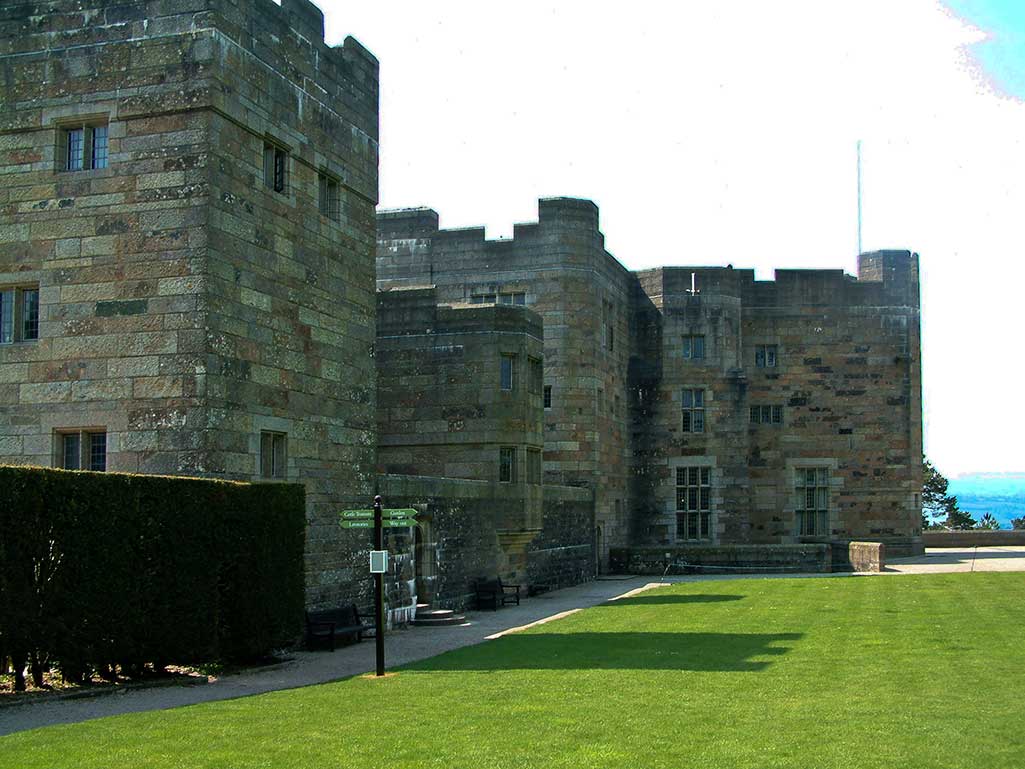
A twentieth century castle, designed by Edwin Lutyens for a millionaire businessman. George Dillistone helped with the garden design. It was a picturesque conception: a dramatic site, a castellated building and Reptonian terraces. But it is a chilly place and one cannot help remembering that Lutyens did not like spending time in gardens. It's a source of regret that Gertrude Jekyll was not on hand to advise him on the planting. But the National Trust has done a good job of furnishing Castle Drogo with an Arts and Crafts Style garden. The NT has also done an extraordinary job of repairing the Castle (to stop damp penetration).
The formal garden is Grade II* registered. The importance of the garden is that there is only one overlay of design from the 1920s. The hard structure of the garden is still in one piece (i.e. the granite terraces, the paths, the shapes and sizes of both the herbaceous and rose borders) whilst the soft structure, the planting, has evolved over the years. The garden is a good example of the Arts and Crafts style. The garden is the highest owned by the National Trust overlooking Teign Vally and Dartmoor. The garden was designed by George Dillistone with Edwin Lutyens for Julius Drewe the founder of Home and Colonial Stores. The Rhododendron Garden was added later in the 1940s by Basil Drewe. The Croquet Lawn, formerly the Tennis Court, is used to play croquet which is available for hire.
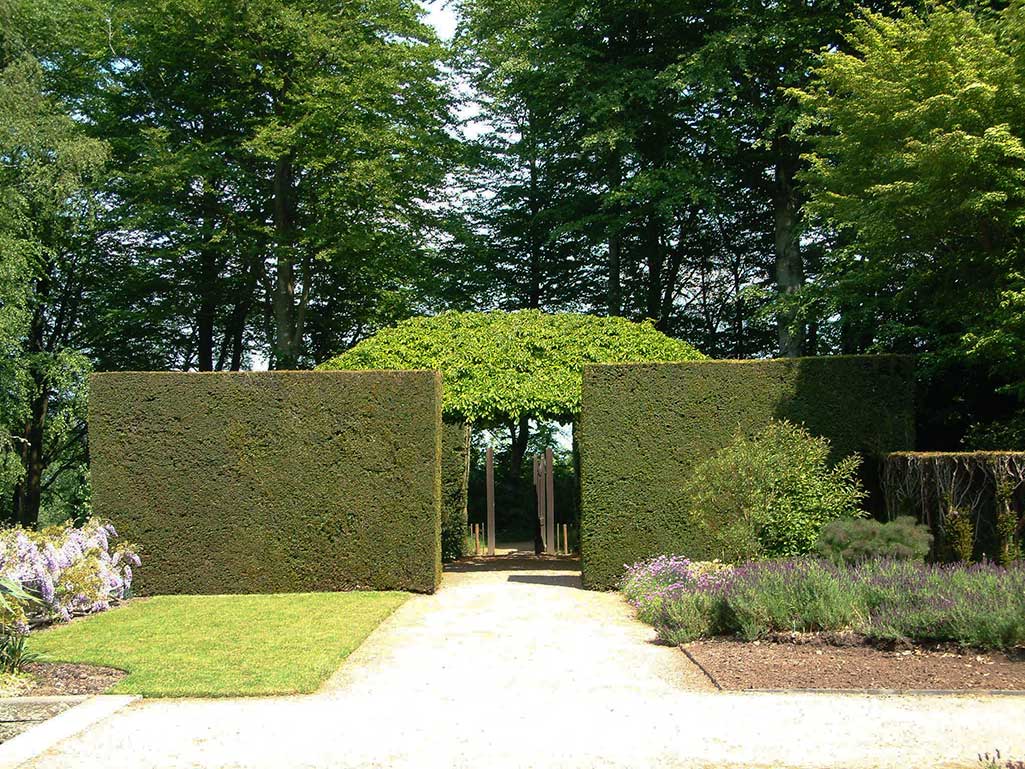
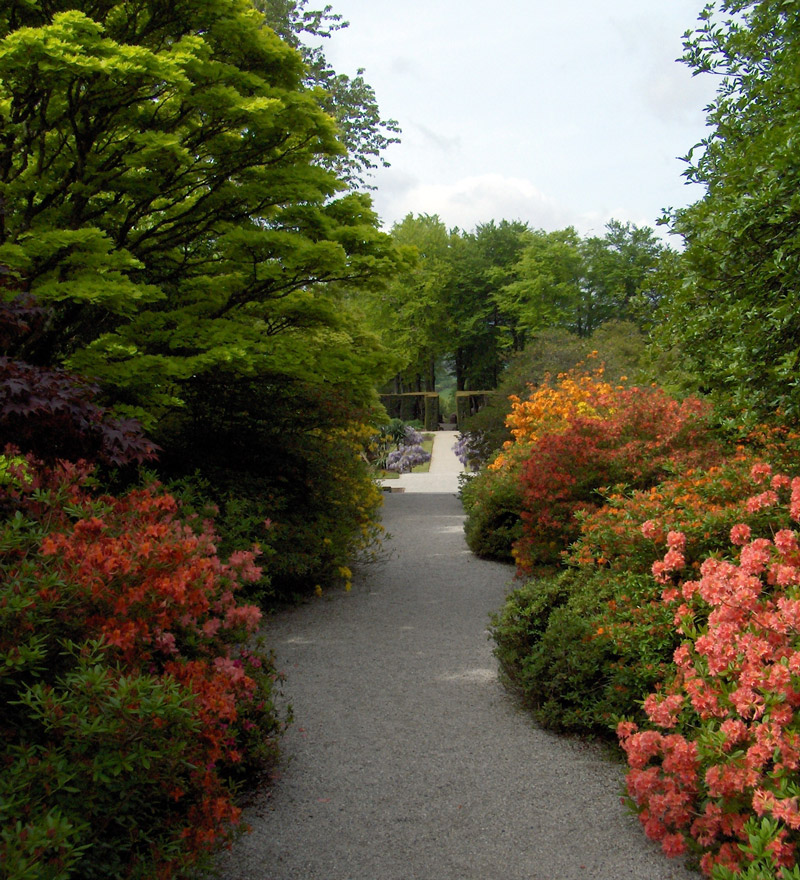
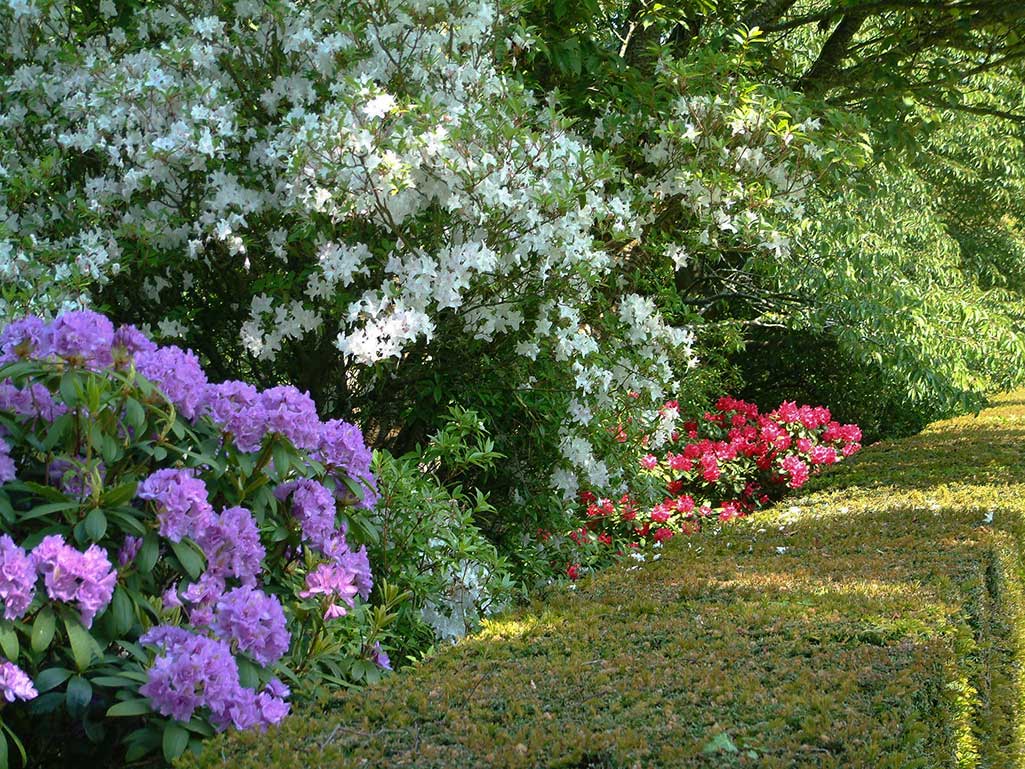
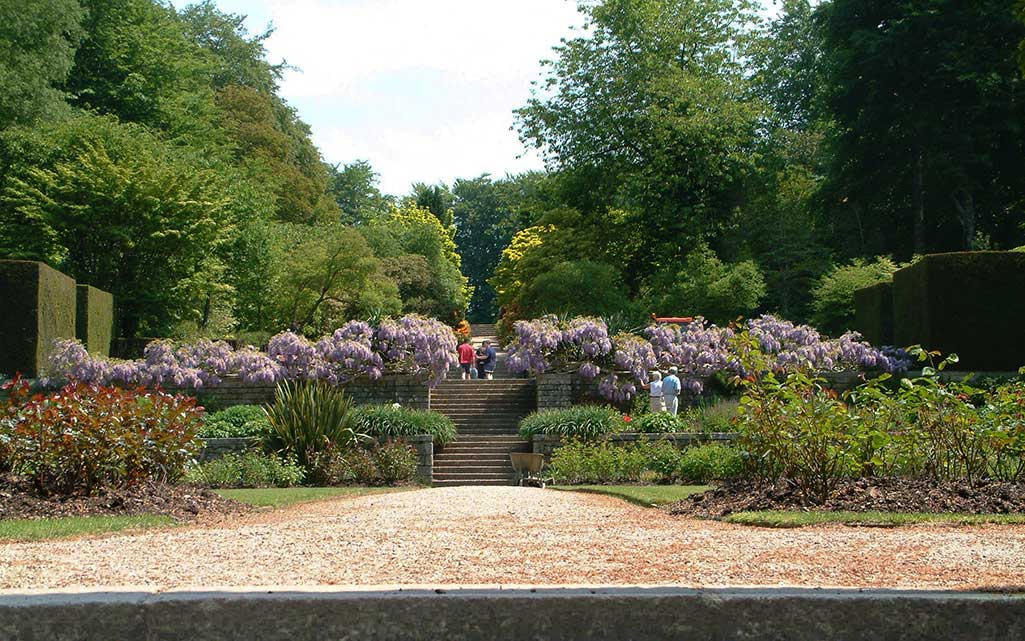
The garden contains four Parrotia persica arbours(commonly known as the 'Ironwood Tree')underplanted with ferns and surrounded by tightly clipped archectural yew hedges. The original Wisteria sinesis still flowers profusely and is laid horizontally along the wall. The roses and herbaceous plants are at their best in June, July and August with autumn colours from September onwards. Spring is the best time to see the Rhododendron Garden and the Shrubbery.
Castle Drogo, Drewsteighton, Exeter, Devon, England, EX6 6PB
Mid March to October. Daily. Open 10.30am to 5.30pm (4:30pm in October)., Also open Friday to Sunday from November to Christmas 11am to 4pm.
Adults £7.80, Gardens Only £5.00 (includes voluntary Gift Aid donation)