 Giardino di Boboli
Giardino di Boboli »
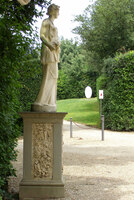
The Medici's Florentine villa, now one of the world's most august galleries, has a famous garden. The original 1549 garden, designed by the sculptor, Tribolo, was similar to his work at Villa Castello. His clients were Duke Cosimo I and his strict, demanding, arrogant, but loyal Spanish wife, Eleonora of Toledo. The renaissance design was as regular as it could be on an undulating site. During the century after its inception, the garden changed and developed with help from many prominent designers. It became Florence's grandest garden, with an early baroque drama and some avenues. This suited the theatrical events which were held. The great grotto, designed by Buontalenti, is near the Palace .....
Read more on Giardino di Boboli
 Villa Gamberaia
Villa Gamberaia »
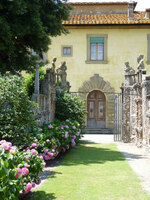
Though long regarded as one of the most perfect Italian gardens, little is known about its design history. Gambereraia has the simple structure of an early renaissance garden combined with the rich decoration of the mannerist or baroque styles. The long lawn, peopled with statues, is a bowling green. There is a nymphaeum, fountains and a lemon garden. The water parterre was a late nineteenth century addition, by a Serbian princess and her close American friend, Miss Blood. Gambereraia was badly damaged in the second World War but has been restored.
Read more on Villa Gamberaia
 Villa Medici di Careggi Garden
Villa Medici di Careggi Garden »
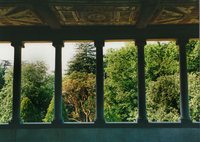
<p>This quattrocento fortified villa is but one remove from a castle. The garden nestles behind a high wall and is famed as the place where Cosimo de' Medici (1389-1464) assembled his Platonic academy. Michelozzi was employed to transform the medieval manor house into a comfortable residence with elegant logias. The garden was laid out in imitation of a Roman villa with space for outdoor living, of the type Pliny wrote about in his letters. A 1636 drawing shows the house and garden much as they are today, though without the circular pool. The original planting was botanical. Cosimo also employed Michelozzi to work on Medici Villa at Fiesole. Careggi looks inward, with the Middle Ages. Fiesole.....
Read more on Villa Medici di Careggi Garden
 Villa Medici, Fiesole, Garden
Villa Medici, Fiesole, Garden »
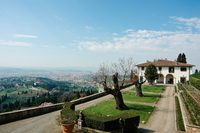
<p>This Medici Villa has gracious terraces, as Alberti recommended, cut into a stony hillside. There are panoramic views of the River Arno and Florence. Sites for earlier villas had been chosen because they were easy to defend, or because of their rich agricultural surroundings. Giovanni de Medici, Cosimo's overweight, libidinous, cultured and favourite son was a child of the renaissance. He cared for art, music and beautiful views. Michelozzo Michelozzi designed the villa. After Giovanni's early death, it was inherited by Cosimo's grandson, Lorenzo the Magnificent (1449-92). Had it been built 50 years earlier, the garden would surely have been enclosed in the medieval way. Had it been made 5.....
Read more on Villa Medici, Fiesole, Garden
 Parco Demidoff - Pratolino
Parco Demidoff - Pratolino »
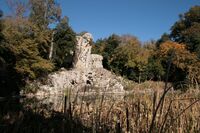
Only a few elements, including the gigantic statue of Appenine, survive from what was once the most celebrated garden in Europe. The rest was destroyed in 1819 to make a well-wooded, easy to maintain, 'English garden'. Garden designers should be wary of fashions. Francesco I, son of Duke Cosimo I, had the garden made for his beautiful and highborn Venetian mistress, Bianca Capello. She later became his wife but the Florentines disliked her as they disliked Francesco I's hobbies: chemistry, alchemy, glass-blowing, porcelain-making and the construction of frivolous gardens. Pratolino was full of humour and invention. A great iconographical programme, partly inspired by Ovid's Metamorphosis, coo.....
Read more on Parco Demidoff - Pratolino
 Villa Medici at Castello (Villa Reale)
Villa Medici at Castello (Villa Reale) »
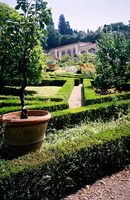
Duke Cosimo I, Grand Duke of the Medicis, loved this place. Though a cold, secretive, moody and ruthless despot, Cosimo I was a generous patron of the arts. He employed a sculptor, Niccolò Tribolo, to design the garden. Castello has spacious terraces and a central axis, following Bramante's example. There is a fine grotto set into the garden wall on the main axis. It celebrates Cosimo I's love of hunting (check). Tribolo's garden sculpture uses an iconographical theme drawn from Ovid's Metamorphosis. It celebrates the greatness of the Medici family. Much of the original garden furnishing, which Vasari describes (below) has gone. The garden is enclosed by walls, in the manner of a hortu.....
Read more on Villa Medici at Castello (Villa Reale)