 Chatsworth Garden
Chatsworth Garden »
<p>A seventeenth century house, plus additions, with an eighteenth century park and a mainly nineteenth century garden. Only Queen Mary's Bower survives from the sixteenth century. From the late seventeenth century design, by <a href="https://www.gardenvisit.com/biography/george_london">London</a> and <a href="https://www.gardenvisit.com/biography/henry_wise">Wise</a>, one can see: the Cascade (designed by Grillet in 1694), the Sea Horse Fountain (designed by Cibber) and Flora's Temple (which has been moved). This design was illustrated by <a href="https://www.gardenvisit.com/history_theory/library_online_ebooks/tom_turner_english_garden_design/dutch_style_in_the_british_isles">Kip and Knyff<.....
Read more on Chatsworth Garden
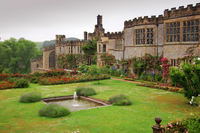 Haddon Hall Garden
Haddon Hall Garden »
<p>A Norman castle which became <a href="https://www.gardenvisit.com/history_theory/garden_landscape_design_articles/historic_design_styles/castle_garden_design_style">medieval castle</a> set in what became a seventeenth century garden (of which there are few in England). The design, with balustraded terraces and steps, is best understood as an English interpretation of a <a href="https://www.gardenvisit.com/history_theory/garden_landscape_design_articles/historic_design_styles/high_renaissance_garden_design_style ">sixteenth century Italian garden</a>. Marvellous. The rose plantings are twentieth century and very good.</p>
<p><iframe src="https://www.youtube.com/embed/f5kZyrCGA-o" width="56.....
Read more on Haddon Hall Garden
 Renishaw Hall Garden
Renishaw Hall Garden »
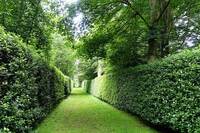
<p><a href="https://www.gardenvisit.com/biography/sir_george_reresby_sitwell">Sir George Sitwell</a> designed an Italian garden for the family seat c1890. He later wrote a book <em>On the Making of Gardens</em>. Sitwell admired <a href="https://www.gardenvisit.com/biography/reginald_blomfield">Reginald Blomfield</a> and hoped to improve English gardens by learning from his visits to over 200 Italian gardens. He was the father of Edith, Osbert and <a href="https://www.gardenvisit.com/biography/sacheverell_sitwell">Sacheverell Sitwell</a>. The Renishaw design has steps, terraces and pools. It is good by the standard of Italian gardens in England but does not match the gardens of Italy in qualit.....
Read more on Renishaw Hall Garden