- England
- Scotland
- France
- Holland
- Germany
- Italy
- Spain
- Portugal
- USA
- China
- Japan
- India
- Iran
- Advice
- Gardens
- England
- Scotland
- France
- Holland
- Germany
- Italy
- Spain
- Portugal
- USA
- China
- Japan
- India
- Iran
- Advice
- Garden Tours
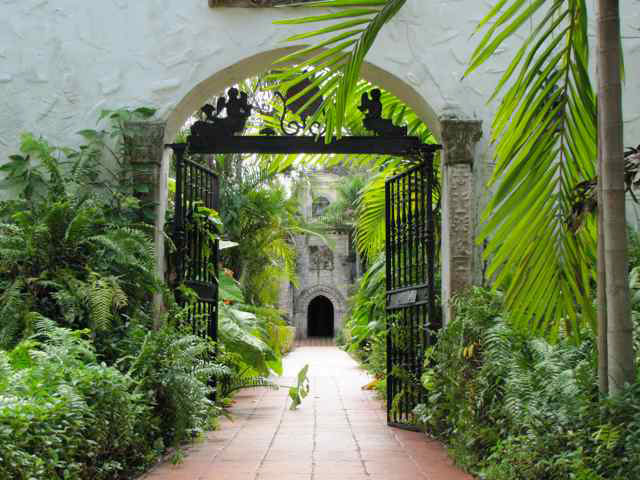
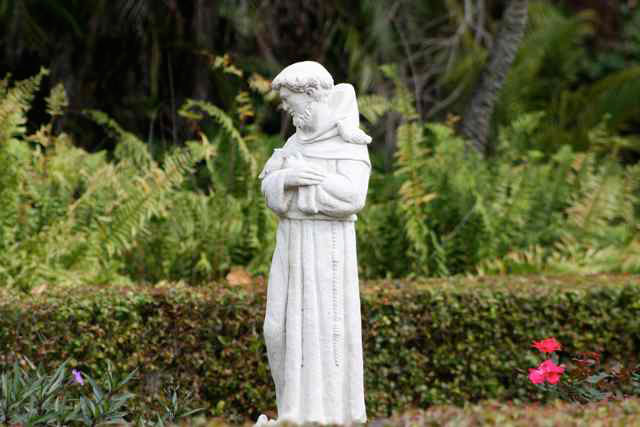
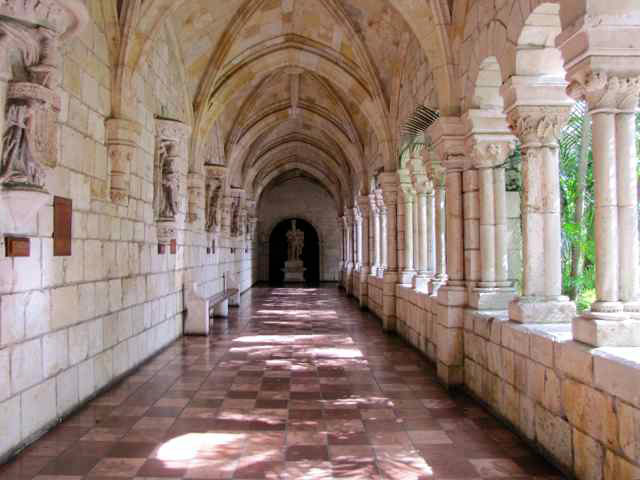
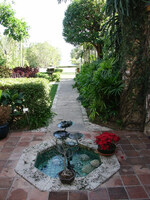
The monastery was built in the twelfth century - in Sergovia, Spain! William Randolph Hearst bought it in 1925 and dismantled the buildings stone by stone, carefully packaged them with protective hay in numbered boxes and shipped them to the US. This co-incided with a severe outbreak of foot and mouth disease in Sergovia and the crates were quarantined on arrival. The crates were unpacked and the hay burnt to avoid possible contamination. Hearst suffered serious financial problems and the stones remained stored in a warehouse for 26 years until after his death. W. Edgemon and R. Moss purchased the stones in 1952 to rebuild the monastery as a tourist attraction. However, workman had failed to return the stones to their numbered boxes. It took 19 months to rebuild and some of stones have never been matched to their original position. The cloister has brick paths and statuary.
16711 West Dixie Highway, North Miami Beach, Florida, USA, Fl 33160
Daily. Open 9am (noon on Sundays) to 4:30pm. Sometimes closed for special events - call in advance to check.